
University, the qualities needed by aspiring doctors that entrance tests do not consider
The medical skills of the future will therefore have to change to put the patient-person at the centre rather than the patient-disease, and this requires a radical change in the teaching of medical practice and the criteria for access to it

4' min read
4' min read
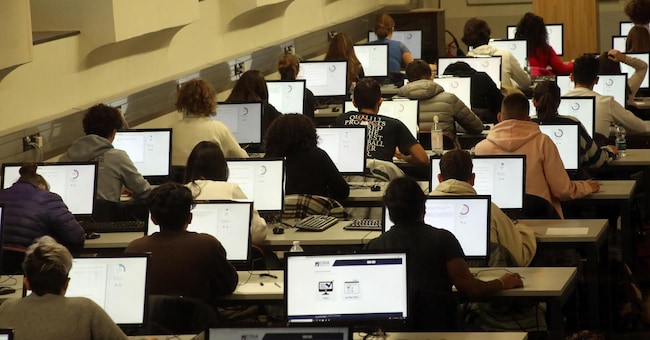
Every year, more than 150,000 young people enrol in the medical school entrance tests, with the hope of being able to practice the profession to which they aspire. Unfortunately, only 10 per cent of them will be able to enrol at university and begin the course of study that will lead them to become doctors.
In the face of these numbers we have a great responsibility to them and to future patients. Are we doing everything possible to ensure that those selected represent the best candidates? Are the 15,000 or so candidates who pass the admission tests each year really the best people to practise medicine? I have many doubts in this regard. At present, the selection of candidates is based on 60 multiple-choice questions, including 4 quizzes on general knowledge acquired during studies, 5 quizzes on logical reasoning, 23 quizzes on biology, 15 on chemistry and 13 on physics and mathematics. In order to pass this entrance test, candidates often prepare at length, using companies that specialise in preparing for this type of selection. There is an immense amount of business and resources at stake, resulting in a poor quality of the assessment process.
What we expect from a doctor
.Let us ask ourselves what characteristics we would like to see in a doctor. Among these is undoubtedly professional competence and technical expertise. A good doctor must certainly have an in-depth medical knowledge and keep abreast of developments in health research and treatments. Alongside this, however, we demand many other skills from future doctors: the ability to connect with patients, to build trusting relationships, and to communicate effectively and sensitively with them and their families. To these skills related to communication and emotional intelligence, we need to add the ability to make accurate clinical assessments, even under conditions of uncertainty, and to recognise the limits of one's competence, the ability to manage stress, the desire to continue to learn from one's mistakes, and the humility to remain focused on the patient's well-being rather than one's own ego. Finally, future doctors will increasingly be asked to know how to work in a team. Medicine is often practised in teams, and an outstanding physician must be able to work well within these teams, showing leadership when necessary and collaborating effectively with other professionals.
Technical skills and medical preparation are acquired through the long course of university studies, but what about relational aptitudes, teamworking and leadership skills, and decision making in situations of uncertainty? University studies and clinical practice can help hone these skills, but if the selection criteria do not take into account the predisposition of future doctors towards these aspects, we cannot expect to form a medical class of excellence.
Theoretical study is not everything
.The entrance tests currently used therefore suffer from a powerful bias: only those who have prepared hard and studied the subjects being assessed in depth deserve to enrol in medical school. In this way, the selective bias rewards candidates who have put more effort into test preparation - or who have had more resources at their disposal to do so - and those who have a strong aptitude for logic and mathematics quizzes. It is not necessarily the case that these criteria select the best people, i.e. those with a deep passion for medicine, strong empathic and interpersonal skills, leadership abilities and continuous learning. On the contrary, knowing the right answer for every question can reinforce the idea that there is always a correct answer for everything and that they, thanks to their test scores, are best placed to find it in every situation they will have to handle. This is what happens when we come across doctors who are reluctant to listen to the patient, who are overconfident in their ideas and who place themselves in a position of superiority over their interlocutors.

