


Leone in Camerun, l’appello contro i «capricci di ricchi» e il nodo della crisi anglofona
dal nostro corrispondente Alberto Magnani

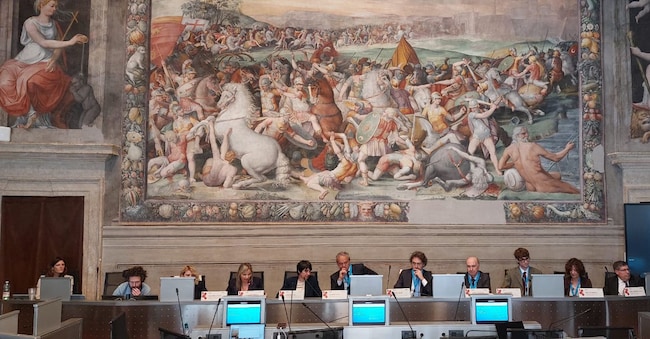
The entrance preparation of Italian university students is worsening. This is shown by the results of the Cisia consortium's Tolc 2025, used for admission to almost one in two three-year degree courses (1,241, or 46.9%). The data were presented in Rome, at the Rectors' Conference headquarters, during Orientarsi al Futuro 2026.
An analysis of the 2025 tests - 324,000 admission tests in four areas of study (Stem, economic-legal-social, health-agricultural-veterinary, artistic-literary-education), down slightly from the 340,000 in 2024 - first of all shows that the scores obtained on the Tolc are on average down compared to the last three years. And if we were almost used to the poor performances in mathematics, the criticalities in Italian are worrying. Especially in text comprehension, which, compared to the previous year's results, marks - 1.2% in the Humanities Tolc, -2.2% in Economics, -1.5% for Engineering.
In reality, the decrease is more general and encompasses the scores in all disciplines except those for admission to Engineering, Psychology and Biology courses. The same applies to the schools of origin because it is the students coming out of the classical school that seem to be improving while those from the scientific school remain more or less at their previous levels.
In addition to the value of the tests themselves, which are almost a natural extension of the check carried out between the desks by the Invalsi tests, there is their orientation function. Taking a Tolc in advance of university enrolment, perhaps as early as the fourth year of high school, allows one both to fill in any gaps and to make a more informed decision. It is a pity, however, as shown by the results of a survey of 3,500 students carried out by Cisia itself, that more than one in three students (34.4%) continue to choose their faculty only after high school and another 36.6% do so during their last year of school. Moreover, they continue to listen to the advice of family or friends, who in 76.7% of cases are still the most listened to influencers. While the role of teachers in the decision-making dynamic remains marginal, although those who teach science subjects still play a more significant role than their colleagues in the humanities.
The same issues were then explored in a subsequent round table discussion during which the Cisia president, Giovanni Betta, called it 'necessary' that 'strategic choices be made on the future of university education' and took up the appeal launched by the CUN president, Paolo Pedone, to set up a Tolc system for master's degrees, with a specific focus on international students.
La newsletter premium dedicata al mondo della scuola con approfondimenti normativi, analisi e guide operative
Abbonati
