
Million-dollar sales and withdrawals at Sotheby's New York
Sensational slip for Giacometti, perhaps too high an estimate. For the 64 lots in the catalogue, of which four withdrawn and nine unsold, $186m was sold
3' min read
Key points
3' min read
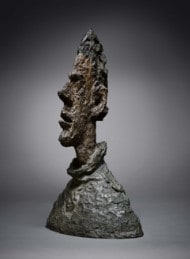
In 2010, the art market's recovery from the crisis started with the sale of an iconic sculpture by Giacometti that realised five times its cautious estimate and ended up with one of the most important collectors of the time. As a counterpoint, the overt crisis in the high-end art market started with the failed sale of a Giacometti bust estimated at $70 million on the evening of 13 May by Sotheby's New York.
In the past 15 years, the big auction houses have created a system increasingly tailored to investors and speculators by introducing derivative products, inflating estimates and pushing collectors to the margins. Now that interest rates are no longer negative and speculators are abandoning the market, only the third-party guarantors remain to shore up its fall, until their liquidity too runs out. Fortunately, the markets that have largely escaped the financialisation disease remain viable, thanks to the many non-billionaire collectors, as witnessed by theimpressionist and modern art catalogues that brought in $41.1 million in realised sales at Christie's New York during the course of the day.
Giacometti unsold
.Lot 17, the large bust of Diego, brother of the sculptor Alberto Giacometti who executed it in 1955, was clearly overpriced, and the absence of third-party guarantees could be a choice of the seller, the Solow family's Soloviev Foundation, or a lack of opportunity. When he was alive, Stefan Solow was known to reject offers of collateral; but the imposition of a very high reserve at over $64 million proved too much. The importance of the lot for the image and outcome of the auction meant that it could not be withdrawn, as is often the case in such cases, and the auctioneer had to declare it unsold. This further complicated the sale of the next 40-plus lots, whereas previously a mix of third-party guarantees and reduced reserves had brought all in all positive results.
The auction in general
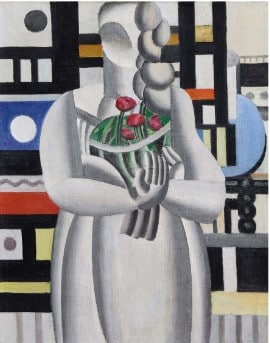
.Giacometti was not an isolated case in the auction: of the 64 lots in the catalogue, four works with million-dollar estimates were withdrawn, including a study for a Kandinsky composition estimated at $6-8m, and nine remained unsold, several with million-dollar estimates and big names like Matisse, Picasso, Soulages and van Rysselberghe. There could have been 10 unsold lots, but one lot secured by the auctioneer, a figure by Leger, initially unsold from an estimate of $5-7 million, was reopened by the auctioneer who promptly sold it after a single bid at $3 million without commission. Presumably the auctioneer preferred to limit the damage by paying the difference immediately, so as not to find the work in storage. The total result of $186 million obviously fell short of pre-auction expectations.
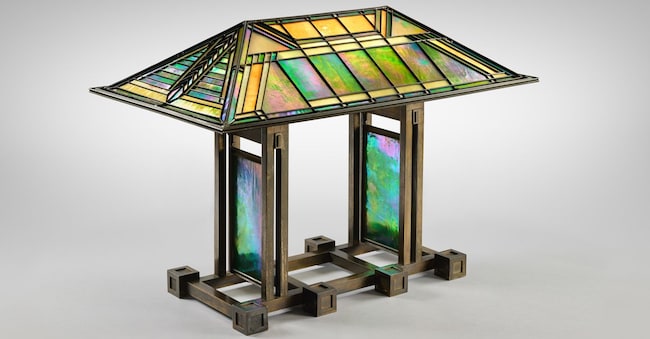
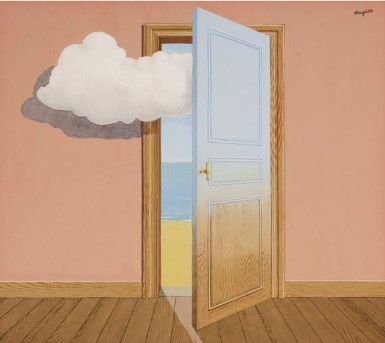
Nearly half of the remaining 60 lots were guaranteed by third parties and several appear to have gone to guarantors, including Magritte's millionaire work 'La Bonne aventure' at $3.3m at the low estimate, and Feininger's trumpeters at the low estimate of $5m. Another Magritte work 'La traversee difficile' that came to auction without a guarantee with an estimate of $10-15m generated genuine interest from several quarters, finishing at $8.2m which with commissions reached the low estimate of $10m: in today's market lowering the reserve is a better strategy than guarantees. A different fate befell a sunny view of Venice by Paul Signac, saved by a single bid below the low estimate but forever at $8.1m with commissions. In addition to Magritte, two other artists crossed the $10m threshold: Picasso with a seated male figure from the later period, dated 1969 that stopped midway below the $12-18m estimate at $15.1m, still too much for a decorative painting of no interest, and Georgia O'Keeffe with a characteristically ornate red flower that exceeded the high estimate at $13m. Among the best performers was a design work by the great architect Frank Lloyd Wright, a 1903-04 lamp that reached $7.5 million from an estimate of $3-5 million.
In fact, the market for quality works still exists, but not at the prices pushed unreasonably over the last five years. It is now the turn of contemporary art catalogues on the next two New York evenings, on 14 May at Christie's and then again at Sotheby's the following day.

