
UpsideTown, after Milan route to Rome and start of partnership with Casavo
CEO and founder Luigi Ucci explains the plans for the capital, short rentals and the partnership with the instant buyer. The project will last 36 months for gross returns of between 22.5% and 27.5%, depending on the amount invested and the timing of joining

4' min read
4' min read
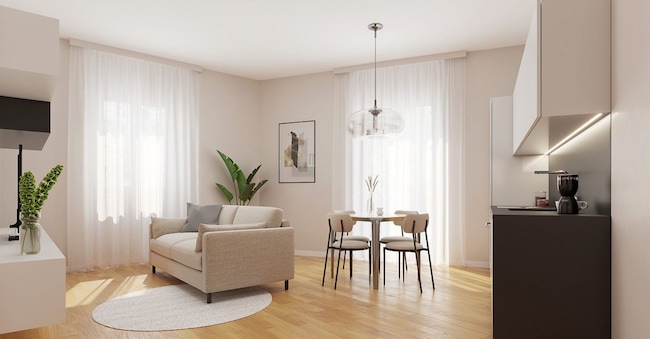
Subscriptions start this morning for 'UrbanRents', a new crowdfunding campaign by UpsideTown, which will allow investors to access the short-term rental market in prime locations without large sums of money. The independent fintech - which selects both real estate and green energy crowdfunding investment transactions - will purchase en bloc a real estate portfolio of seven furnished flats in Rome and Milan, in high-demand areas (Parioli/Salario in Rome, Navigli in Milan), ready to be placed on the short rent market. Within the third year, the properties will be sold individually, realising an extra return for investors, which will be added to the rental income generated.
"The project," explained Luigi Ucci, ceo and founder of UpsideTown, "provides for a duration of 36 months against total gross returns of between 22.5% and 27.5%, depending on the amount invested and the timing of joining. The project maximises the return of the investment thanks to the tax benefit, provided in the measure of a 30 per cent deduction/deduction on the capital invested for natural or legal persons with tax residence in Italy: with the tax benefit, therefore, the return of the operation for natural person investors will be between 52.5 per cent and 57.5 per cent.
As with all campaigns published on the UpsideTown portal," the company explains in a note, "there are safeguard clauses in favour of investors: in this specific case, in addition to the preferential liquidation, which gives investors priority in the order of distribution over the project owner, there is also a put option, which protects investors from any deviations in the assumed timing, allowing for disinvestment at the 36th month, at the target yield envisaged for the class of units subscribed. Investors in the platform will also be able to take advantage of the right of first refusal on the sale: early access to the purchase and the returns generated by the rental period will optimise the cost structure to be incurred in acquiring the properties. The transaction is promoted by Redestate Spa, an operator with a specific focus on the Rome markets.
Bringing crowdfunding to Rome and a new partnership with Casavo are the two bets that UpsideTown aims to develop in 2025.
"A few weeks ago," Ucci explains, "we successfully closed the largest equity crowdfunding round for a value add property in Rome, in the Quartiere Africano. Just under two million raised, 200% overfunding, one thousand square metres to be redeveloped to create 13 units with outdoor areas. The duration of the investment was 15 months with gross yields between 17.5% and 23%, in proportion to the risk class and amount invested. The transaction is intended to finance the purchase and development of a 900-square-metre unit, which will be divided into 13 flats of various sizes for sale. Not only that. To safeguard investors, the transaction provides for the preferential liquidation of capital and earnings to the portal's investors with respect to the project owner, so as to guarantee the alignment of interests on the outcome of the transaction. To date, the portal has raised about EUR 5.5 million in Rome, financing six transactions with avalue add strategy. "Of these,' Ucci clarifies, 'two were successfully concluded in a few months, ahead of the Proponents' expectations, distributing an average annual gross ROI of 21 per cent to investors.
Brand connect


Newsletter RealEstate+
La newsletter premium dedicata al mondo del mercato immobiliare con inchieste esclusive, notizie, analisi ed approfondimenti
Abbonati