
Urban Planning Inquiries: yet more acquittals, but the issues remain
In the Via Fauché case, the Milan court’s ruling regarding two professionals deemed to be ‘acting in good faith’

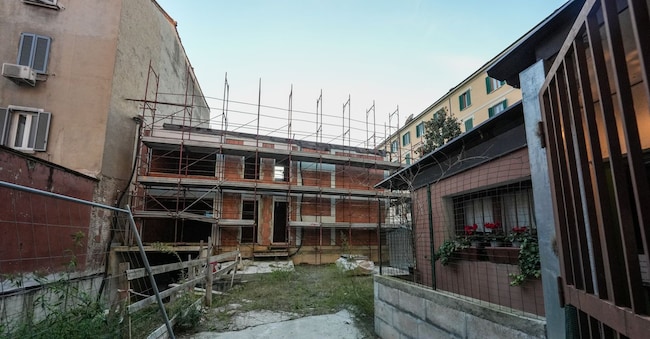
The investigations into Milan’s town planning department still have an uncertain outcome, at least from a criminal law perspective. Indeed, another verdict has been handed down, resulting in acquittals. The Court of Milan has acquitted the builder Luigi D’Ambrosio and the site manager and designer Marco Colombo ‘because the act does not constitute a criminal offence’ in the trial centred on various charges of planning offences, unauthorised land subdivision and forgery, relating to the building site at 9 Via Fauché, where a residential block with two storeys above ground and a basement was built on the site of an old workshop and warehouse. The local council had since decided to demolish the building following a ruling by the Regional Administrative Court (TAR), which was upheld by the Council of State, demonstrating just how difficult it is to follow the course of the investigations, which are divided between an administrative aspect and a strictly criminal one.
The acquittal was handed down by Judge Franco Cantù Rajnoldi. Another builder, Gaetano Risi, was acquitted today, as requested by the prosecutor Paolo Filippini, ‘on the grounds that he did not commit the offence’. For the other two defendants, however, the prosecution had sought suspended sentences of up to one year.
This is yet another acquittal in a case in which, amongst other things, no municipal executives or officials were among the defendants. Last June, the Court had acquitted all eight defendants – including builders, a designer, and former municipal executives and officials – in the Torre Milano case.
In the Via Fauché case, the prosecution alleged that Colombo had made false statements by describing the works as a refurbishment, whereas they were in fact a new build, for which a planning permission was required rather than the SCIA (self-certification), which was used instead. During the closing speech, the public prosecutor had referred to the rulings of the Regional Administrative Court (TAR) and the Council of State, which had ruled that the works were not lawful from a town planning perspective. The public prosecutor had also contested the defendants’ claim that they could invoke ‘blameless reliance’ on the conduct of the technicians and municipal departments. The acquittal, however, suggests that the defendants, represented by lawyer Cesare Cicorella, were acting in ‘good faith’, even though, two years later, the same municipal departments had deemed the courtyard where the building was to be erected to be too small. The grounds for the verdict will be issued in 90 days’ time.
The case of Via Fauché is regarded as an anomaly precisely because even the local council had ultimately agreed that demolition was necessary. However, there remains a general sense of uncertainty as to what will come of all these investigations into unauthorised land subdivision in Milan.


