
Artificial intelligence: the US and China dominate. Mantovano calls for ‘a step change at EU level’
The speech by the Under-Secretary and Delegated Authority for the Security of the Republic at the Digital Innovation Forum 2026. In Italia, investments totalling around one billion for AI companies. A supercomputer costing over 400 million in Bologna. Quacivi (ACN): ‘A fund set up with businesses to ensure citizens’ cyber security’

Key points
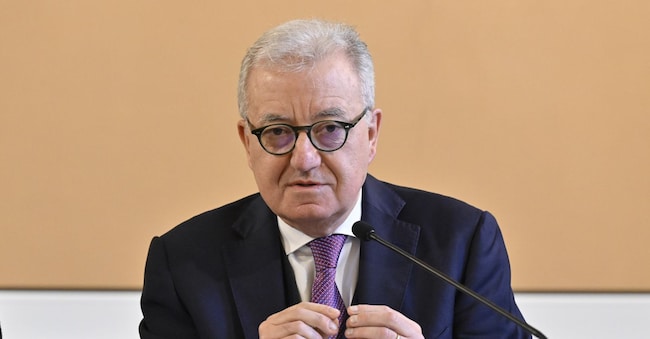
Regulating artificial intelligence is not enough. Europe risks becoming increasingly dependent on other countries’ technologies and on the conditions set for their use. The warning comes from Alfredo Mantovano, Under-Secretary to the Prime Minister and the official responsible for the security of the Republic, at the Digital Innovation Forum 2026: ‘If the security standards and rules of access’ to artificial intelligence tools ‘continue to be defined by others – Washington, Beijing or large private laboratories – Europe will find itself increasingly in a passive position, in which it will be confined to acting as a second-tier regulator and a dependent user’.
Technological dependence on the United States and China
This issue has direct implications for European defence. Mantovano sets out the terms of the problem: ‘There is this US–China polarisation, and Europe and its member states find themselves in a difficult position: however strong integration within the EU may be, and however deeply we are embedded in the North Atlantic Alliance, Europe relies to a very significant extent on strategic technologies developed outside its own borders for its defence. This dependence concerns not only the availability of these technologies, but above all the ability to influence the conditions under which they are developed, distributed and used’.
It is not merely a race for innovation. It is a matter of strategic autonomy. The call to Brussels is to support the development of European technologies: ‘In the face of these difficulties, a change of pace is needed at EU level. We need to make an effort to support Member States in developing technological capabilities that can compete with those of the US and China. There is still a long way to go.”
Law 132: up to one billion for artificial intelligence and businesses
Italy’s response is also underpinned by Law 132 of 2025, the first comprehensive national framework on artificial intelligence. The legislation regulates the use of AI in the most sensitive sectors and aims to strengthen the country’s technology sector.
Alongside the regulations come investments: up to one billion euros to support businesses operating in the fields of artificial intelligence, cyber security and emerging technologies. Mantovano points out that these resources are “intended for small and medium-sized enterprises with high growth potential”.

