
US bases and the local economy

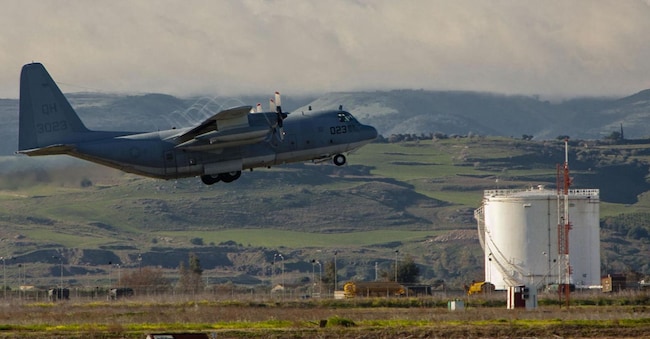
Donald Trump periodically threatens to withdraw American troops stationed in various countries, including Italy. Public debate tends to focus on geopolitical and strategic aspects: deterrence against Russia, the role of NATO, and European strategic autonomy. There is, however, far less discussion of another issue – one that is less exciting but very practical: what happens economically to the areas hosting US bases when the soldiers leave?
New research by two economists from the Universities of Cologne and Mannheim (Kochems & Schmidhäuser, 2026) into the consequences of the large-scale withdrawal of US troops from Germany following the Cold War shows that military bases are not merely strategic infrastructure: they are also major local economic hubs. And when they close, the impact can last for decades.
In the 1980s, Germany alone hosted more American soldiers than all the other European countries put together. At the end of the Cold War, the United States drastically reduced its military presence. In the space of about five years, nearly 200,000 soldiers were withdrawn, amounting to around 80 per cent of the troops stationed in the country. By way of comparison, there are currently around 12,000 American military personnel in Italia.
For decades, those bases had been a key part of the local economy. Not only because they directly employed German workers, but also because they generated demand for services, catering, construction, retail and transport. In 1989, US military spending in Germany generated around 17.5 billion dollars of local economic demand at current values. It is precisely this mechanism that the paper seeks to measure, drawing on the fact that the withdrawal was rapid, unexpected and decided almost exclusively on geopolitical and military grounds – rather than economic ones – making it a sort of ‘natural experiment’.
Using administrative data, the researchers reconstruct the presence of military bases on a municipality-by-municipality basis and combine this with detailed data on employment, wages, municipal finances and the individual careers of German workers. The result is probably the most comprehensive analysis ever carried out of the local economic effects of a foreign military withdrawal, and it reveals a significant impact.

