
US-China: agreement on agricultural products, medical devices and consumer goods. Details to follow on Monday
Following the meeting between Trump and Xi, Washington has announced new trade agreements with Beijing. Greer: more favourable terms for a range of trade deals. Issues remain regarding chips and rare earths

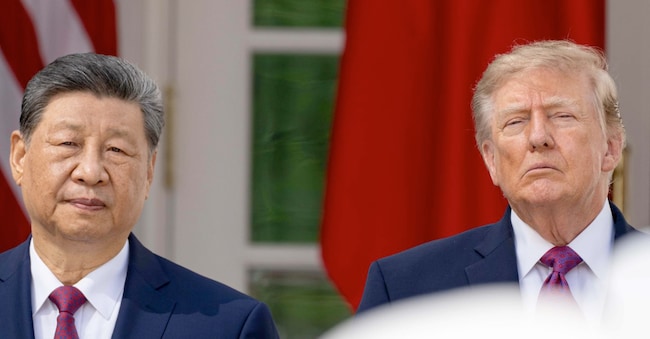
Another step towards a trade truce. The United States and China have reached agreements on a range of products that can be traded on more favourable terms. Greer has so far only specified a few categories: American agricultural products and medical devices, and Chinese consumer goods deemed non-sensitive. The details will be made public on Monday.
The announcement was made by the US Trade Representative Jamieson Greer, following themeeting at the White House between Donald Trump and Xi Jinping. “We have actually reached an agreement with the Chinese on several of these issues,” Greer told CNBC. Trump described the talks with Xi as “very productive”, assuring that further developments are on the way.
This is not, at least for the time being, a new comprehensive trade agreement, but rather a carefully considered decision by the world’s two largest economies: to resume trade in products deemed less sensitive, whilst maintaining restrictions in strategic sectors.
One of the most important issues for Washington remains agriculture. China is a key market for American producers, and purchases of soya and other agricultural products have become one of Beijing’s main bargaining chips in recent years. Among the sectors discussed in the negotiations over recent weeks was also energy, with the possibility of reducing the barriers that have effectively halted US exports of liquefied natural gas to China.
The technology dispute remains the most challenging. Washington continues to restrict China’s access to the most advanced semiconductors, whilst Beijing retains a dominant position in the refining and processing of rare earths, which are essential for electronics, energy and defence. It is precisely these mutual dependencies that have helped push the two sides towards a more selective approach to managing the trade dispute.

