
US Court of Appeals rejects Anthropic appeal against Pentagon
The company remains classified as a national security risk. A new hearing is scheduled for 19 May

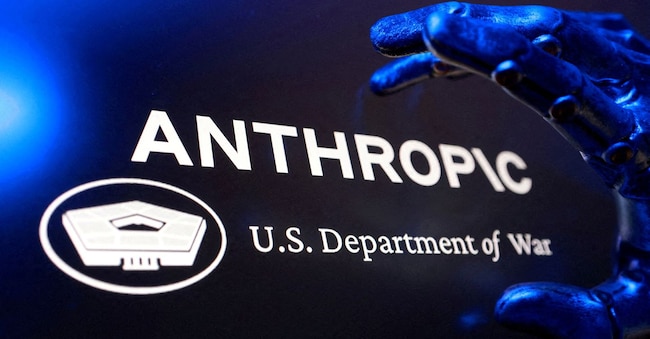
The federal appeals court in Washington, US, dismissed the appeal of Anthropic against the Pentagon. The dispute concerns the classification of the technology company as a national security risk in the supply chain. The Department of Defence, in fact, had called Anthropic a danger after the clash over the use of artificial intelligence in war, with the company refusing to remove certain limits on its models and the subsequent termination of the contract.
The Federal Court ruling
At least for the time being, the court's decision leaves in place the qualification of Anthropic's products as a national security risk, preventing companies working with the Department of Defence from using its products. The judge did not find that there were sufficient grounds to reverse the government's decision, as 'the precise amount of economic damage to Anthropic is not entirely clear'.
The previous
This decision departs from the conclusions reached by another federal judge, the one in San Francisco, which in a recent ruling had forced Donald Trump's administration to remove the label describing the company as a threat to national security. In that case, the court had recognised that the government's decisions can be detrimental to a company engaged in close competition with rivals in the Ai field. In any case, the D.C. court scheduled another hearing on 19 May at which further evidence will be presented.
Anthropic's answer
"We are grateful that the court recognised that these issues need to be resolved quickly," Anthropic said in a note, "and we remain confident that the courts will eventually agree that these supply chain labels are unlawful. Matt Schruers, CEO of the Computer & Communications Industry Association, also expressed concern about the conflicting rulings on the Anthropic-Pentagon case. "The Pentagon's actions and the Washington court's decision create substantial uncertainty in the industry at a time when American companies are competing with global counterparts to drive Ai development," said Schruers.

