Middle East

US-Iran agreement: the first details are emerging

There is widespread scepticism about how quickly the Strait of Hormuz will be able to reopen

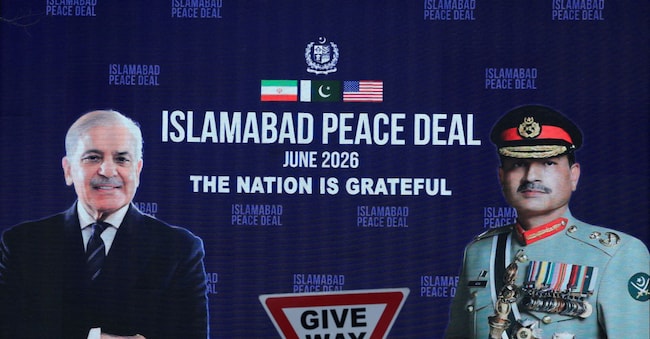
Un poster con il capo dell’esercito pakistano Marshal Asim Munir e il primo ministro Shehbaz Sharif,  dopo l’accordo Usa-iIan  REUTERS

4' min read

Translated by AI
Versione italiana

4' min read

Translated by AI
Versione italiana

The United States and Iran are preparing to formally sign an interim peace agreement that has already led both sides to claim victory, although the details of the deal are only emerging piecemeal and energy sector experts are sceptical about how quickly the Strait of Hormuz can be reopened. Tehran has also stated that the version of the agreement circulating in the media is inaccurate.

The text of the so-called memorandum of understanding – which paves the way for two months of negotiations on Iran’s nuclear programme and other issues – has not yet been published. A near-final draft, seen by Bloomberg News, shows that Iran is set to receive a sanctions waiver allowing it to sell oil immediately, whilst other financial incentives will be deferred.

Loading...

A US official has stated that the full agreement could be published within the next two days, ahead of the signing ceremony. The event is scheduled to take place at Bürgenstock, a mountain resort overlooking Lake Lucerne, the Swiss Foreign Ministry announced on Tuesday. Vice-President J.D. Vance is expected to lead the US delegation, whilst Iran will likely be represented by the Speaker of Parliament, Mohammad Bagher Ghalibaf.

According to a source familiar with the matter, the United States has begun circulating the text of the provisional agreement amongst the allied nations gathered at the G7 summit in France. Neither Washington nor Tehran has yet officially published the document.

Another person familiar with the contents of the agreement, who asked to remain anonymous, said that the technical details are still being finalised, suggesting that the exact wording may be subject to change before it is signed.

However, the details of the agreement – a copy of which Bloomberg News has seen – provide a comprehensive picture of the economic boost Iran will receive by ending its control over the Strait of Hormuz and reaffirming its commitment never to acquire nuclear weapons. The US Treasury Department will grant waivers for exports of Iranian crude oil and petrochemicals immediately after the memorandum is signed. The United States will also lift the naval blockade of Iranian ports, and the two countries will work together to ensure that maritime traffic through the Strait of Hormuz returns to pre-war levels within 30 days.

President Donald Trump is in France for the G7 summit, where the war with Iran – which has caused energy prices to soar – is at the centre of the debate. European countries such as France, the United Kingdom and Italia are ready to help clear mines from the Strait of Hormuz, if necessary, although they are concerned about the potential risks to their own ships and sceptical about the possibility of a full reopening by Friday, as promised by Trump.

Trump also held talks with the President of the United Arab Emirates, Sheikh Mohamed bin Zayed, and the Emir of Qatar, Sheikh Tamim bin Hamad. These countries could, alongside the United States, contribute to the creation of a $300 billion development fund for Iran following the conflict. The draft seen by Bloomberg states that the United States and its regional partners will draw up a plan to provide this sum to support Iran’s reconstruction and economic development.

The United States will turn to other countries and the private sector to secure investment commitments, a US official has said. Iran claims that the war, which began on 28 February with an Israeli-US air strike, has cost the country over 250 billion dollars in economic damage. Iranian officials have stated that the memorandum of understanding will allow them to access tens of billions of dollars in funds frozen in countries such as Qatar. The draft seen by Bloomberg states that the United States is committed to unfreezing and making these funds fully available, though it does not specify a timeframe.

Many European governments, investors in the energy sector and shipping companies have doubts about how quickly the Strait of Hormuz – through which a significant proportion of the world’s supplies of oil, liquefied natural gas and aluminium normally pass – will be able to return to pre-war conditions. In addition to the potential need to reopen the strait, there is the long-term question of whether Iran will allow free passage.

Tehran has indicated that it will impose shipping tolls on vessels following the 60-day period of new negotiations between the United States and Iran. On Tuesday, during his meeting with the leader of the United Arab Emirates, Trump stated that the strait would remain “permanently” open and toll-free. The day before, a senior US official had told journalists that the status of the Strait beyond the 60-day negotiation period would be up for discussion.

On Monday, Vance defended the agreement, stating that the deal would be based on a verification system to ensure that Iran honours its commitments. Republican senators have said they are pressing the Trump administration for further details and have suggested that it will be up to Congress to vote on the final agreement.

Neither the United States nor Iran makes any secret of their mutual mistrust. The White House says that Trump will not hesitate to resume attacks if he believes that the leaders in Tehran are not complying with the terms of the agreement. Iranian officials have warned that the United States has launched two attacks against the country in the past year, whilst negotiations were ongoing.

Israel’s war against Iranian-backed Hezbollah militants in Lebanon represents a further potential obstacle to the success of the agreement. The memorandum of understanding is likely to provide for a ceasefire on “all fronts”, including Lebanon. During a telephone call with Lebanese officials, Ghalibaf stated that Israel “must withdraw from the occupied territories”, according to a report on Tuesday by the Iranian news agency Mehr.

Copyright reserved ©
Loading...

Brand connect

Loading...

Newsletter

Notizie e approfondimenti sugli avvenimenti politici, economici e finanziari.

Iscriviti