
US Senate committee accuses epidemiologist Fauci of contempt of Congress
The motion was passed with 8 votes in favour and 7 against. The epidemiologist had exercised his right to remain silent during a hearing; he now faces a criminal investigation

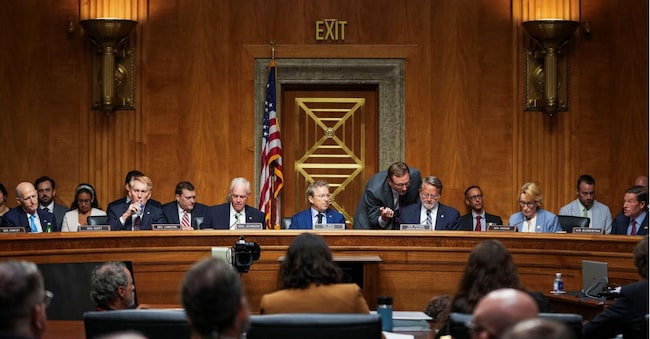
The US Senate Committee on Homeland Security and Governmental Affairs has voted to charge the epidemiologist Anthony Fauci, one of the architects of the US response to the Covid-19 pandemic, with contempt of Congress for invoking his right to remain silent during last week’s hearings. The subject of the hearing was Fauci’s own handling of the Covid-19 pandemic; when questioned by committee members, he invoked the Fifth Amendment over 100 times, asserting his right not to answer questions that might incriminate him.
Well-founded fear of self-incrimination
With regard to Fauci’s stance, Rand Paul, the committee chair, stated that the constitutional protection afforded by the Fifth Amendment could not apply, as the epidemiologist had received a pardon last year from the Democratic President Joe Biden and therefore should not have feared criminal prosecution. Fauci and the Democrats opposed to the contempt resolution argued, however, that he had a well-founded fear of self-incrimination, given the Republicans’ publicly expressed desire to prosecute him criminally.
“Dr Fauci was under no risk of federal prosecution,” Paul said at the start of the hearing. “All he had to do was tell the truth,” he added. Fauci, in a statement explaining his decision to invoke his Fifth Amendment rights, had stated that he had good reason to fear the possibility of criminal charges, given what he described as Paul’s determination “to make me say anything, anything at all, that might justify his repeated public promises that I will end up, to use his words, ‘behind bars’”.
The pardon granted by Biden covered actions taken from 2014 up to the day in January 2025 on which it was issued. It does not protect Fauci from any criminal proceedings at state level, nor from investigations into testimony he has actually given which lawmakers consider to be false. The referral will be sent to the US Attorney’s Office in Washington, which will decide whether to open an investigation or, if necessary, seek to prosecute the doctor for contempt of Congress.
President Paul’s options
President Paul now has two options: to try to secure a final vote in the Senate – where, however, 60 votes are required, which the GOP does not have (it holds only 53) – or to refer the case directly to the Department of Justice, which will then decide whether to proceed with criminal charges.

