
US tariffs are taking their toll on Italian-made goods, with container volumes at Italian ports on the decline
The Trump administration’s tariffs are hitting the food sector (-33% for oils and fats) and the automotive sector (-21.8%). Logistics costs are rising

The effects of international conflicts and US tariff policies are now becoming increasingly evident in shipping routes and logistics costs – phenomena that are reshaping the balance of world trade. This is highlighted in the 27th edition of the Fedespedi Economic Outlook, a periodic report on trends in freight transport, compiled by the National Federation of International Freight Forwarders.
Tensions in the Middle East, according to the study, have caused an 83% drop in traffic through the Strait of Hormuz, whilst the Trump administration’s tariffs are beginning to affect Italian exports to the US market, particularly in the food sector (-33% for oils and fats) and the automotive sector (-21.8%). Logistics costs are weighing particularly heavily on businesses, accounting on average for 9.9% of company revenues and exceeding 11% for SMEs.
“The geopolitical landscape,” says Alessandro Pitto, president of Fedespedi, “continues to be the factor that most influences the international economy. The real issue today is not predicting the next crisis, but ensuring we are prepared. We must shift from a paradigm of prediction to one of preparedness, working towards a genuine ‘national project’. The idea that our location guarantees us a steady income as a natural logistics hub is an illusion: recent crises, such as the nearly 1,000-day closure of the Red Sea, demonstrate that routes change easily and trade continues along other paths. Geography is an advantage only if it is capitalised on through physical and digital infrastructure.”
Traffic on the decline in Italia
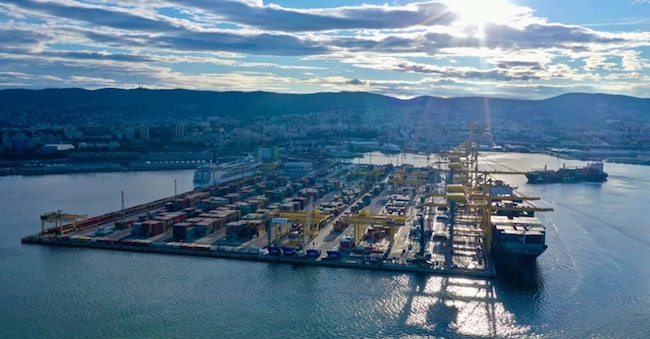
Analysing the various transport sectors, the report shows that, as regards shipping, in the first quarter of 2026, global container traffic (in TEUs, i.e. 20-foot containers) recorded an estimated growth of +4.4%, driven in particular by volumes from the Far East, one of the most dynamic regions with an increase of 8.8%, alongside Sub-Saharan Africa (+14.8%) and Latin America (+4.4%). In contrast, Italian ports saw an overall decline of -4.6% in TEUs handled. The decline was felt particularly acutely at the port of Trieste (-23.6 per cent), affected by the reorganisation of shipping alliances, Savona (-14.1%) and Genoa (-4.9%), whilst Venice recorded strong growth (+5.8%).
As for air freight, the study states that, according to IATA data, global air freight traffic in April 2026 grew by 4 per cent compared with the previous year, driven in particular by Asia and trans-Pacific routes. Italia, on the other hand, saw the opposite trend, as in the first four months of 2026 our airports handled 385,100 tonnes of freight, recording a slight decline of 1%. According to Fedespedi, this decline ‘was influenced by the slowdown at the main national hub, Milan Malpensa (-5%), which was affected by difficulties in the Middle East and government policies (such as the €2 tax on small parcels from non-EU countries), as well as by declines at Pisa (-19.3%) and Rome Ciampino (-7.9%). Italia nevertheless remains among the European leaders in terms of total connectivity (direct and indirect), ranking fourth on the European continent, ahead of countries such as France’.


