Trade war

Tariffs, White House: 'For the EU they remain at 15%'. Brussels asks for clarification

The suspension applies only to tariffs generated under the Emergency Economic Authorities Act and does not affect other tariffs

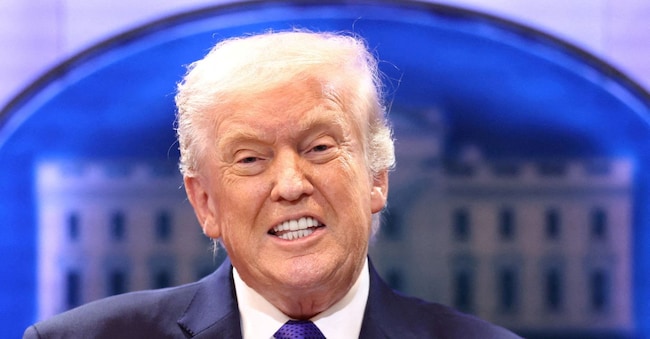
Il presidente Donald Trump durante la conferenza stampa in cui ha commentato la sentenza della Corte Suprema che ha bocciato i dazi

6' min read

Translated by AI
Versione italiana

6' min read

Translated by AI
Versione italiana

After the Supreme Court's decision blocking his tariffs, Donald Trump appears more fierce than ever. The Supreme Court 'accidentally and unwittingly gave me, as President of the United States, far more power and strength than I had before their ridiculous, stupid and internationally divisive ruling,' the US president wrote on Truth. However, Trump's reaction to the 20 February ruling blocking the tariffs announced with great fanfare on 2 April continues to be furious. In fact, the president, again via social media, issued a warning: countries 'who want to play games with the ridiculous Supreme Court decision, especially those who have been ripping us off for decades, will face much higher and worse tariffs than those agreed to recently. Beware."

What the Trump administration will now do

Trump clarifies what he intends to do now: 'As president, I do not have to go back to Congress to get tariffs approved. Such approval has already been granted, in many forms, a long time ago! It has also just been reaffirmed by the ridiculously ill-conceived Supreme Court decision!"

Loading...

US Trade Representative Jamieson Greer, today in Brussels, indicated to the G7 trade ministers that the Trump administration's intention after the US Supreme Court ruling is to maintain the framework of previous tariffs, but to link them to different legal bases. This was learnt from informed sources. "Our aim is to act quickly to avoid new uncertainties. But we also want to avoid the idea that there could be refunds for foreign exporting companies," Greer said.

A confirmation of the line comes from the White House. The US intends to continue imposing 15% tariffs on imports from the EU even after the recent Supreme Court ruling. This was said by a senior White House official, stating that the legal basis for these new global tariffs is provided by the decree signed by Donald Trump immediately after the Court ruling that declared the previously declared tariffs illegal. "This is, however, only temporary, while the administration will seek other legal authorities to apply more appropriate or pre-negotiated tariff rates," the source continued, "Until then, we expect all countries to continue to comply with trade commitments to reduce trade barriers and other concessions, commitments," he concluded, "that have not changed.

The EU Commission calls for clarity

There is a lot of confusion in these hours: the European Commission has so far not specified on which elements it has asked the US for clarification on the decision to trigger 15% tariffs in half the world for five months after the rejection by the US Supreme Court. "We are only asking for clarity from the US - a need also reiterated by Italy's vice-premier Antonio Tajani - , it is up to Washington to provide clarity and only then can we make our own assessments on what to do," indicated the spokesman in charge of trade at the Commission, who repeatedly stressed that "full clarity on the new developments in trade relations with the US is the minimum necessary so that we, as the EU, can make a lucid assessment and decide on the next steps to be taken".

One of the unanswered questions for now is whether the 15% is additional to the existing average tariffs in 2024 (before Trump's return to power). The EU spokesman then indicated that so far there have been no new talks between Brussels and Washington.

US Customs Agency suspends collection from 24 February

Only one thing is certain: the US Customs and Border Protection will suspend collection of the customs tariffs revoked by the Supreme Court last Friday, effective Tuesday, 24 February. The agency announced this in a note published on Sunday. "Tariffs imposed under the Emergency Economic Authorities Act will cease to be in effect and will not be collected as of 00:00 (5:00 Gmt) on 24 February 2026," the note reads. The US Customs Agency clarified that the suspension only applies to tariffs generated under the Emergency Economic Authorities Act and does not affect other tariffs.

The executive order only covers Ieepa tariffs and does not cover other tariffs, including those imposed under Section 232 of the Trade Expansion Act of 1962, as amended, and Section 301 of the Trade Act of 1974, as amended. The Cbp will provide further guidance to the trade community.

EU Parliament postpones vote

In the EU Parliament, trade committee chairman Bernd Lange indicated that the vote on the text on the EU-US tariffs agreement reached last summer in Scotland has been postponed. "Nobody knows what will happen and it is not clear whether there will be additional measures or how the US will really ensure compliance with the July agreement: that is why a clear majority decided to amend the text and postpone the vote on the two legislative dossiers". Hence the proposal to cancel the two votes tomorrow morning'.

Consequently, the EU Parliament also basically aligns itself with the position of the Commission, which has asked the US to clarify what it intends to do. Lange said that "we want clarity from the US, we want to see that they are sticking to the agreement. On Wednesday next week there will be another meeting to assess how developments are progressing. He went on to say that the 15% tariffs decided the other day by the US include new tariffs that are totally different from the previous ones, many products at 15% are not covered by the agreements signed with the EU.

Who wins and who loses

An analysis conducted by the independent trade monitoring body Global Trade Alert found that those benefiting from the Supreme Court's freezing of US tariffs, with Donald Trump's consequent decision to put them at 15% for all, will be Brazil in the first place, with average tariff rates falling by 13.6 percentage points, followed by China, with a reduction of 7.1 percentage points. This was reported by the Financial Times.

The hardest hit will be the US's long-standing allies, including the United Kingdom, the European Union, and Japan, as their exports are dominated by steel, aluminium, and automobiles, sectors covered by other tariffs that remain in place after Friday's ruling. The new tariffs are scheduled to go into effect tomorrow, but are only valid for 150 days before needing further authorisation by Congress.

Johannes Fritz, an economist and managing director at Gta who conducted the analysis, said that 'countries such as China, Brazil, Mexico and Canada, which have been most severely criticised by the White House and targeted with Ieepa tariffs under special executive orders, have seen their tariffs fall the most'. Asian manufacturers such as Vietnam, Thailand and Malaysia, often singled out by Trump for huge trade surpluses with the US, will benefit from the new regime. Their manufacturing base, which includes clothing, furniture, toys and plastics, will perform particularly well.

Asia in the crosshairs

US Trade Representative Jamieson Greer, however, said his office plans to launch investigations into unfair trade practices related to industrial overcapacity, which "will affect many of these countries in Asia that have overcapacity". "We are looking at unfair trade practices and issues such as rice abroad, where people are getting a lot of subsidies, and that is killing our rice farmers here," he said. Greer added that the new global tariffs will not affect Trump's upcoming meeting with Chinese President Xi Jinping. The purpose of the bilateral agreement is "to maintain stability, make sure the Chinese hold up their end of our deal and buy American agricultural products" and Boeing jets, and "send us the rare earths we need".

Tajani: we need clarity

From Brussels, Foreign Minister Antonio Tajani spoke. "At the G7 meeting on international trade we will listen to what the Americans will say. We need clarity, we need to know exactly what the proposal is, what they intend to do even with the agreement reached. Even the Supreme Court ruling is not clear, for example on the possible issue of reparations," Tajani said, reiterating that "trade wars are of no use to anyone". "We will work united, Italia's line is to work together with Europe and our partners to ensure that commitments are kept and above all our concern is to reassure all Italian companies that export," he pointed out.

Copyright reserved ©

Brand connect

Loading...

Newsletter

Notizie e approfondimenti sugli avvenimenti politici, economici e finanziari.

Iscriviti