Towards the vote

US, only 12,000 jobs created in October amid hurricanes and strikes

The figure is the latest on the state of the economy before the 5 November elections. Trump: a 'disaster'. Biden: 'The economy is strong'

3' min read

3' min read

The last economic data before next Tuesday's US vote showed the creation of only 12,000 jobs in October, the smallest increase since December 2020. The figure disappointed expectations, but felt the impact of extraordinary events, two hurricanes and strikes, particularly at aerospace giant Boeing, which temporarily paralysed activity.

The unemployment rate remained stable at 4.1 per cent . Also unchanged was the expanded underemployment rate, which includes discouraged and forced part-timers, at 7.7 per cent. The September payrolls figure, which originally reflected 254,000 new jobs, was revised to 223,000.

Loading...

On the inflation front, wages showed monthly increases of 0.4 %, slightly higher than the expected 0.3 %. On an annual basis, however, they rose by 4%, in line with expectations and the September figure.

Analysts for October had predicted the creation of about 110,000 jobs and a stable unemployment rate at 4.1 per cent, but warned of unusual volatility and unknowns. Last month, the US, especially the southeastern regions, were hit by hurricanes Helene and even more so Milton, one of the most severe in US history. The government has warned that it is not yet possible to calculate the jobs swept away by the extraordinary weather.

An agitation over the contract for Boeing engineers and technicians also saw over 30,000 employees cross arms. The Department of Labour estimated that the strike subtracted a total of 44,000 from the monthly statistics, contributing to a 46,000 payroll decline in the entire manufacturing sector last month. The strike at Boeing apopears now close to a conclusion, with an agreement between the union and the company soon to be put to a vote. A recovery of temporarily lost jobs seemed to be suggested by a recent drop in weekly claims for unemployment benefits, which had been rising.

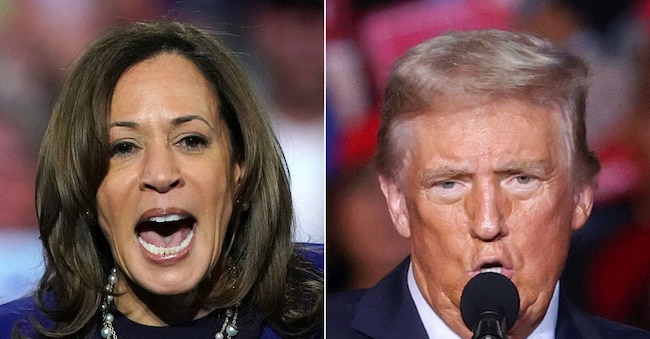
The state of the labour market, and the economy in general, is at the centre of the concerns of the electorate, which will go to the polls on Tuesday 5 November with the White House and Congress at stake. Democratic presidential candidate Kamala Harris is counting on the progress of recent years under Joe Biden's administration, and on an agenda focused on aid and incentives for the middle classes. In contrast, rival Donald Trump offers generalised tax cuts and extensive trade protectionism, denouncing inflation and claiming that Americans are worse off today than four years ago when he was president.

Trump wasted no time in brandishing the figure as a sign of crisis, ignoring the volatility in statistics caused by temporary factors pointed out by all economists: his campaign called it a 'catastrophe' that reveals 'how much Kamala Harris has destroyed the economy'. He continued: 'In a single month, she wiped out nearly 30,000 jobs in the private sector and nearly 50,000 in manufacturing'. Biden retorted that 'the economy remains strong' and predicted that 'job growth will pick up in November', thanks to hurricane rebuilding efforts. The president also cited the preliminary agreement on the Boeing contract. Jared Bernstein, chairman of the White House Committee of Economic Advisers, added that 'anyone who ignores the distortions in the data has an agenda and needs to be taken into account'.

The electoral battle, just days before the polls open, is more intense than ever amidst a head-to-head battle in the polls: more than 60 million Americans have already cast their ballots through early voting, in person or by mail where possible. That is 40 per cent of the total 2020 voter turnout, when 70 per cent of voters cast their ballots early during the pandemic.

The new jobs data will also be discussed by the Federal Reserve, which has initiated a policy of lowering interest rates, now less concerned about cost-of-living flare-ups and more committed to supporting soft landing scenarios for growth. However, no corrections in strategy are anticipated: it should, given the uncertainties surrounding the employment numbers, keep its promise to cut the cost of money by 25 basis points at the end of the upcoming summit, which will slip one day from its usual dates, to next Wednesday and Thursday, precisely because of the elections. Rates are currently at 4.75%-5% after a 50 basis point braying at the 17 and 18 September meeting.

Copyright reserved ©
Loading...

Brand connect

Loading...

Newsletter

Notizie e approfondimenti sugli avvenimenti politici, economici e finanziari.

Iscriviti