
US, Congress approves plan to avoid shutdown in extremis
A large bipartisan majority passes a simplified bill that funds the government until March. Trump fails to raise debt ceiling

4' min read
4' min read
The US Congress approved in extremis and with a large bipartisan majority a bill to avert the shutdown of the federal government, which would otherwise have been triggered at midnight local time. First the House took a vote: the vote, on a simplified and compromise package, was 366 to 34, supported by a broad consensus of Republicans and Democrats. A majority of at least two thirds, 288 votes, was needed among the deputies to overcome procedural hurdles, which was more. A final and in turn positive vote then came shortly before 1 a.m. from the Senate, sending the text without delay to the outgoing White House of Joe Biden for certain signature. The senators unanimously decided to cut the debate short in order to speed up the passage of the measure received by the House as much as possible.
The budget agreement, on a single document repeatedly redrafted in the House in a race against time, first of all contains an extension of funding for ministries and government agencies at existing levels until 14 March. It also provides for 110 billion in relief for victims of natural disasters and ten billion for farmers. It also reauthorises for one year the so-called Farm Bill, the traditional legislation on agricultural policies and rural America that is an important instrument of social intervention and anti-poverty (it manages food stamps, food vouchers for the poor).
Instead, the compromise does not contain any immediate action to cut spending and suspend or raise the federal debt ceiling, which President-elect Donald Trump and his influential ally Elon Musk have been calling for from the outset. A partial defeat, at least temporarily, for the President-elect, who had to deal with difficult balances in Parliament and divisions within the Republican ranks themselves. Challenges that could also remain in the new legislature, where the Republicans will be in the majority but only by a few seats in both the House and the Senate.
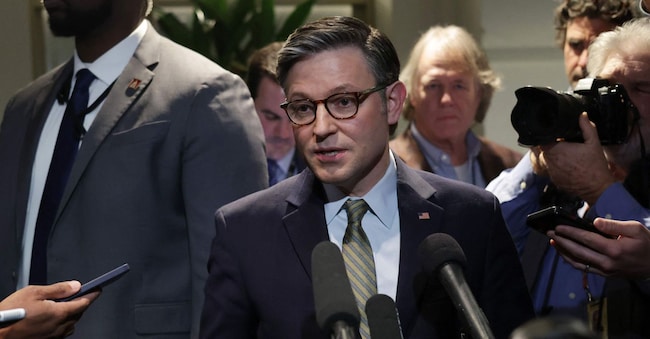
Musk, among the most aggressive voices against budget compromises with the Democrats, had expressed scepticism just minutes before the vote, criticising House Republican Speaker Mike Johnson's efforts to negotiate with Democrats to secure passage of the budget as treasonous. "Is this a Republican or a Democrat bill?" he had asked rhetorically on his X platform, alternating between ultra-judgmental comments on US domestic politics and aggressive international policy outbursts, such as supporting the German far-right as the only one who can 'save' Germany. In the end, however, he congratulated Speaker Johnson on a measure that he described as streamlined.
A shutdown, from the weekend in the absence of agreements on extensions of the expiring budget funds, threatened consequences that were not easy to calculate exactly but were certain: Goldman Sachs had estimated them at a reduction in GDP growth of 0.15% for each week of the crisis. Hundreds of thousands of civil servants - out of a total of almost two million - would be temporarily without pay and activities deemed non-essential slowed down or stopped, affecting sectors from tourism to infrastructure. It also called into question the credibility and seriousness of the US government. The longer the freeze lasted, moreover, the more the risks could increase, up to and including recession and shocks to financial market confidence.


