
US: Boeing's plea bargain on 737 Max accidents rejected
The airline giant had agreed to plead guilty to fraud following the two fatal 737 Max crashes (346 fatalities) by paying a $243.6 million fine
2' min read
2' min read
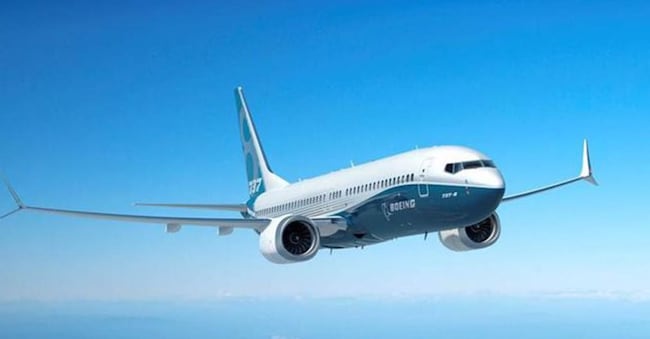
A US federal judge has rejected last July's agreement between Boeing and the US Justice Department in which the airline giant agreed to plead guilty to fraud following the two fatal 737 Max crashes (346 fatalities) and pay a $243.6 million fine for violating a 2021 court settlement. Boeing and the Justice Department now have 30 days to update the court on how they intend to proceed in the case, Judge Reed C. O'Connor of the Northern District Court of Texas ruled.
Paul Cassell, an attorney for the families of the passengers who died in the crashes, called the ruling an important victory for the rights of crime victims. "It is no longer possible for federal prosecutors and defence attorneys to work out backroom deals and expect judges to approve them," Cassell said. "Justice O'Connor recognised that this was a win-win deal between Boeing and the government, which did not focus on the main concerns: holding Boeing accountable for its deadly crime and ensuring that nothing like it happens again in the future."
The Story
The 737 Max began commercial passenger service in 2017. But already in the following year, trouble started. A Max 8 plane crashed in Indonesia, in the Java Sea, on 29 October 2018. A tragedy with 189 deaths from the Lion Air company's flight. A few months later another tragedy in Ethiopia with the same type of plane, a crash with 157 fatalities on 11 March 2019.
Both accidents happened shortly after the jets took off. Immediately after the Ethiopian Airlines disaster several countries, first China then others including Italy, decided to ground all 737 Max flights due to fears over the safety of the aircraft.
The cause of accidents
.According to the investigation, the cause of the two accidents with 346 fatalities was a defect in an innovative automatic piloting software, for which the pilots of Lion Air and Ethiopian Airlines had not received adequate training. At fault was a flight control function called the Manoeuvre Characteristic Augmentation System (Mcas). Subsequent analysis led many analysts to assert that Boeing had been in a hurry to develop a more modern model of the 737 because it was losing market share due to the success of the competing A320neo aircraft made by the more fuel-efficient European manufacturer Airbus.

