
US sanctions on Thierry Breton, European anger. Macron: intimidation. Brussels: we can respond
Washington imposes entry bans on the former EU Commissioner for the Internal Market and Services and four other Europeans, accused of promoting 'extraterritorial censorship' against American companies and platforms
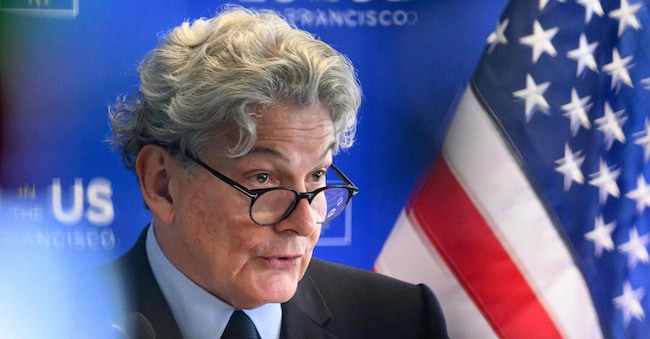
Washington's decision to impose entry restrictions in the United States on Thierry Breton, former European Commissioner for the Internal Market and Services, and four other Europeans has ignited a fierce political clash over the Digital Services Act (DSA) and the borderline between rules and censorship.
For the United States, US Secretary of State Marco Rubio claimed action against five people accused of 'coercing' American platforms to censor or 'demonetise' US opinions, calling them 'radical activists' and promising ahard line against what he calls extraterritorial censorship.
Also from Washington, the US Under Secretary of State for Public Diplomacy Sarah Rogers defended the measure on X, arguing that the entry bans hit an 'ecosystem' of NGOs prone to censorship.
On the European side, the Commission 'strongly condemned' the restrictions, sought clarification from the US and warned that, "if necessary", the European Union (EU) can "respond quickly and decisively" to defend its regulatory autonomy.
Stéphane Séjourné, Executive Vice-President of the European Commission, expressed 'total solidarity' with Breton, arguing that 'no sanction' can 'silence' the sovereignty of the European peoples.

