
Use of weapons in Russia, Italians against but Pd and Fi divided. Here are the countries in favour
Non-binding resolution on EU support for Ukraine passed
by Redazione Roma
 Aggiungi Il Sole 24 Ore
ai preferiti su Google
4' min read
Key points
4' min read
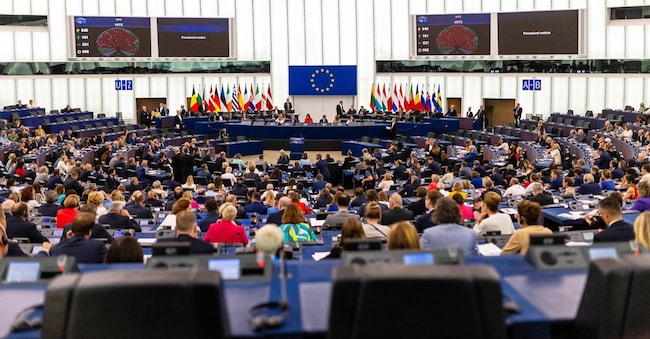
The European Parliament approved Ukraine's use of weapons supplied by Western countries on Russian territory. But the European Parliament's non-binding resolution on EU support for Ukraine, with a controversial paragraph calling for the lifting of restrictions on the use of weapons sent to Kiev, allowing Ukrainians to strike legitimate military targets on Russian territory, confirmed the divisions that run through both the governing majority and the opposition. Italian MEPs essentially voted against the EU Parliament resolution that "calls on member states to immediately lift restrictions on the use of Western weapons delivered to Ukraine against legitimate military targets on Russian territory".
Ukraine divides the field wide
.On military support for Ukraine, however, the PD voted together with Forza Italia and Fratelli d'Italia, while the M5s and Alleanza Verdi Left voted together with the Lega. In short, the majority in Europe went in no particular order. The broad camp also split. And, within the broad camp, the PD divided, with defections of the Dem MEPs especially on a specific point of the resolution, that on the possibility of Ukraine using weapons received from European countries on Russian territory.
Divisions in the Pd
In the PD, the nerves of both the areas that judge the party too interventionist in Ukraine and those that judge it too lukewarm have come out into the open. The former are represented in Europe by MEPs Cecilia Strada and Marco Tarquinio, who have always been against sending arms: going against the group's indications, they abstained in the final vote on military support to Kiev. The rest of the Dem team, however, was fairly united: 17 yes out of 21, with two absent. More painful was the specific point on the use of western weapons against Russia in Russia. PD secretary Elly Schlein is against it and in fact the group had indicated that it would vote 'no', despite the fact that the European Socialist family was in favour. The outcome of the ballot box showed a patchwork Pd: two 'rebels' voted in favour, Elisabetta Gualmini and Pina Picierno, and 6 MEPs did not take part in the vote. Among them was also the party president, Stefano Bonaccini, leader of the internal minority, Energia Popolare. All the others followed the party's instructions and voted against (they do not appear in the official counts, but the Dems include both Tarquino and Lucia Annunziata among those against). In the end, the abacus returned the image of a troubled vote: 11 against, two in favour, 8 not voting (including the two absentees, among them Giorgio Gori, who then said yes on social media).
For the M5s, however, 'the resolution on Ukraine voted by the European Parliament is an invitation to war'. Also for the leaders of the Green-Left Alliance, Angelo Bonelli and Nicola Fratoianni, 'since the beginning of the criminal invasion of Ukraine by Russia, the strategy based only on sending weapons has progressively erased any prospect of peace and put aside diplomacy as an instrument to resolve the conflict'.
Russia's pro-weapons countries
.On the issue of the use of Western weapons on Russian soil by the Ukrainian armed forces, Europe was divided. In general it can be said that the majority of European countries have not placed any restrictions on the equipment supplied to Kiev. This includes Finland, Sweden, Baltic countries, Poland, Czech Republic, Denmark, Holland and most probably Romania as well.

