
End-of-life tyres, Italy on the way to 100% collection
The new target in the revision of the decree governing the disposal of around 420,000 tonnes each year

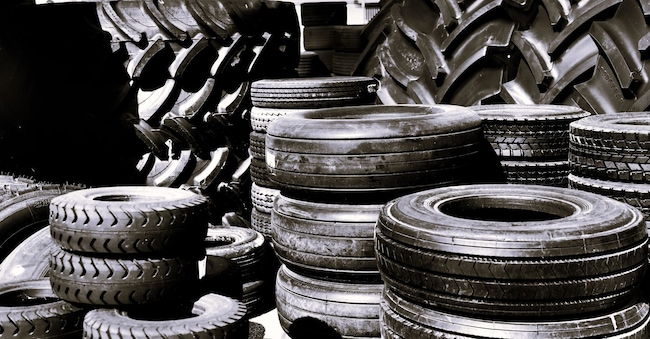
End-of-life tyres: Italy is moving towards 100 per cent collection, currently set at 95 per cent, and a minimum material recovery target of 45 per cent. The novelties are contained in the update of Decree 182 of 19 November 2019, which regulates the extended producer responsibility (EPR) for the reference chain. The public consultation was opened in mid-January by the Ministry of the Environment and will close on 12 February, with an expected entry into force on 1 January 2027 at the earliest.
L’evoluzione
"The extended producer responsibility system, which governs the disposal of tyres, was officially born in 2011, then updated by Decree 182 of 2019, and is now being revised because room for improvement has emerged," explains Giuseppina Carnimeo, general manager of Ecopneus, the consortium that manages the end-of-life chain.
"The desire,' he adds, 'is to strengthen the efficiency of the system and bring it into line with the guiding principles of the EPR schemes of territorial capillarity and continuity of service. Today by law we must collect 95% of the weight of tyres put on the market in the previous year by our members. The increase to 100 per cent is positive. Also interesting is the material recovery target with a minimum quota of 45 per cent of what is collected, while the rest goes into energy recovery as an alternative fuel, for example in cement factories".
The numbers
Every year in Italy about 420,000 tonnes of tyres reach the end of their life cycle and are replaced by cars, motorbikes, trucks, industrial and agricultural vehicles. A constant quantity in recent years.
On a national level, Ecopneus coordinates the collection, transport, treatment and valorisation of over 180 thousand tonnes. In 2025 it fulfilled about 52 thousand collection requests at the more than 20 thousand generation points served. And it already achieves an average of 50 per cent material recovery. The direct economic value of its supply chain has been calculated at 41 million per year, while the indirect value - which includes the benefits of recycled material instead of virgin material - comes to 75 million.


