
Utilitalia: 'Agri-voltaics costs too much. Renewable targets at risk'
Industry players protest after stop to the installation of ground-mounted photovoltaic panels in agricultural areas

2' min read
2' min read
The day after the approval of the Emergency Decree on the agri-food sector, which introduced a stop to the installation of ground-mounted photovoltaic panels in agricultural areas, the negative reactions of many operators in the sector are flowing in. Utilitalia, the association of all the country's utilities (to understand the publicly-owned companies that supply electricity to cities and the country) also took the field to express its opposition to the measure, the text of which was announced but has not yet been made available.
Director General Colarullo: the decree is bad for Italy
"We believe that the Dl Agricoltura, with its ban on agri-voltaics on the ground, is bad for Italy. No one wants a wild conversion of farmland, but reasoning should be done on the agricultural areas that are no longer in production, which could be convenient to convert to photovoltaics. Instead, a generalised ban does not allow economic evaluations, it does not have the necessary flexibility'. Utilitalia director general Giordano Colarullo said. "We are still waiting for the decree on eligible areas for renewables, and with this measure potential areas for development are being reduced."
The association: we contest the blanket ban
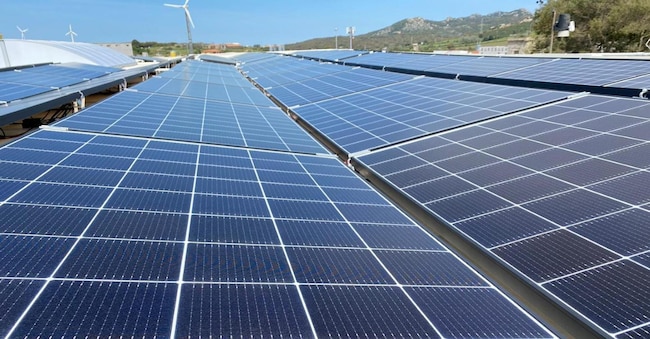
The decree law approved yesterday in the Council of Ministers allows the installation of panels on land for agricultural use as long as they are raised at least two metres above the ground to allow crops to be grown underneath. It remains to be understood, then, what the scope of the exemption will be for photovoltaic plants for which authorisations are pending. Depending on how the bar is set, either all 300 gigawatts of photovoltaic plants for which connection to Terna has been requested can be included, or practically all of them can be excluded.
"We will see how many they will put in, since they are more expensive than those on the ground," he added. "We think that fewer will be installed, and this will jeopardise the Pniec's (the National Energy Plan, ed.) renewables targets. We do not question the government's objective of protecting agriculture, but we do question the path chosen, a generalised ban with no flexibility to make economic assessments. If the government wanted to defend the agricultural use of land, it could have thought of incentives for those farmers who want to convert their land to photovoltaics because it is not very profitable'.


