Ecomondo 2026

Utilities: 9.9 billion invested in Italia in 2025 (+16.5 per cent)

Figures from the 2026 Sustainability Report compiled by Fondazione Utilitatis for Utilitalia. The sectors receiving the most funding: water and the energy transition (including decarbonisation, the circular economy and digitalisation)

3' min read

Translated by AI
Versione italiana

3' min read

Translated by AI
Versione italiana

In 2025, utility companies made investments totalling 9.9 billion euros, compared with 8.5 billion the previous year: an increase of 16.5 per cent, whilst in 2025 the increase had been 15 per cent. This commitment is set to continue in the coming years: for the three-year period 2026–2028, the companies have planned a further €29.7 billion in investment.

These are some of the figures that emerge from the 2026 Sustainability Report, “The Value of Utilities for the Country’s Transition”, compiled by the Utilitatis Foundation for Utilitalia based on a sample of over 115 member companies and presented at Ecomondo in Rimini.

Loading...

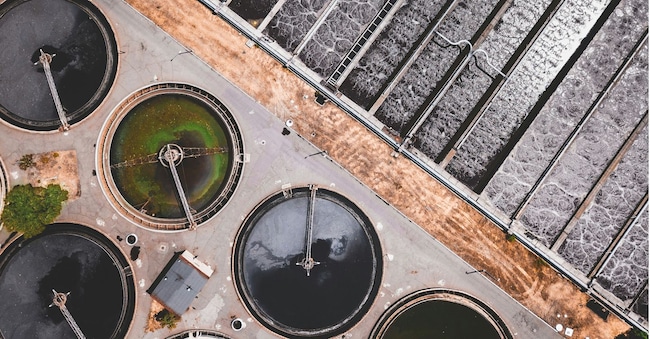
The two main areas on which the utilities have focused their financial resources are water services and the energy transition. In the water sector, investment totalled 4.4 billion euros, allocated to network renewal, reducing water losses, ensuring security of supply and improving wastewater treatment systems. Today, 59 per cent of the water network is organised into districts and remotely controlled, whilst 92 per cent of sewage sludge is reused or recovered, according to the report.

Utilities are allocating over 3.4 billion euros to three key areas of the transition: 1.6 billion to decarbonisation (compared with 1.3 billion in 2024), €1 billion to the circular economy (in line with 2024), and €822 million to digitalisation, up from €780 million the previous year.

Among the results already achieved through efforts in this direction is the reduction in emissions: an analysis carried out on a representative sample of companies shows, compared with 2019, an 18 per cent reduction in direct greenhouse gas emissions and a 17 per cent reduction in indirect emissions associated with purchased energy. 84 per cent of the electricity generated by the utilities in the sample comes from renewable sources. On the environmental front, 97 per cent of the sorted municipal waste collected is sent for recycling, 

Over the coming years, of the €29.7 billion in investment planned between 2026 and 2028, 39 per cent relates to water services, 12 per cent to energy generation, 11 per cent to energy networks and 10 per cent to environmental services.

“The implementation of these programmes,” explains Luca Dal Fabbro, President of Utilitalia, “requires regulatory stability, appropriate authorisation procedures and coordination between businesses, institutions and local authorities. The investments made and planned for the coming years by utility companies demonstrate just how strategic the sector is for the ecological and digital transition and for the country’s competitiveness. This represents a concrete industrial commitment to modernising infrastructure, strengthening security of supply and improving services for citizens.”

According to Dal Fabbro, ‘the authorisation processes in Italia for photovoltaic projects take between 3 and 5 years – twice as long as in France, Germany and Spain: if there were fast-track procedures, significant potential could be unlocked quickly’. As for the circular economy, however, “Italia remains a leader in Europe, one of the most exemplary countries, thanks in part to massive investment by utilities,” confirms Dal Fabbro. “The plastics crisis is linked to massive dumping from abroad, particularly from China, whose virgin plastic competes with recycled plastic. But this is a market issue, not an investment one, and as such it must be resolved. And we hope that the forthcoming European Circular Economy Act will help.”

On the subject of water, the president of Utilitalia emphasises that the sector remains strategic: ‘Compared to 10 years ago, we are losing far less water; we have made progress and must continue to do so. In the Centre-North, however, expenditure stands at 90–100 euros per inhabitant, compared with 15–20 in the Centre-South: this is a gap in investment and in the capacity to implement projects, linked above all to in-house management. We need to bridge this gap and enable the South to make major investments.”

The report also highlights the contribution made by utilities to the creation of economic and social value: the value generated in 2025 amounted to 43.5 billion euros, comprising 26 billion euros spent on the purchase of goods and services from suppliers, 54 per cent of which went to local businesses. And the number of new hires exceeded 8,000. According to Mario Rosario Mazzola, President of the Utilitatis Foundation, “the report shows how the utilities’ contribution to sustainability goes beyond investment and environmental performance, also encompassing the creation of economic value, the quality of employment and the development of people”.

Copyright reserved ©
Loading...
Loading...

Brand connect

Loading...

Newsletter

Notizie e approfondimenti sugli avvenimenti politici, economici e finanziari.

Iscriviti