
Valditara: ‘Already 47,000 healthcare services provided to school staff; we are working to reverse the cuts in the budget’
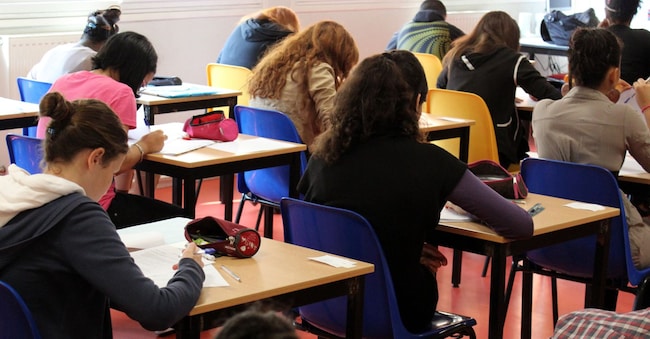
The minister pointed out that in 2024, Italian classes had an average of 18 pupils in primary school and 20 in lower secondary school, compared with the OECD average of 21 and 23 pupils respectively.

Key points
“In just a few days, over 47,000 healthcare services have already been provided to school staff – services that are free of charge thanks to free health insurance.” This was stated by the Minister for Education and Merit, Giuseppe Valditara, during Question Time in the Chamber of Deputies, whilst also reiterating the commitment, during the approval of the 2027 Budget Bill, to reverse the cut of 7,000 posts in the sector provided for in the budget.
Pupil-to-teacher ratio
The Minister for Education pointed out that, in Italia, the pupil-teacher ratio is below the EU and OECD averages at all levels of education. In 2024, Italian classes had an average of 18 pupils in primary school and 20 in lower secondary school, compared with the OECD averages of 21 and 23 pupils. According to Invalsi data, in the 2025/2026 academic year, the average number of pupils per class was 17.6 in primary school, 19.3 in lower secondary school and 19.6 in upper secondary school.
Around 206,000 people hired
“This Government,” continued Valditara, “has recruited around 206,000 staff members: given that a further 40,000 or so teaching posts are already estimated to be filled for the next academic year, the number of teachers recruited during this parliamentary term will be well over 20,000 more than in the previous one. We have also saved thousands of eligible candidates from past competitive examinations who had been abandoned by the previous government.”
School drop-out rates on the decline
Valditara also took the opportunity to take stock of the work carried out during this parliamentary term, starting with the significant reduction in school drop-out rates. ‘According to Invalsi, we are set to reach a school drop-out rate of 7.3 per cent by 2026, exceeding the 9 per cent target set for 2030. This, again according to Invalsi’s calculations, has meant that 520,000 pupils who had previously stopped attending school have been brought back into education. This is a figure of which all Italians should be proud. Furthermore, we have reduced the proportion of pupils with inadequate skills in Italian, maths and English at the end of their 13 years of schooling to 6.3 per cent.”
What we’ve learnt
And again according to the OECD PISA data, published in September, as Valditara noted, ‘Italia, for the first time, has overtaken Finland in reading – a country that has long been regarded as the undisputed leader in global education – and ranks significantly above the OECD average, including in mathematics and science. In maths, we are well ahead of France, Sweden, Germany and the United States. And in science, we are, alongside the United Kingdom, Turkey and Belgium, one of the very few countries to have improved our performance compared with 2022’.
Brand connect


Newsletter Scuola+
La newsletter premium dedicata al mondo della scuola con approfondimenti normativi, analisi e guide operative
Abbonati