
Valditara: compulsory Italian for parents of foreign pupils sparks row with the Flc-Cgil
The Minister: “What is learnt at school must not be lost at home; it is essential that parents know our language and interact with teachers.” According to Valditara of the Flc-Cgil, “making Italian lessons compulsory for the parents of foreign pupils ‘who are not doing well at school’ is not integration: it is a penalty imposed by decree”

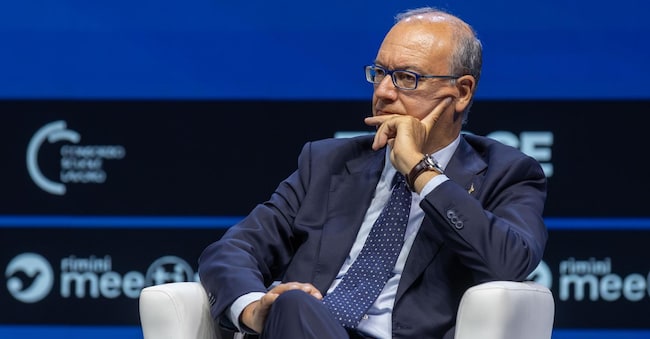
Making the study of Italian compulsory for the parents of foreign pupils, particularly those who are struggling at school. The proposal came from the Minister for Education, Giuseppe Valditara, who spoke at the conference ‘The Courage to Educate: Rebuilding the Alliance between School and Family’ at the Rimini Meeting. “I will propose making the study of Italian compulsory for parents whose children are not doing well at school: what is learnt at school must not be lost at home; it is essential that a parent knows our language and interacts with teachers; there are too many parents of foreign pupils who do not show up at school, whilst this too is important”, said the head of the ministry in Viale Trastevere, who added that “inclusion is not enough: we must move towards a model of integration based on our founding values, involving foreign nationals; without this ability to involve them, we are unlikely to achieve a balanced, cohesive and respectful society that can guarantee a future of well-being for its citizens”. The minister also touched on the issue of the distribution of foreign pupils: “In the America of racial segregation, there were schools for whites and blacks”, but segregated schools risk becoming “those where there is a significant concentration of foreign pupils; we must strive for a balanced distribution. “It is essential that there is not an extremely high proportion of foreign pupils in any one class, as this leads to difficulties in learning the language and the values of the community: in short, a balanced distribution is key,” concluded Valditara.
The FLC-CGIL puts up a barrier
The FLC CGIL does not share this view; in its opinion, the minister’s words “confirm a short-sighted view of schools and integration processes. Making Italian lessons compulsory for the parents of foreign pupils ‘who are not doing well at school’ is not integration: it is a penalty imposed by decree, with a mechanism that risks producing exactly the opposite effect to that intended”. Valditara, for his part, said he felt concerned “when I learn that the dropout rate for foreign pupils is 26 per cent and for Italian pupils 6 per cent” or when, within the same classes, there are pupils with one year’s extra schooling and others with one year’s less, ‘we must address this not just with words or demagoguery, but with concrete action’. To this end, he claimed to have planned the recruitment of 1,000 teachers for newly arrived pupils and an allocation of 13 million to strengthen Italian language provision. The minister also returned to the issue of informed consent: “It is a vision of freedom; it means giving families the chance to choose on ethically sensitive issues such as how their child should be brought up. I have seen books aimed at 6- and 7-year-olds that made my blood run cold; they state that gender identity is not a biological fact but merely a cultural one. I have received insults and threats, but we must have the courage to make such choices – enough of this brainwashing,” he concluded.

Brand connect


Newsletter Scuola+
La newsletter premium dedicata al mondo della scuola con approfondimenti normativi, analisi e guide operative
Abbonati