Van Gogh: records and guarantees take centre stage at Sotheby’s
Sold for 190.4 million, it was part of the Blaquier-Arrieta collection, which was sold for 412 million dollars

Key points
On the evening of 18 November at Sotheby’s, the general catalogue of modern art was preceded by the catalogue dedicated to the 12 lots in the Blaquier-Arrieta collection, a controversial Argentine ‘sugar baron’ family, focusing on Impressionist and Post-Impressionist works often acquired in the 1970s and 1980s and, therefore, long absent from the market. The collection realised $412 million, below expectations, whilst the general catalogue of 47 lots brought in $366 million.
The role of guarantees
The Blaquier-Arrieta collection was guaranteed by the auction house and, subsequently, all lots secured a third-party guarantor, meaning that, in effect, there was at least one buyer even before the auction began. Guarantees played a crucial role in half of the lots and, despite the guarantees, seven works failed to reach their low estimates before commission was added; in five cases, it would appear that the works were sold without any real bidding. The auction lasted just 35 minutes, as there were only two brief bidding battles over ‘minor’ works; the rest was a long wait for bids that never materialised.
This outcome is typical of the indiscriminate use of guarantees, which encourage auction houses to set excessive estimates with no real scope for bidding; in this instance, several guarantors even stopped well below the low estimates, in two cases at half the estimate. All this is to the detriment of the genuine auction mechanism, which is tainted by collateral financial arrangements.
Van Gogh record
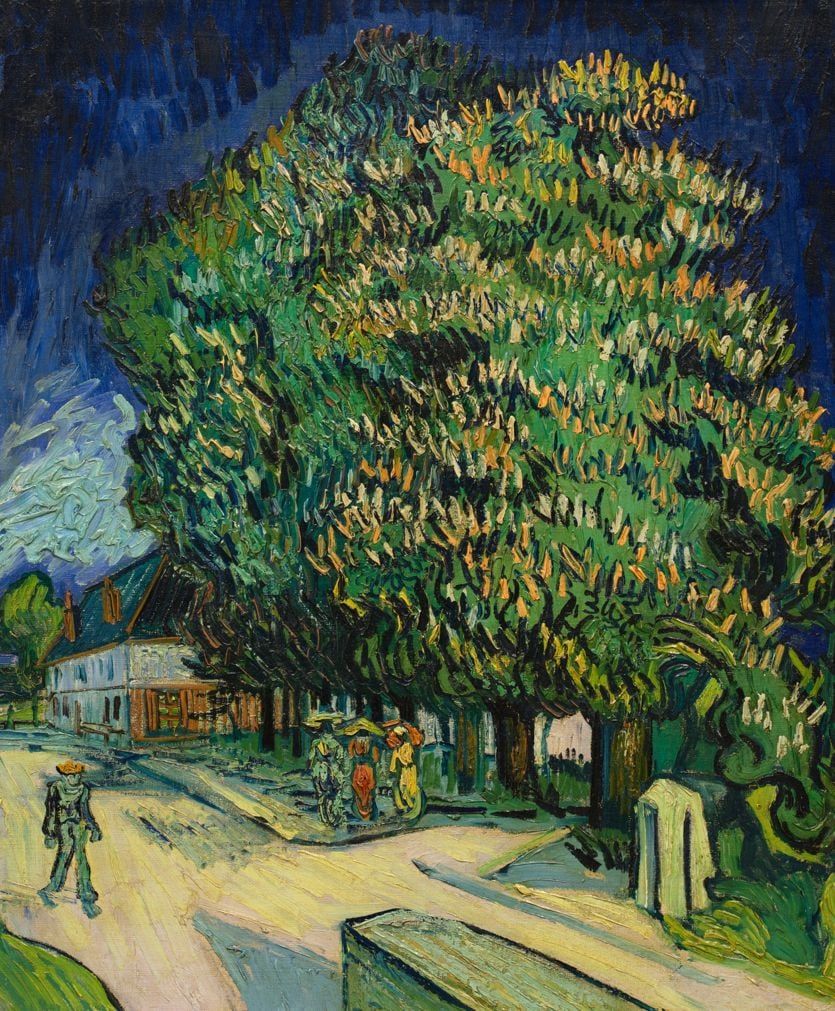
A staggering 190 million is attributable to the new record set for a painting by Vincent Van Gogh, ‘Chataigniers en fleurs’, painted on 24 May 1890 in Auvers-sur-Oise, shortly before his suicide. The medium-sized canvas (70 x 58 cm) depicts a large, lush chestnut tree in bloom dominating the urban landscape beneath a dark blue sky, with brushstrokes immediately recognisable as characteristic of the artist’s style in his final years.
It lacks, however, the expressive power of the portraits from the same period, such as that of Dr Gachet, which, at $82.5 million, held the record from 1990 to 2022 and which, when adjusted for current dollar values, remains the record price. ‘Chataigniers en fleurs’ came to auction after a 62-year absence from public view, with an on-request and guaranteed estimate of around $180 million, and was therefore set to surpass the nominal record of $117 million set in 2022 for an 1888 landscape from the Paul Allen collection. Bids in increments of 5 million quickly pushed the price up to 165 million dollars, apparently between two bidders, with 25.4 million in commission bringing the final price to 190.4 million dollars.
The sale of this work was in doubt right up to the last moment, due to a claim by the heirs of the German family of Jewish origin Fischer, who owned it until 1936, when it was sold at market price by a Dutch gallery to which it had been consigned in 1932–33. The family was subsequently persecuted by the Nazis and, in 1938, stripped of many works of art, which were later rightfully claimed and recovered. Nevertheless, thanks to recent changes in US legislation on the matter, the distant heirs were able to launch a last-minute legal challenge, arguing that this painting too should be considered part of the forced sales, despite the fact that the family had long been aware of its existence and the previous generation had never attempted to recover it, for obvious reasons. This last-minute claim therefore represents a clear strategy to cause as much damage as possible and force the seller into a settlement, which is precisely what happened, with private agreements the details of which remain unknown.
Auction houses, therefore, are on the one hand major beneficiaries of restitution claims (often at the expense of museums and public collections), but on occasion they fall victim to them when such cases create uncertainty regarding the legitimacy of ownership – even if the claims are belated and specious, and need not necessarily be true to achieve their intended effect.
Cézanne and the Post-Impressionists
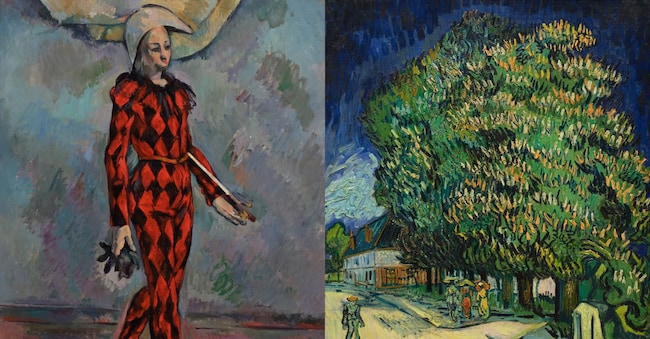
A second work from the collection exceeded the 100 million threshold, although it did not set a new record for Cézanne, with a vertical canvas measuring almost one metre, dating from 1888–90, depicting a Harlequin in a black-and-red chequered costume, a motif featured in four of his works, all of which are held in major museums except for the one at auction; this subject would later be taken up by other great artists such as Picasso. The work came to auction with a guarantee, with an on-request estimate of around 120 million dollars, but sold for (presumably at the guarantor’s level?) at 99 million dollars, which, thanks to 12 million in commission (it would have been higher had there not been the ‘discount’ on the guarantee fee), results in a final price of 111 million dollars.
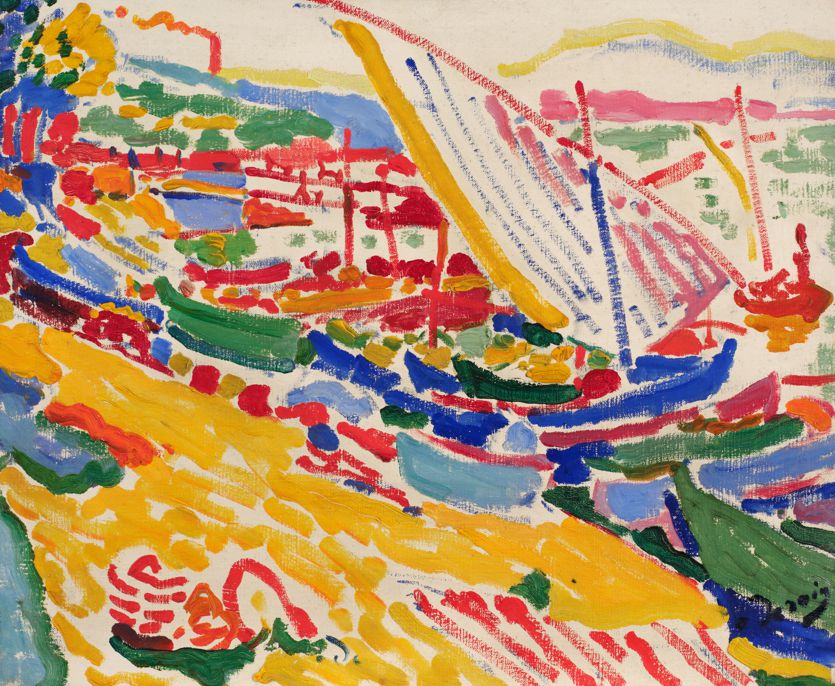
Three further Post-Impressionist paintings, all from the early 20th century, were sold within the estimate: a still life by Gauguin from 1901, which sold for 5 million (6.1 million including commissions), half the estimate of 10–15 million dollars, and two Fauvist works: another still life by Maurice de Vlaminck from 1906, which sold for 2.5 million including commissions, within the estimate of 2–3 million dollars, and a vibrant view of boats at Collioure painted in 1905 by Derain, which sold for 4 million, half the estimate of 8–12 million, equivalent to 5 million dollars including commissions.