
Vans: Italia lags behind the rest of Europe, down 4.7 per cent in the first half of the year
The domestic market is feeling the impact of the ‘wait-and-see’ effect caused by the incentives, which were booked at the end of July and snapped up within a few hours

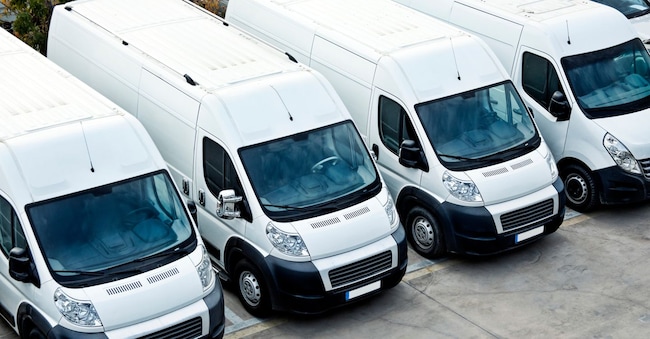
The Italian van market is bucking the European trend and, in the first half of the year, recorded a 4.7 per cent fall in registrations, compared with the 1.7 per cent growth recorded across the region as a whole. This may well be due to the ‘wait-and-see’ effect caused by the incentives, which were then actually awarded in a single day at the end of July.
With around 94,000 registrations of light commercial vehicles from January to June, Italia accounts for 10 per cent of the European van market and ranks as the fifth-largest market on the continent in terms of size. On the domestic market, the medium and heavy goods vehicle sector fared better, performing in line with the European average. In Europe (the EU plus EFTA and the UK), in the first half of the year (according to ANFIA figures), the light commercial vehicle market stood at around 928,000 units, up 1.7 per cent compared with 2025, alongside lorries – with a gross vehicle weight (GVW) exceeding 3,500 kg – which increased by 9.3 per cent, and heavy goods vehicles (GVW exceeding 16,000 kg), which saw an 8.6 per cent increase year-on-year.
In this context, Italia is one of the major European markets in the light commercial vehicle sector to have recorded a 4.7 per cent fall in registrations, alongside France – the leading European market, down 2.1 per cent in the first half of the year – and Germany, down 4.6 per cent. Sales of medium-to-heavy goods vehicles fared better in Italia, up 3.9 per cent in the first half of the year, as did sales of vehicles weighing over 16,000 kilograms, which rose by 5.6 per cent.
The commercial vehicle sector – particularly light commercial vehicles – for which the transition is even more complicated than for passenger cars, with, on the one hand, an electric vehicle market stuck at low market shares, and, on the other, the looming threat of the revision of the EU Decarbonisation Regulation, which places vans on the same footing as passenger cars.
However, the fact that the incentives on the Italian market – 16 million for electric vehicles, 24 million for new registrations regardless of power source – were snapped up in less than an hour speaks volumes about operators’ interest in low-impact powertrains, given the availability of financial support, and, more generally, about the drive to renew the fleet.


