Middle East

US-Iran negotiations fail: no nuclear deal and tensions in the Strait of Hormuz

After US Vice-President Vance's withdrawal from Islamabad, talks with Tehran break down with no commitments on nuclear disarmament, while tensions in the region rise again

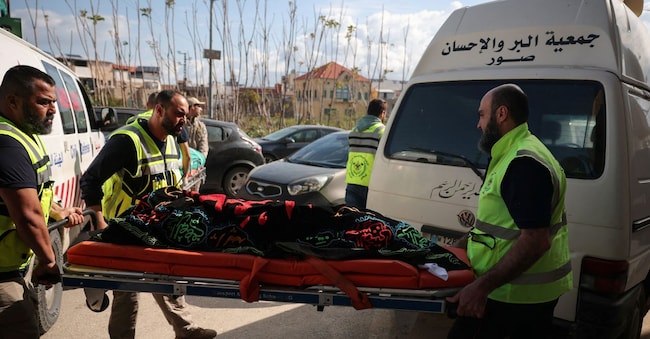
I membri della protezione civile trasportano il corpo di Taleen, di un anno e mezzo, rimasta uccisa in un attacco israeliano nel villaggio di Srifa insieme ad altri tre membri della sua famiglia, il giorno del funerale presso la moschea di Al Kharab a Tiro, in Libano, il 12 aprile 2026. REUTERS Reuters

3' min read

Translated by AI
Versione italiana

3' min read

Translated by AI
Versione italiana

The announcement by the US Vice-President and head of delegation to the talks, J. D. Vance, came from Islamabad in the middle of the night and rekindled concerns in chancelleries around the world: "The United States has not reached an agreement with Iran".

According to the US vice-president, who has already departed Pakistan for the US, 'there is no promise on Iran's part to permanently abandon the nuclear weapon'.

Loading...

Tehran: "Diplomacy never ends"

According to Tehran, 'the negotiations failed due to unreasonable US demands'. But, regime sources add,"no one expected an agreement in the first round of negotiations". The Iranian line is that 'diplomacy never ends' and that consultations will continue after the failure to reach an agreement with the US in the first round of negotiations in Pakistan. According to the Irna news agency, when asked if diplomacy was over, Esmail Baghaei, Iran's Foreign Ministry spokesman, responded by saying that"diplomacy never ends". "The diplomatic apparatus is a tool to guarantee, protect and preserve national interests," Baghaei told Iranian media, adding that "consultations between Iran, Pakistan and friendly and neighbouring countries will continue."

After the deadlock in the talks with the United States, the Iranian delegation led by the Speaker of Parliament, Mohammad Bagher Ghalibaf, also left Islamabad for Tehran Iranian media reported.

Vance's words

'We have been quite flexible, but we have not been able to make progress,' US Vice President J.D. Vance said at the end of the talks. The online version of Al Jazeera reported this. 'We were not able to reach a situation where the Iranians were willing to accept our terms. I think we were quite flexible, we were quite accommodating,' he concluded.

Pakistan, the country that had facilitated the mediation and obtained a two-week cease-fire, asks Washington and Tehran to respect the cease-fire anyway.

According to initial reconstructions, Hormuz, Lebanon, nuclear power, sanctions, frozen assets and war reparations were the main obstacles preventing an agreement. A stalemate that at the moment registers no official reaction from President Trump, who has limited himself to posting on Truth a link to an article entitled "The trump card the president holds if Iran won't give in: a naval blockade", which recalls how a naval blockade was used to weaken Venezuela before its president, Nicolás Maduro, was captured by US troops during a lightning military operation.

Dall'Iran alla Cina, tutti gli autogol di Donald J. Trump

Two oil tankers arrived in the Strait of Hormuz turn back

Two empty supertankers attempted to cross the Strait of Hormuz and reach the Persian Gulf, but turned back at the last minute. According to ship tracking data, Pakistani broadcaster Ndtv reports, a trio of large tankers, all without direct connections to Iran, began approaching the Strait from the Gulf of Oman late in the evening, arriving near the Iranian island of Larak in the early hours of today, Sunday 12 April. At this checkpoint, the Agios Fanourios I, bound for Iraq, and the Pakistan-flagged Shalamar, bound for the island of Das in the United Arab Emirates, turned around. A third vessel, the Mombasa B, sailed further on and headed between the islands of Larak and Qeshm, an Iranian-approved route to the Persian Gulf. At the moment it has not indicated a specific destination. The specific reasons behind the sudden changes of course - and the third, successful passage - are unclear, as both Iraq and Pakistan had previously received permission from Iran to cross the Strait. But their reconsideration came just as US and Iranian negotiators in Islamabad announced that they had failed to reach an agreement.

Meanwhile, two US warships were in the Strait of Hormuz last night, but Iran denied the US. The Pasdaran: 'We will act severely with military ships transiting Hormuz.

Copyright reserved ©

Brand connect

Loading...

Newsletter

Notizie e approfondimenti sugli avvenimenti politici, economici e finanziari.

Iscriviti