Airlines

Váradi (Wizz Air): ‘We are not a fragile airline; we have cash reserves and new aircraft’

The CEO is banking on demand holding up, with ticket prices rising by 3 per cent: the increases do not cover the cost of jet fuel. In Naples, it is partially replacing Volotea

5' min read

Translated by AI
Versione italiana

5' min read

Translated by AI
Versione italiana

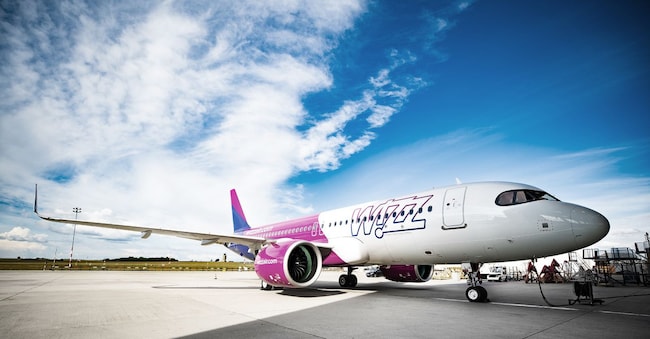
A difficult winter lies ahead for the European aviation industry, with fuel costs posing one of the main uncertainties for the sector. Wizz Air, the Hungarian low-cost airline, heads into the winter with €2.35 billion in cash reserves, 80 per cent of its fuel requirements for the next six months already covered, and a more efficient, next-generation fleet. The airline is banking on demand remaining strong and has confirmed a 20 per cent increase in capacity – the highest in the sector – having scaled this back from the 30 per cent previously forecast, whilst its competitors are cutting capacity to contain costs. It is in Italia that the carrier is focusing its expansion, with 15 new aircraft due in 2026 and capacity set to rise by 40 per cent.

“Before the war, jet fuel cost around 700–800 dollars per tonne; today it’s around 1,500–1,600 dollars: essentially, the price has doubled,” explains Wizz Air’s CEO, József Váradi, in this interview with *Il Sole 24 Ore*. ‘The increase, albeit with fluctuations, has continued over recent months and remains a source of pressure for the entire sector.’

Loading...

European demand on the rise

In the early stages following the outbreak of the conflict, demand for travel in Europe had come to a sudden halt. Uncertainty over geopolitical developments had prompted many passengers to postpone their bookings. As the months went by, however, the market recovered. The summer turned out to be better than expected. And the recovery does not appear to have petered out with the peak of the summer season: bookings for the winter are also showing signs of holding up.

According to Váradi, ‘revenues are returning to growth and ticket prices are rising by around 3 per cent. This increase is not sufficient to fully offset the rise in energy costs, but it marks a reversal of the trend compared with the period when lower fares were accompanied by particularly high fuel costs. ‘Fuel costs remain higher than the industry is able to pass on through prices,’ is the management’s summary. However, compared with the most difficult period, the market is moving in the expected direction.

Capacity on the rise, but less than expected

Wizz Air continues to grow, albeit at a slower pace than originally planned. Capacity, in terms of available seats, will increase by around 20 per cent in the coming months, whereas the airline had previously anticipated a rise of close to 30 per cent. This is a gamble that the market is struggling to accept, given that ‘the emergence of a slowdown in the sector poses a risk, whilst Wizz intends to continue growing aggressively until 2027 to capture market share from weaker competitors’. All this comes as the airline announces cuts to its winter flight schedule; however, with the switch from the A320/A321ceo to the new A321neo, the airline will have larger aircraft with a greater number of seats at its disposal.

In September, traffic grew by 24 per cent, and the target for the next quarter is to maintain growth of around 20 per cent.

Management emphasises that this decision is also linked to the need to keep costs under control at a time when winter is traditionally a more challenging period for airlines. “We have moderated our growth in order to shoulder the increased costs of the business,” explains Váradi.

Liquidity, fleet and fuel coverage

The company cites financial and operational stability as one of the key factors underpinning its resilience as it faces the coming months. Three elements, in particular, are considered crucial: liquidity, fleet efficiency and fuel price hedging.

Wizz Air has approximately 2.35 billion euros in cash, equivalent to around 35 per cent of its liquidity ratio, according to figures provided by the management. The airline also highlights the efficiency of its fleet: its new-generation aircraft consume around 20 per cent less fuel than previous-generation aircraft.

As regards fuel hedging, Wizz Air states that it has hedged around 80 per cent of its fuel requirements for the next six months at a price of around $800 per tonne, compared with a market price of around $1,600.

Loading...

A combination which, according to the company, should enable it to face the winter in a relatively strong financial position.

Winter could speed up consolidation

The flip side of the coin is the potential pressure on the most vulnerable airlines. “Some European airlines have already shown signs of difficulty and the situation could worsen in the coming months,” predicts the CEO, ruling out the possibility that Wizz Air could be counted amongst the weak carriers on the brink of default, as Ryanair CEO Michael O’Leary had predicted. Among the cases cited are airBaltic, Volotea and the Romanian charter airline AnimaWings, whilst the Norwegian carrier Norse Atlantica is seeking fresh capital – certainly not a sign of financial health.

Wizz Air’s reasoning is based on three variables: liquidity, aircraft utilisation rates and the level of fuel hedging. Airlines that simultaneously have limited liquidity, a fleet that is too large for demand and low fuel hedging would be more exposed to financial pressures. In this scenario, any reduction in supply by competitors could create new growth opportunities for carriers with greater financial capacity.

Italia becomes the main market for expansion

It is primarily in Italia that Wizz Air is focusing a significant part of its growth strategy. In 2026, the airline plans to add 15 new aircraft in the country, bringing its total fleet to 46 aircraft by the end of the year.

Italian capacity is expected to increase by around 40 per cent, a rate significantly higher than that recorded in other European markets.

The main driver is the expansion of the domestic network, alongside the strengthening of connections between Italian airports and Spain.

“Italia is our main growth market,” the management emphasises. The company maintains that the increase in capacity is driven by demand and does not simply represent an expansion of supply that is set to be scaled back at a later date.

The Volotea effect and the Naples case

The reduction in the number of certain competitors could further accelerate Wizz Air’s growth in Italia. This is the case in Naples, where Volotea has scaled back its operations and Wizz Air has announced the arrival of new aircraft.

The Hungarian group is therefore keeping a close eye on its competitors’ decisions, assessing the possibility of making use of any gaps left in the market. The same trend could occur at other Italian airports, where the airline sees scope to expand its presence.

Pratt & Whitney engines: moving towards normalisation

There remains the issue of engines, which in recent years has affected the operational capability of numerous airlines operating Airbus A320neo family aircraft fitted with Pratt & Whitney GTF engines.

Wizz Air reports a significant improvement: the number of aircraft grounded due to engine-related issues has fallen from around 44 to 26. The stated aim is to reach zero by the end of 2027.

The gradual return of aircraft to the fleet is therefore enabling the airline to rebuild its capacity just as the European market is showing signs of recovery. Wizz Air also expects to take delivery of around 30–40 new aircraft per year, partly offsetting these deliveries with the return of aircraft leaving the fleet.

For the airline, therefore, the coming months will be a delicate balancing act: on the one hand, fuel prices, which remain significantly higher than pre-conflict levels; on the other, demand that has proved more resilient than expected and a market in which any reduction in competitors’ capacity could open up new opportunities for growth.

Copyright reserved ©
Loading...

Brand connect

Loading...

Newsletter

Notizie e approfondimenti sugli avvenimenti politici, economici e finanziari.

Iscriviti