SpaceX applauds

Vast Space throws down the gauntlet: replace the Iss with an artificial gravity station (and Apple design)

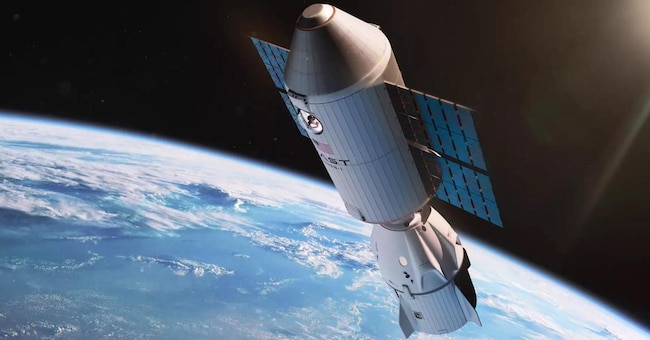
Vast Space, which now employs 610 people and hires ten a week, spares no detail: it promises that when completed in 2032, Haven-2 will consist of nine modules, characterised by unprecedented refinement

4' min read

4' min read

The well-informed whisper that Elon Musk is behind it. The official figures, however, indicate that the 49-year-old cryptocurrency wizard Jed McCaleb is behind Vast Space (he is behind the peer-to-peer networks eDonkey and Overnet, as well as the bitcoin exchanger Mt. Gox).
And yet there are many similarities between SpaceX's patron and McCaleb, who with the company he founded not even four years ago aims to launch a commercial space station, the Haven-2, by 2028, which would allow astronauts to remain in low Earth orbit (within two thousand kilometres of the Earth) even after the International Space Station, or Iss, is decommissioned in 2030.

"It will be the first phase," explains Max Haot, CEO of Vast Space, during Iac 2024 in Milan. "We know that in weightlessness we can live for a year or so, and in conditions that are not easy. Perhaps, however, lunar or Martian gravity is sufficient to live a lifetime comfortably. The only way to find out is to build stations with artificial gravity, which is our long-term goal'.
Loading...

Vita a bordo

Apart from the considerable personal fortunes (McCaleb's is estimated at over $2.4 billion), the elective affinities between the space billionaires are suggested by their approach to space, conceived as a commercial field in which to sell services, a good deal of expertise - Musk's former engineers work in Vast - and the design of vehicles and equipment, which makes it difficult to distinguish the Haven modules from SpaceX launchers and capsules.

Even more significant is the very 'SpaceX' tactic with which Vast Space wants to attack the market: although it has no contracts with NASA, the company aims to launch Haven-1, a prototype of the future station, in the second half of next year. "Building an outpost that artificially reproduces gravity will take ten or twenty years, and an amount of money that we don't have now.
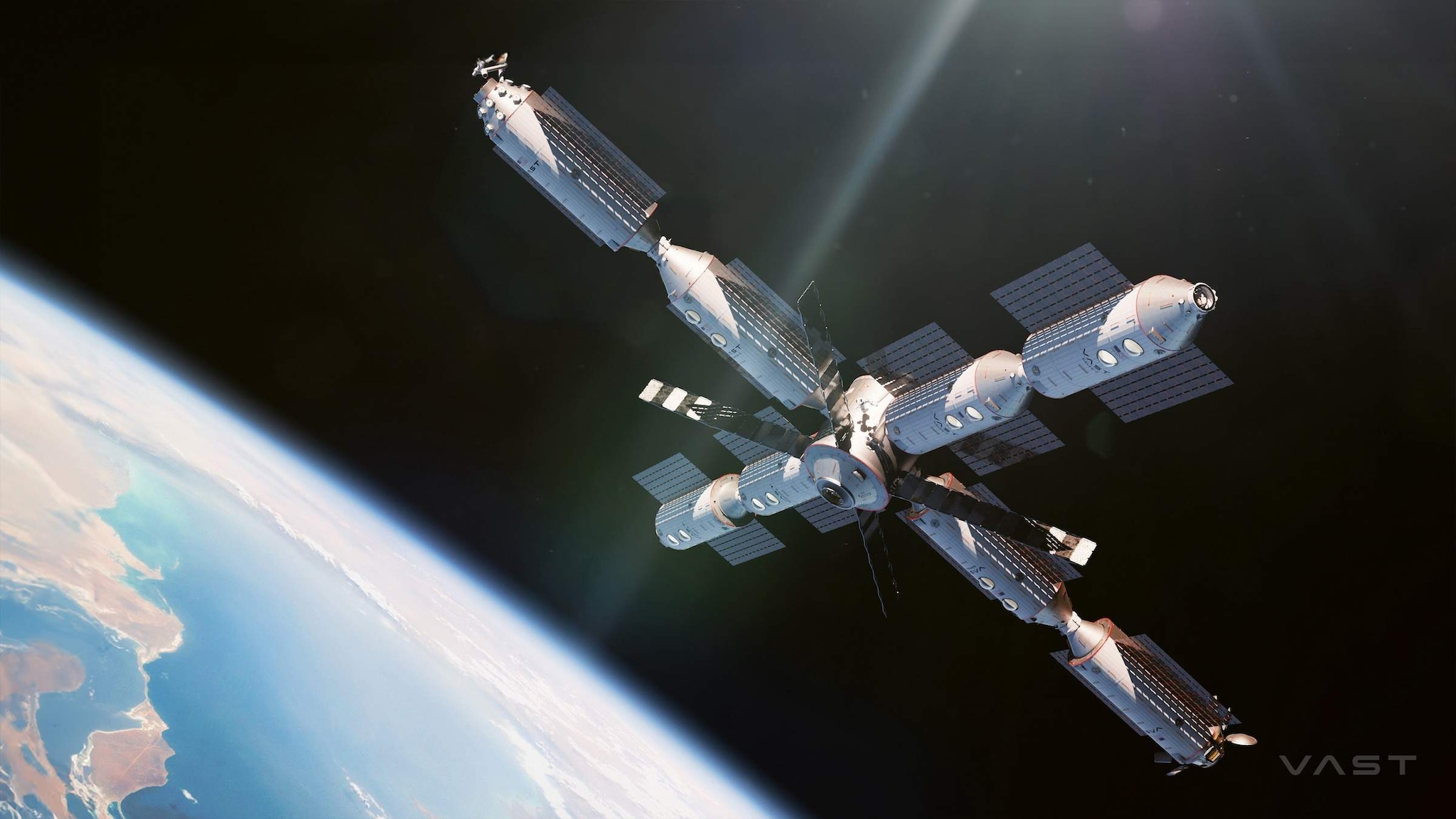
Vast Haven, configurazione completa.

However, in order to win the most important contract in the space station market, the replacement of the Iss, with our founder's resources next year we will launch four people on a Dragon (yes, from SpaceX, ed). They will stay aboard Haven-1 for a fortnight, then return safely, demonstrating to NASA our capability before any competitor does'.

A tactic that becomes a strategy: with an initial funding of $415 million, in 2021 Nasa inaugurated the Cld programme, or 'Commercial Low Earth Orbit Destinations', to support the development of private stations in low orbit and maintain a stable human presence in space. Allocated to three different projects, after Northrop Grumman gave up developing one of them, Nasa concentrated its funds on the two survivors: Starlab, by Voyager Space and Nanoracks, and Orbital Reef, by Jeff Bezos' Blue Origin.

Vast Space aims to outdo them all and present itself to NASA, which will have to choose which project to carry out in the second half of 2026, as the only interlocutor with a concrete precedent. It is with Haven 2 that we hope to win,' Haot urges. 'We guarantee that the first module will be ready by 2028, so that NASA will have two years to test it while the Iss is still operational. In this way, the United States, but also Italy, will not have to worry about being without a space station for a while after the retirement of the Iss. Moreover, in terms of power, volume, capacity, and windows, Haven 2 will be a more efficient station than any other, including the Chinese one already in orbit, the Tiangong, and the one planned by the Russian Federation'.

A theme, the even geopolitical relevance of the orbital garrison, which could make all the difference when deciding who to finance and how much. And an underlining that, who knows whether unintentionally on Haot's part, evokes the other existing commercial station project: that of Texas-based Axiom Space, which predates Nasa's Cld programme and is the most advanced of them all, thanks in part to the collaboration of the specialist Thales Alenia Space Italia. But on whose sustainability, Axiom's financial problems, made public by a scoop in 'Forbes', cast a worrying shadow.

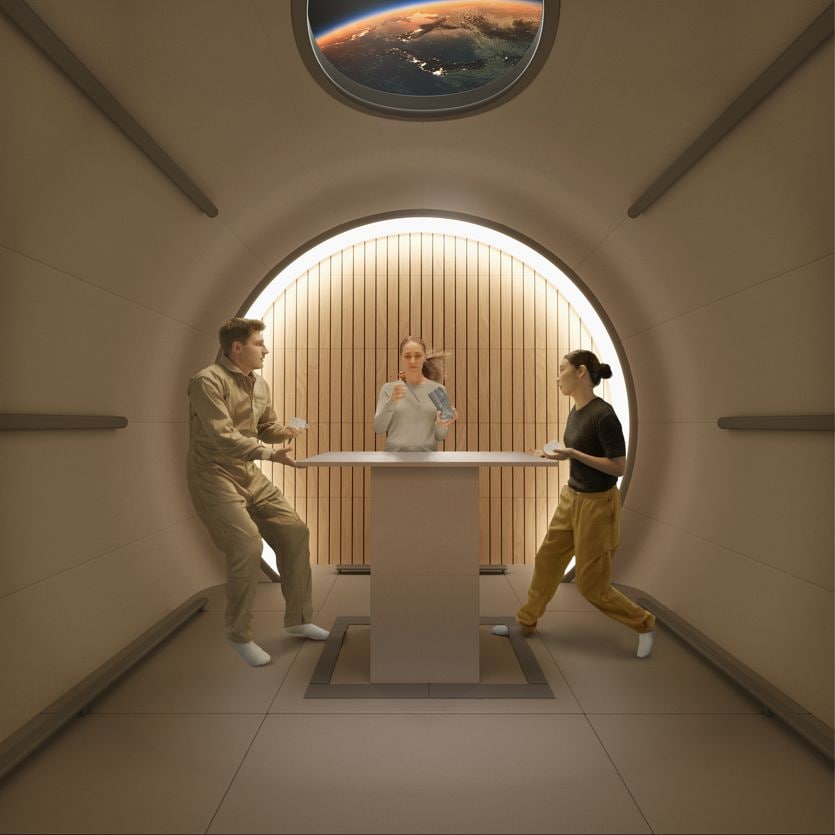
This is why Vast Space, which now employs 610 people and hires ten a week, spares no detail: it promises that when completed in 2032, Haven-2 will consist of nine modules, characterised by unprecedented refinement: 'we have collaborated with great designers, such as Peter Russell-Clarke, for more than twenty years at Apple. Haven-2 will also have wooden elements. And this is not because we conceive it as a space hotel, but to improve liveability on board and, consequently, productivity. He who is better off, works better'.

Words that allude to a market, de facto, that does not exist today: 'Up to now, all space stations have been built by governments and at exorbitant prices: our project will allow costs to be cut by about five times or perhaps more,' Haot replies: if we succeed in securing Nasa as an anchor customer, if we guarantee the interests of all the nations in the Iss programme, but also attract countries that have been excluded from the market up to now, if, in short, we know how to create an efficient and low-cost company, our dreams will be within reach'.Much will depend on the launch of Haven-1. Certainly, with a SpaceX Falcon 9 and 'perhaps with an Italian commander,' Haot winks. 'Anything is possible'.

Copyright reserved ©
Loading...

Brand connect

Loading...

Newsletter

Notizie e approfondimenti sugli avvenimenti politici, economici e finanziari.

Iscriviti