Environment

Pollution: vehicle emissions alter plants’ photosynthesis

This was discovered by researchers from the CNR, the Institute of Geophysics and Volcanology and the National Centre for Biodiversity. They monitored plants in Florence

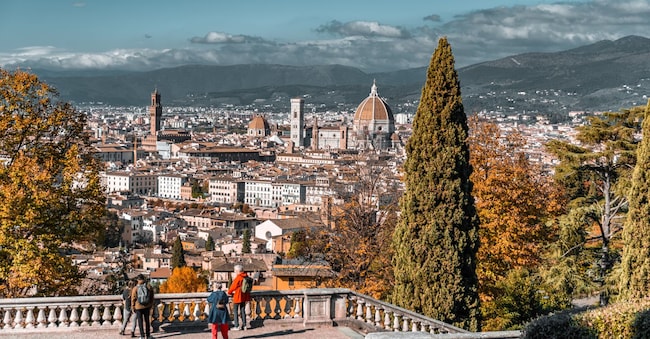
Gli alberi di Firenze monitorati per verificare l’inquinamento della città (Adobe Stock)

3' min read

Translated by AI
Versione italiana

3' min read

Translated by AI
Versione italiana

Plants as sentinels of urban pollution and tram lines as a possible solution. It’s happening in Florence: traffic is ‘written’ on the leaves of trees, and this phenomenon has emerged from a scientific study resulting from a collaboration between thethe Institute for Research on Terrestrial Ecosystems of the National Research Council (CNR-IRET), thethe National Institute of Geophysics and Volcanology (INGV) and the National Biodiversity Future Centre (NBFC). The report examines and analyses the link between exposure to atmospheric particulate matter (PM) and the functional response of the leaves of the tree species Celtis australis, known as the hackberry.

How the study was carried out

The interdisciplinary study, published in the journal Environmental Pollution, therefore analyses the impact of vehicle emissions on urban vegetation in Florence: leaf samples were collected from eight sites across Florence, distributed along a gradient ranging from areas with heavy traffic to suburban areas and the city’s historic parks.

Loading...

What emerges is that exposure to pollution alters, shapes, structure, size and position of the stomata – that is, the microscopic openings on the foliage that regulate the exchange of oxygen and carbon dioxide and transpiration – with the result that they act as sentinels for smog. 

The research, it is explained, ‘demonstrates a significant link between PM composition and ecophysiological, magnetic and isotopic indicators, revealing a direct connection between vehicle pollution, short-term physiological responses in leaves and integrated indicators of environmental exposure. In particular, the close association between magnetic susceptibility and the carbon isotopic signature highlights the potential of magnetic indicators to link particulate matter accumulation to functional effects on plants’.

The study therefore proposes ‘the adoption of an interdisciplinary, multi-proxy approach that opens up new perspectives for the biomonitoring of air quality and the sustainable planning of urban green infrastructure’.

The areas and the positive turnaround of the tram system

“In areas with heavy traffic, the trees showed alterations in stomatal morphology, reduced photochemical efficiency and a different carbon isotopic signature,” explained Andrea Scartazza, senior researcher at CNR-IRET. “These results,” he added, “show that exposure to pollutants does not merely leave traces on leaf surfaces, but is associated with measurable changes in carbon assimilation processes and in the photosynthetic functioning of plants.”

It appears that, in Florence at present, the busiest area out of the eight sampled is Piazza Beccaria (identified thanks to a nearby ARPAT monitoring station). The area where there are the fewest problems, however, as Scartazza noted, is the ‘Cascine’ area.

Iron concentrations in leaves

It is interesting to note that, as a result of pollution, the leaves become magnetic and, according to the analyses carried out, one of the main elements found is iron (and therefore iron particles), due to brake discs and fuels: ‘Magnetic susceptibility faithfully reflected the spatial distribution and bioaccumulation of PM in the leaves, showing a significant association with the concentration of iron-rich particles,’ added Aldo Winkler, head of the INGV’s palaeomagnetism laboratory.

For the people of Florence, however, the situation can only get better. This is because, in recent years, the City Council – following the lead of former mayor Dario Nardella and through the efforts of the current mayor, Sara Funaro, and the Councillor for Mobility, Andrea Giorgio – has been redesigning the city with tram lines: in addition to the lines already in operation (which run through the historic centre and also reach the airport, Careggi and the Scandicci area) – the line to Bagno a Ripoli will be inaugurated by mid-2027: among the planned stops is Piazza Beccaria, and a significant improvement in traffic indicators is therefore expected. ‘The tramway will certainly bring benefits,’ concluded Scartazza. And the best indicators of the results will be the trees themselves, which act as natural air filters on the one hand and are capable of detecting environmental quality on the other.

Copyright reserved ©
Loading...

Brand connect

Loading...

Newsletter

Notizie e approfondimenti sugli avvenimenti politici, economici e finanziari.

Iscriviti