

L’Iran rischia di diventare l’Alcatraz di Trump
di Giuliano Noci

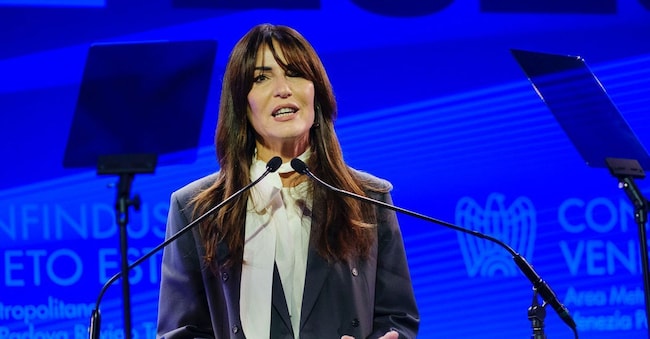
Signs of recovery, albeit in a context full of uncertainty, for manufacturing activity in Eastern Veneto. This is revealed by the survey "La Congiuntura dell'Industria del Veneto Orientale" (final balance 4th quarter 2025 - forecast 1st half 2026) conducted by Confindustria Veneto Est, in collaboration with Fondazione Nord Est, on a sample of 763 manufacturing and service companies in the provinces of Padua, Treviso, Venice and Rovigo.
In the fourth quarter of 2025, production shows an increase of +2.6% year-on-year, the strongest since the second period of 2022, more robust for small enterprises (+4.2%) and engineering (+6.7%). In 2025, the balance, on a yearly average, is +0.5% growth, breaking two consecutive years of decline (-2.7% in 2023 and -1.2% in 2024). Tariffs and the devalued dollar are affecting exports (-0.6% in the quarter), which, however, will close 2025 on a steady footing (+0.2%). Production is expected to remain stable in H1 2026 by 60.7% of companies, and to grow by one in four (23.6%).
Industry turnover improved in the fourth quarter, thanks to the positive trend in domestic demand (+2.7%), driven by the recovery in wages. The foreign component (-0.6%) was less tonic and again in a minus sign, summarising stable sales in the EU area (-0.1%) and a drop in non-EU sales (-1.5%) after the advance in purchases from the USA (+0.2% exports in 2025). Orders recorded a more marked tendential increase (+1.5%). Employment is still positive, but slowing down (+0.4%). Commodity prices rose further between October and December for a third of the sample (32.3% from 29.7). The ECB has been firm on rates since mid-2025, uncertainty reduces the demand for credit: cost of money rising for only 8.1% of companies, compared to more than three quarters (78%) who note it as stable. Corporate liquidity strained for 16.2%.
Business confidence for the first half of 2026 is slightly improving, although the upturn remains slow, in a global context full of uncertainty factors, including geopolitical tensions, new tariffs and market volatility. Forecasts are mainly oriented towards maintaining production levels: 23.6% of companies expect an increase, 15.6% a decrease, compared to 60.7% who lean towards stability. Expectations on the trend of domestic orders are increasing for 18.2%, stable for 61.0%. Expectations on foreign demand are improving, increasing for 26.0% (39.8 in medium and large-sized companies), stable for 56.2% and decreasing for 17.7%. 42.9% expect new hires (56.2% in the medium-large). Despite the persistent climate of uncertainty, spending on fixed investments is expected to be stable by six out of ten companies (59.9%), in contraction for 23.3%, but in expansion for 16.7%, a share that could rise again if the decree implementing the hyper-amortisation is certain, consistent and timely.
'Despite a stormy context, in 2025 the industry in our area held up and managed to reverse the negative trend that had been going on for a couple of years, thanks to its competitive and adaptive capacity,' comments Paola Carron, president of Confindustria Veneto Est. 'But it is a fragile hold, threatened by structural imbalances and new international uncertainties. We cannot delude ourselves that adaptation is enough. Difficulties also persist in more affected sectors, such as textiles-clothing, metallurgy, and mechanical subcontracting'.

