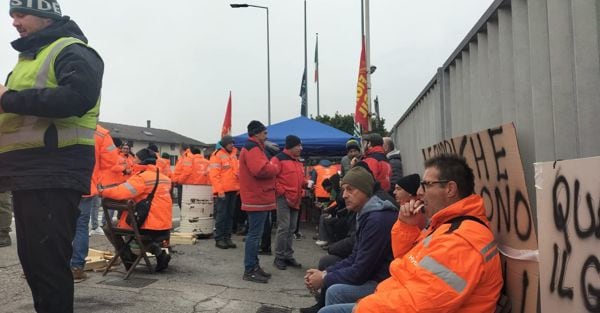
Veneto, over 4,500 workers involved in company crises
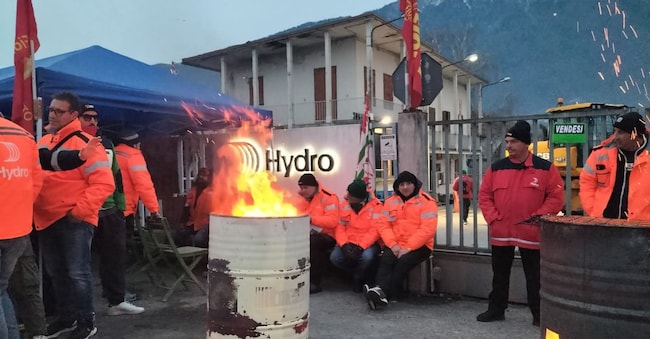
For Hydro Extrusion Italy, the Ministry of Enterprise and Made in Italy has convened a round table for 20 January

More than 4,500 workers are involved in company crises in Veneto. The estimate comes from the regional Fiom, which monitors the situations in the various provinces. The largest situations land at the regional company crisis unit, which is currently managing about 15 tables: each one has more than a hundred jobs affected. Another 24 cases are under monitoring.
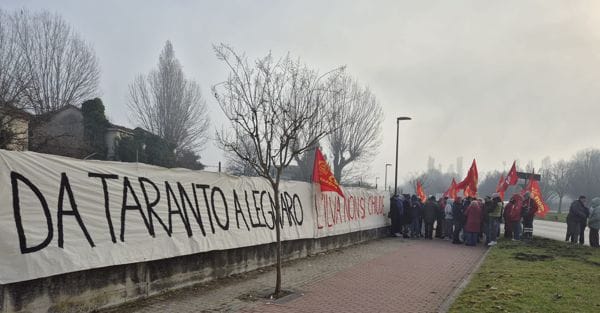
Non-isolated phenomena
There are various causes: new world order, tariffs, war events: we are now working in a system that is based on uncertainty. And then there are new elements, such as the crisis that for the first time has reached the luxury sector, which until now has been preserved. The other common factor is the ongoing energy and sustainable transitions, which have put a strategic sector for the Veneto such as automotive out of play. And as if that were not enough in the region, attention is very high on what concerns Acciaierie Valbruna, the heart of Vicenza and a production plant in Bolzano that is put under threat by the tender launched by the Autonomous Province for the area, whose concession is expiring. The date for clarification has been pushed back to 16 January, but - as the region points out - that is too long a time to leave a company and its employees in uncertainty.
"The company crises that are emerging in Veneto are neither episodic nor just 'sectoral': the problem is general and has to do with the fundamentals of competitiveness. We are talking about the cost of energy, taxation, infrastructural deficiencies, but also - and increasingly so - a lack of attention to investment in intangibles: research, innovation, skills, digital and organisation, i.e. all the factors that affect productivity,' explains Confindustria Vicenza President Barbara Beltrame Giacomello.
Metalmechanics in distress
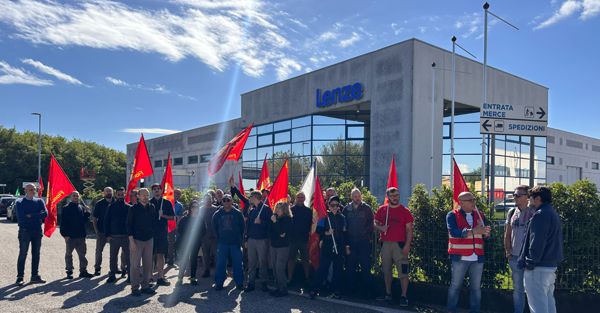
Engineering is probably the sector most under fire. 'During the crisis of 2008 and 2009, companies, small and often undercapitalised, were in many cases acquired by multinationals and investment funds, undermining their roots with the territory,' explains Antonio Silvestri, secretary general of Fiom in Veneto. 'Now, however, we are not in a cyclical downturn phase that will be followed by a recovery, as has always been the case: nor is it a transition towards a new equilibrium. We are witnessing a structural change, globalisation itself is under discussion, the balances of decades are compromised. In the meantime, however, production has left Italy and Europe: we have been told that heart and brains remain here, but that is not enough. And industrial policy is completely absent'. In a structurally more uncertain scenario for industry, 'the larger Veneto companies, often multinationals or in the hands of funds, tend to reorganise production on an international scale, penalising peripheral territories like ours. The smaller ones, if not supported by a strong national and regional industrial policy, risk being overwhelmed. Moreover, the current social shock absorbers are not adequate to deal with the current situation,' Silvestri concludes.
There are many cases of multinationals leaving: for two of them - Edim Bosch in Belluno and Hydro, which only last year announced investments in the historical steel processing site in Feltre - a few days before Christmas, the prefect Roccoberton also entered the field. The Edim case leads back to the difficulties of the European automotive sector: the historical reality of die casting and aluminium processing, is at the centre of a perfect storm between the Bosch crisis, which led to the collapse of orders; the slowness of the transition to electric mobility; the competitive gap, with production costs that are up to 40% higher than Asian and Eastern European competitors. Yesterday, at the headquarters of Confindustria Monza-Brianza (the 286 employees are divided between Villasanta, 137, and Setteville, 49), the extraordinary redundancy fund was decided until May, while the tight search for a buyer continues. For Hydro Extrusion Italy, the Ministry of Enterprise and Made in Italy has convened a round table for 20 January.