
Veneto, Transition 4.0 and 5.0 drive productivity, competitiveness and employment
Fòrema report: 71.5 per cent of companies have invested in capital goods, digital and green technologies, but now we need regulatory certainty and planning
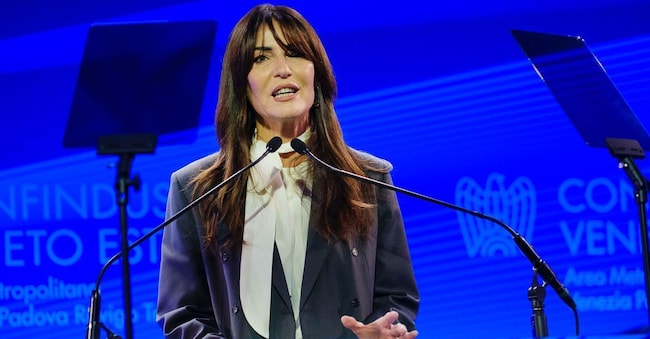
Transition 4.0 and 5.0 have generated investments that have boosted productivity, competitiveness and employment in Veneto, but now uncertainty risks acting as a brake.
This was revealed by a survey by Fòrema, a training company of Confindustria Veneto Est, conducted on a representative sample of 1,000 companies in Veneto (three quarters from the provinces of Padua, Treviso, and Vicenza), 76% of which are manufacturing (32% engineering), mostly SMEs (75% between 10 and 249 employees), with an annual turnover between 2 and 50 million euros for 69.5% (over 50 million for 22.5%). In essence, the plans have had a positive impact on the digital and energy transformation of Veneto companies, but uncertainty over the new 5.0 plan is blocking investment.
The impact
In Veneto, 71.5% of companies have made investments in 4.0 and 5.0 plans, with an acceleration in the 2022-2025 period: this has resulted in a boost to productivity and employment, which has increased by +12.8% in four years, making 88.6% of companies more or much more competitive. But full effectiveness - the report points out - depends on a non-negotiable condition: simplicity, certainty of rules and a multi-year horizon.
The results show, first of all, a very high level of utilisation of the 4.0 (introduced by the Budget Law 2020) and 5.0 plans to support the digital and green transformation of the production system: 71.5% of the companies have made technologically advanced tangible and intangible capital investments, R&D activities and personnel training, taking advantage of the tax credit. Most investments are concentrated in the period 2022-2025 (87% of active companies). The volume is between EUR 100,000 and EUR 1 million for 70.2% of the companies, and exceeds EUR 1 million for more than a fifth (21.8%).
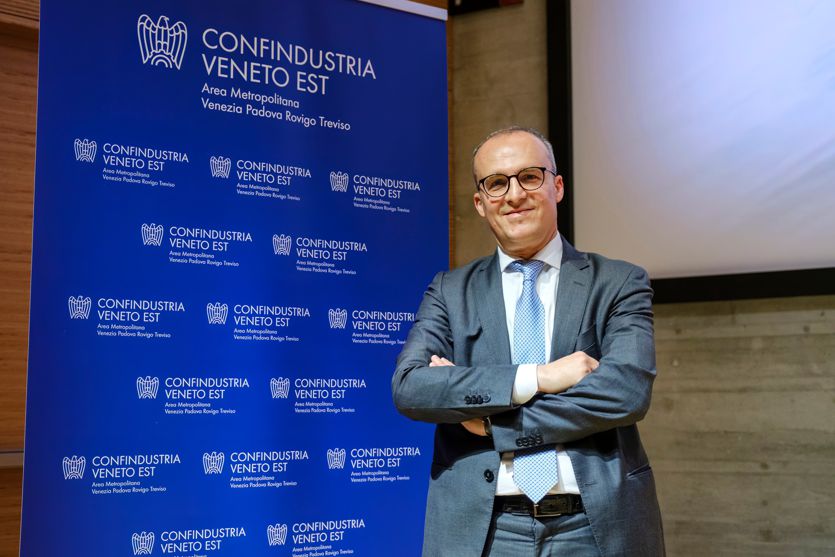
'These numbers tell us one thing very clearly: when instruments are stable and accessible, companies do business and invest, with benefits for innovation, productivity and employment. This is the meaning of a real industrial policy for the country,' says Paola Carron, president of Confindustria Veneto Est. Companies need certainty, continuity, and consistency of policies; they ask for incentives to be stable, easy to use, and timely. We warmly welcomed in the Budget Law 2026 the new hyper-amortisation for investments that can be subsidised from 1 January until 2028. But four months after its entry into force, the potential of the rule remains unexpressed and the investment decisions of many companies frozen, in the absence of the implementing decree with technical clarifications on the measure. The first drafts, moreover, increase the mandatory communications for companies, instead of simplifying them. How is it possible to be in the same situation as in 2025 and not to have capitalised on that frustrating experience for the production system?".

