
Asparagus, Veneto record and production on the upswing
Treviso leads the way with the Badoere PGI registered in 2010 - In Padua, the Pernumia speciality is put to the test
by Barbara Ganz
Veneto holds the record in the national asparagus scene: the region is home to around a fifth of the total production (21.2%) and the figures - contained in the report on the economic data of the vegetable published by Veneto Agricoltura - show a production of asparagus in Veneto that, after three years, once again exceeds the threshold of 13 thousand tonnes. Looking at the numbers for the five-year period 2019-2024 with estimates for 2025, we can see a 21.7% increase in asparagus production over the past year.
Production
The quantities, if the last six years are taken into account, were only higher in 2022 (14,168 tonnes, in 2024 just under 11,000) and reinforce the centrality of regional production.
Slight contraction instead for cultivated areas. With 1,806 hectares, Veneto is down 4% on 2024, but it is still one of the most incisive regions in Italy in terms of asparagus cultivation: 19.6% of asparagus-growing areas in Italia are located within its borders.
The territories
The primacy of production is held by the province of Padua with about 40%, but there are many other territorial specialities: Verona (20%), Treviso (15%), Venice (10%), Rovigo (10%) and Vicenza (5%). All these provinces contributed to the significant growth in production in 2025, with the exception of Treviso, which was the only one to show a decrease (-7%).
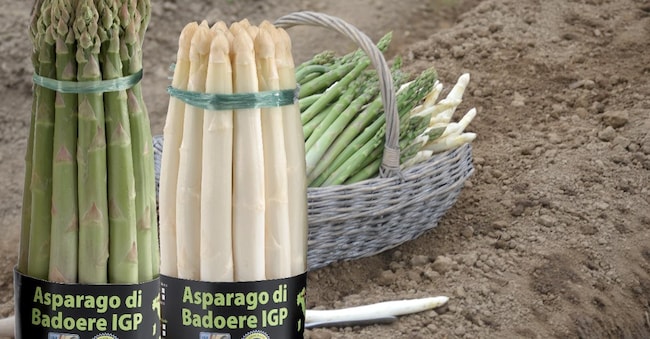
Yet the Treviso area remains the reference point for the Badoere Igp asparagus. In 2024, the year in which approximately 28 tonnes, out of a total of 15 hectares, of this Geographical Indication were harvested in Veneto, it in fact accounted for 69% of the areas allocated to it and 66% of the total tonnes produced in the region. Far more distant are Padua and Venice, with shares of around 30% and 6% respectively in terms of certified production, and 20% and 2% in terms of surface areas.

