
Venice case, Brugnaro in City Council: 'I'm going ahead, no conflict of interest'
The mayor reports to the court for the first time and addresses the issues: Pili area, Reyer, wiretapping
by Barbara Ganz
2' min read
2' min read
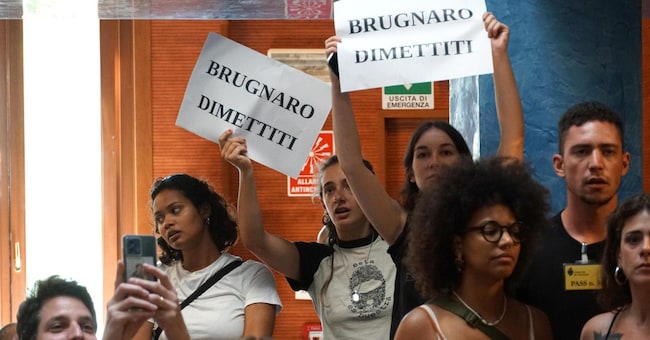
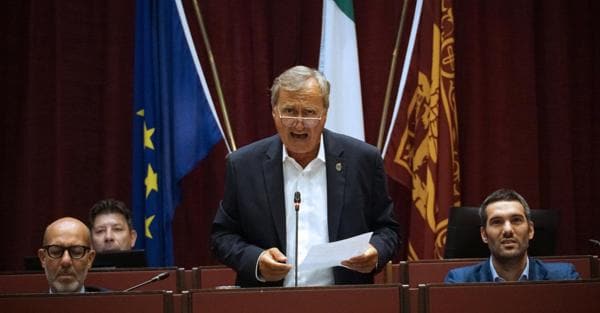
The mayor of Venice Luigi Brugnaro appeared this morning at the extraordinary municipal council meeting requested by the opposition for a clarification on the enquiry that shook Venice on 16 July last and led councillor Renato Boraso to jail. Among the many people under investigation is the first citizen himself, who opens by reiterating his choice to remain in his post: "I have done nothing to be ashamed of, but I am under investigation and remain at the disposal of the judiciary to answer all questions. I have done nothing and I feel the duty to remain in office so as not to betray the mandate of the people'. On the street, hundreds of protesters, supporting the call for his resignation (but also, in a minority, supporting him).
Brugnaro has been mayor since 2015: 'I have been in office full-time for more than nine years, even over 12 hours a day, taking time away from my family,' he said, 'I am here to prove the honesty of my actions. I owe it above all to the citizens: I put my face, all my experience, into it. And that is why I am appalled'.
In the courtroom, Brugnaro tackled the knots directly: on the one hand, the conflict of interest in the Pili area - of which he is the owner after having bought it at a State auction, well before the election - to Reyer, whose sporting results on the field he claims, but also 'the pedagogical and social project that underlies it. No favours to those who freely chose to sponsor it. I do not accept the argument of those who think that an entrepreneur cannot be a public administrator'.
Since 2017, Brugnaro's companies have been managed by a blind trust, about whichthe investigation raises numerous doubts: "I was neither politically nor legally obliged to use this instrument, but I did. The companies obviously continue to operate with their own employees and managers'.
Finally, the Boraso case: 'I would never have imagined what he is being accused of. In the interceptions I attacked him and provoked him for a way of doing politics that was wrong for me, based on continuous promises rather than concrete facts. That's all I knew'.

