
Danish film ‘Woman Unknown’ wins in Venice
May el-Toukhy’s film wins the Golden Lion and the Best Actress award. Malkovich wins Best Actor, whilst ‘Naza’ receives the Special Jury Prize

Key points
Golden Lion
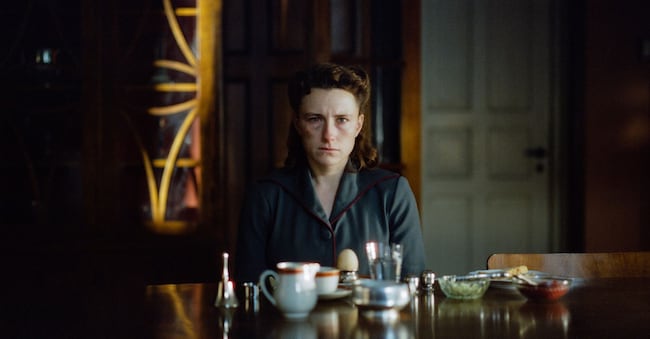
By awarding the Golden Lion to Woman Unknown, the jury led by Maggie Gyllenhaal has achieved a masterful compromise, bringing together cinema and politics – a prominent theme throughout the Festival. First and foremost, it is the only film in competition directed by a woman, May el-Toukhy (the female minority is the festival’s new highlight), and its theme – one that remains ever-relevant – is the female body: controlled, abused, punished and accustomed to silently enduring the pain associated with sexuality. The plot takes us to Denmark in 1945, immediately after the liberation, when the nanny and maid Marie (Mathilde Arcel) is set to marry Christian (Carsten Bjørnlund), a wealthy businessman, self-proclaimed anti-Nazi and widower. Her social rise is within reach, whilst she watches in horror as Copenhagen vents the anger of the occupation against women who have had relationships with Germans – the tyskerpiger ‘German girls’, or feltmadrasser, ‘camp mattresses’ – who are shaved and subjected to public torture (they will be classified in the archives as ‘unknown women’). Red is the colour of the Danish flag, Marie’s jumper and the swastika that the nanny finds one morning on her front door, jeopardising her future. The protagonist is often deliberately framed from behind or behind bars – where she is placed, and where Marie metaphorically places herself – in a Dreyer-esque aesthetic and cinematography (by Jasper Spanning).
Grand Prix of the Jury
Rarely has the Grand Prix been so aptly awarded as it was to Lee Chang-dong’s Possible Love, a South Korean take on class struggle, albeit with a different connotation to Bong Joon-ho’s Parasite. A mass redundancy at a factory and the violent suppression of a strike, which shook South Korea, inspired the director to explore an unlikely friendship between a documentary filmmaker documenting the lives of those made redundant and the wife of a former worker who has fallen into depression. The bond between the two women leads the worker – who is reluctant to open up – to agree to be interviewed, and his wife to dream of a different fate, perhaps even a new love. Over a weekend in a dream villa, the two working-class figures discover they are mere pawns in the risk-free, denial-ridden lives of the documentary-maker and her husband. The film builds in intensity, showing great sensitivity to the humanity revealed in the plot with depth and poetic originality.
Silver Lion for Best Director
The highly controversial Dau, due to the Russian background of its director, the dissident filmmaker Ilya Khrzhanovsky, won the Silver Lion for Best Director. Perhaps it was a tribute to Khrzhanovsky’s twenty-year-long body of work, which straddles the line between ‘total cinema’ and artistic experimentation, and which has also sparked controversy over alleged abuses on set. The director, now in exile in Berlin, drew inspiration from the physicists who helped build the Soviet atomic bomb to portray an idealistic scientist who ultimately succumbs to the logic of the Soviet empire, recreating on a smaller scale within his scientific institute the madness, violence, repression and paranoia of the USSR over four decades. A monster of a film – jagged, confusing and fascinating – the final instalment of a trilogy featuring three different directors of photography, set designers and costume designers, and thousands of extras.
Women’s Volpi Cup
Mathilde Arcel, star of Woman Unknown by May el-Toukhy
Men’s Volpi Cup
John Malkovich in Wild Horse Nine by Martin McDonagh, with a screenplay that seamlessly blended crime, action, memoir and comedy, without ever tiring the viewer. It’s funny, but with an underlying theme that is anything but light-hearted: US interference on the international stage, from the Bay of Pigs to the Kennedy assassination, via the secret services. The undisputed star and well-deserved winner of the Coppa Volpi for Best Actor is Chris—John Malkovich, a CIA agent who carries the rifle used to shoot JFK in a briefcase: he is responsible for many ‘operations’. He finds himself in Chile on the eve of the coup of 11 September 1973, and his terminal illness drives him to an uncontrollable need to tell the truth to everyone, especially the young people who will end up on the ‘death flights’. It is likely that we will see Malkovich at the Dolby Theatre, in keeping with the tradition linking the Oscars and the Academy, even at a Venice Film Festival without Hollywood.


