
Venture Capital, in Europe the push comes from big companies
4' min read
4' min read
Investing in the development of new technologies is often too risky for traditional financial institutions, which do not always have the technical expertise to assess the risks and potential. This is where venture capital comes in, a form of financing that specialises in supporting innovative companies and start-ups when the risk is high, but so is the potential for growth.
Venture capital funds intervene mainly at two moments: in the initial phase, when the company needs capital to develop a promising idea, or to support the expansion of established companies that aim to scale their business. Attracting investment towards the energy transition presents particular challenges, due to high costs and long development times.
But it is precisely these technologies - such as sustainable fuels and renewable energy - that are attracting the interest of investors: between 2020 and 2024, in the US market, expected returns from sustainability deals have exceeded the general venture capital average.
The venture capital market
The post-pandemic digitalisation drive has driven the venture capital market to record levels: according to financial analyst firm CB Insights, equity investments reached USD 663 billion globally in 2021 (+114% year-on-year). After a sharp decline in 2022-2023, the market has returned to growth: in the first quarter of 2025, the value of investments increased (+34% year-on-year), although the number of deals continues to fall, a sign of investor caution. Driving the upturn is artificial intelligence, which now attracts one in five financings.
At the beginning of 2025, around 12% of global venture capital was directed towards Europe, behind the US (75%) but still ahead of Asia (9%). However, unlike the US market, recovery is slow in the Old Continent, held back by the difficulty of attracting investment in AI. The countries with the largest volumes are the United Kingdom (16 billion investments in 2024), France (7 billion) and Germany (7 billion). Italy is far behind, with just over 1 billion. However, between 2014 and 2024 the Italian market grew more than the European average, demonstrating at least some stability.
The role of corporate venture capital
In addition to specialised investment funds, large companies also operate directly in the venture capital market. This form of financing not only aims at financial returns but also has a strategic objective: to strengthen corporate business through the innovation brought by start-ups. This model is gaining increasing weight in Europe: in 2024, more than one in five venture capital deals saw the participation of a corporate investor.
The Eni Next case
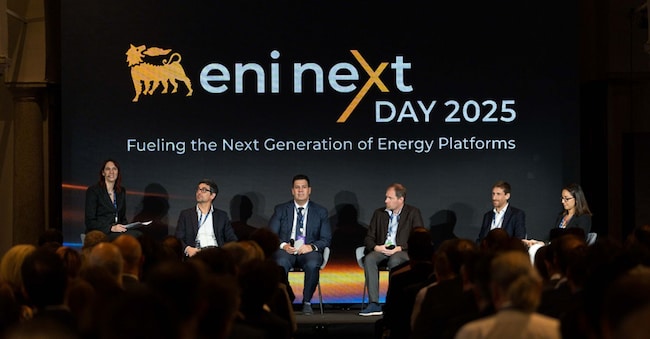
Eni Next is Eni's corporate venture capital company, founded in 2019 and based in Boston. It invests in startups active in clean energy and advanced digital technologies, with the aim of identifying innovative technologies for the energy sector, supporting Eni's decarbonisation strategy and improving the efficiency of industrial operations. The solutions developed by the startups are integrated with Eni's research, according to the philosophy of open innovation: working alongside internal and external resources to find the most promising solutions and accelerate the company's growth.
The clean tech sector in which Eni Next operates is often defined as tough tech due to its technical complexity, long development times and the need for substantial investment. In this sector, Eni Next can offer more than just financing: startups have access to Eni's technical expertise and knowledge of the energy market.
This know-how is also behind the recent collaboration with Azimut, Italy's leading investment and asset manager. The group has announced the launch of a venture capital fund focused on the energy sector, choosing Eni Next as one of its strategic advisors. The partnership will draw on Eni Next's expertise to identify the most innovative solutions and select the startups with the greatest growth potential.
Eni Next's investment sectors and strategy
Eni Next has built a portfolio of more than twenty startups, focused on three strategic pillars. The first concerns the development of new energy sources and solutions to reduce emissions. One example is the startup Commonwealth Fusion Systems, a company for the development and industrialisation of fusion energy, which once brought to industrial scale, will be able to provide clean energy with a safe and virtually unlimited process.
In the field of CO₂ capture, Eni Next has focused on different approaches: the start-ups Mantel and Cool Planet Technologies are developing technologies to extract carbon dioxide from industrial exhaust gases, while Captura directly extracts CO₂ from the ocean, amplifying its natural function of removing carbon from the atmosphere.
Another area concerns renewable energy, sustainable mobility and low-emission products. Among the start-ups in this area is Italy's Energy Dome, which has developed an innovative long-life battery using common industrial components and without resorting to critical minerals - an approach that won it over €17 million in funding from the European Innovation Council in 2023.
Finally, Eni Next invests in technologies that support the energy transition through cutting-edge digital solutions. It finances, among others, the French startup Pasqal, which develops and commercialises quantum computers, and Radical AI, which combines artificial intelligence and robotics to speed up the development of new materials.
Eni Next's investment strategy aims to support the entire cycle of innovation, working alongside startups at different stages: from those that are developing a promising idea, where the investment risk is higher and the horizons longer, to those with a product on the market that aim to expand, with faster returns. This approach reflects the principle of technology neutrality on which Eni's strategy for the energy transition is based, which involves adopting and researching all available options for a sustainable future.

