

La figlia del clan racconta la ’ndrangheta a caccia della libertà
di Raffaella Calandra

4' min read
4' min read
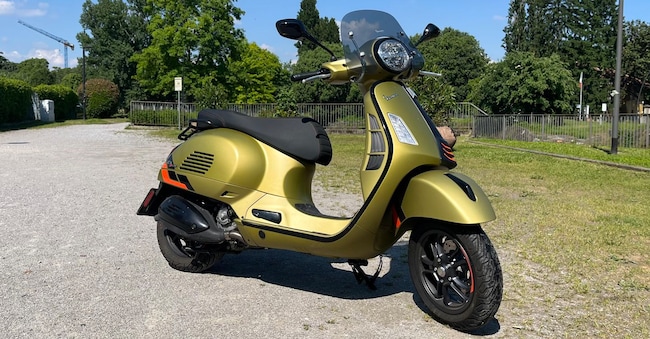
Ever since it was designed by Corradino d'Ascanio in 1946 (the first was the 98), with two small wheels and the unmistakable steel body (features that have remained virtually unchanged), the Vespa has been a world-famous icon, built in over 19 million examples. At the last Eicma in Milan, Piaggio unveiled the Vespa Gts 310, which is fitted with a single-cylinder, liquid-cooled 310 cc Euro 5+ engine in place of the 278 cc engine, compared to which it has more than 70% new components: maximum power varies little, 1.2 hp more (from 23.8 hp of the previous engine to 25), but is reached at a lower rpm of 1,750 rpm; torque increases more - 28.9 Nm compared to the previous 26 - available from the first opening of the throttle. The new engine enhances the "Gran Turismo Sportivo" qualities of the Vespa flagship, which achieves unprecedented performance. Comfort also improves because mechanical and drive belt noise has been reduced.

As tradition dictates, the Vespa Gts 310 has an all-steel body that also acts as a frame, carrying the engine unit (centrally mounted) and mechanical parts. It is a construction philosophy that ensures sturdiness and dynamism, to which the small 12-inch rims also contribute: as a counterpart, they require greater attention to potholes and city road joints that can put them in crisis. In addition, the flat platform makes it easy to carry a gym bag or shopping bag between your feet. Behind the shield we find a drawer that opens by pressing the start-up knob, once it has 'seen' the electronic key: there is space for your wallet, a pair of gloves and your smartphone, which can be connected to the Usb socket located inside. Pressing and turning the knob gives access to the underseat, not exactly the Vespa's strong point: two not too big jet helmets or a PC briefcase can be stored there; speaking of the underseat, next to it is the 8.5-litre tank cap: the more absent-minded might happen to spill petrol in the compartment while refuelling.

Sitting on the seat, 790 mm above the ground, one is comfortable, assuming a very natural position, with relaxed arms. There is ample space for the rider's legs and feet, even if he plays pivot in a basketball team; less spoiled is the passenger who enjoys a good seat, but will find the handles a little uncomfortable to hold on to as well as the footrests, which are a little too far forward (at a standstill he will touch the rider's calves with his toes if he is not very tall). The instrumentation is unchanged, a mix of analogue and digital (3-inch display): always clearly visible and exhaustive, it houses the Vespa Mia connectivity system, standard on the SuperSport version tested, optional for the Vespa Gts and Gts Super. In gear, it is difficult to feel the benefits of the change to the larger engine: the Vespa was already very agile and responsive in the previous version and a direct and immediate comparison would be needed to verify the improvements in performance. The fact is that I was particularly struck by the fluidity of the engine and the response of the throttle, which was prompt and linear, almost like an electric vehicle. The new Vespa is a pleasure to ride, it doesn't vibrate and doesn't have any gaps in its power delivery up to the 130 km/h indicated (now reached with less effort), which is enough to take you onto the motorway without fear, but only with a little more caution when 'tackling' trucks and lorries.
In the city the Vespa is loved for the agility with which it manoeuvres, the quickness in changes of direction and the 'handkerchief' steering angle, in the sense that you can turn almost within a square metre. The suspension, then, is the same as always with a single-sided front suspension, while the braking system with double 220 mm discs has already been improved in the 2023 version with the adoption of new Brembo callipers and brake master cylinders: the braking force is greater but you have to squeeze the levers well to have it all at your disposal, a solution that also avoids disasters in panic stops. And even on wet pedestrian crossings you can open the throttle with ease: the traction control (standard) prevents rear-end skidding. Finally, a note on fuel consumption - at the end of our test the on-board computer indicated an average of 28.5 km/l - and one on the price: the 7,500 euros charged for the test model puts it well above the competition; in return, the Vespa, in addition to its unique charm and style, also offers better value for money: just take a look at the online sales adverts to find requests that for other models would provoke outraged protests from visitors and, instead, for a Vespa are considered perfectly fair.

