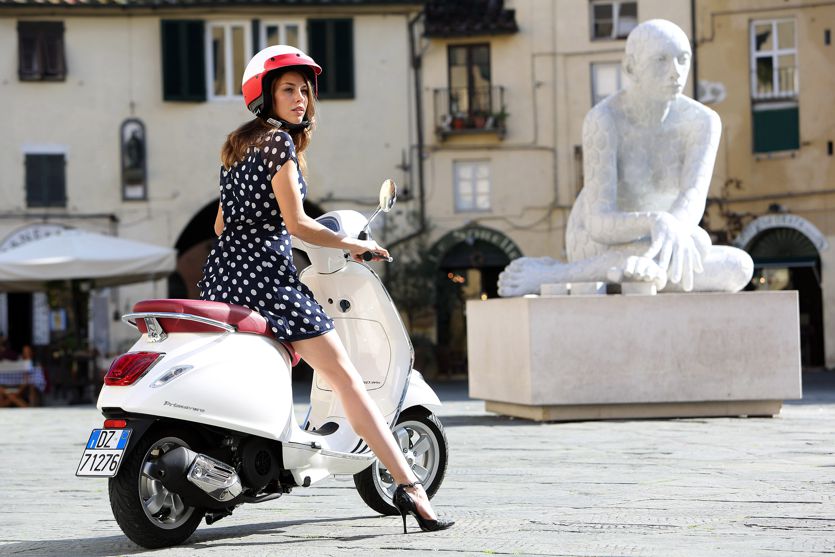
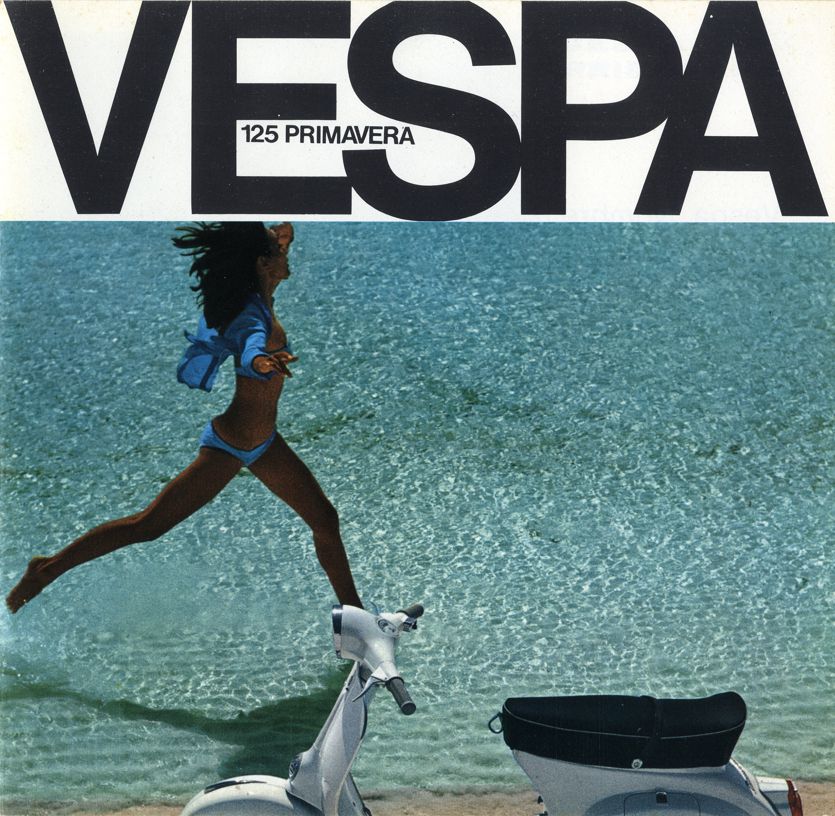
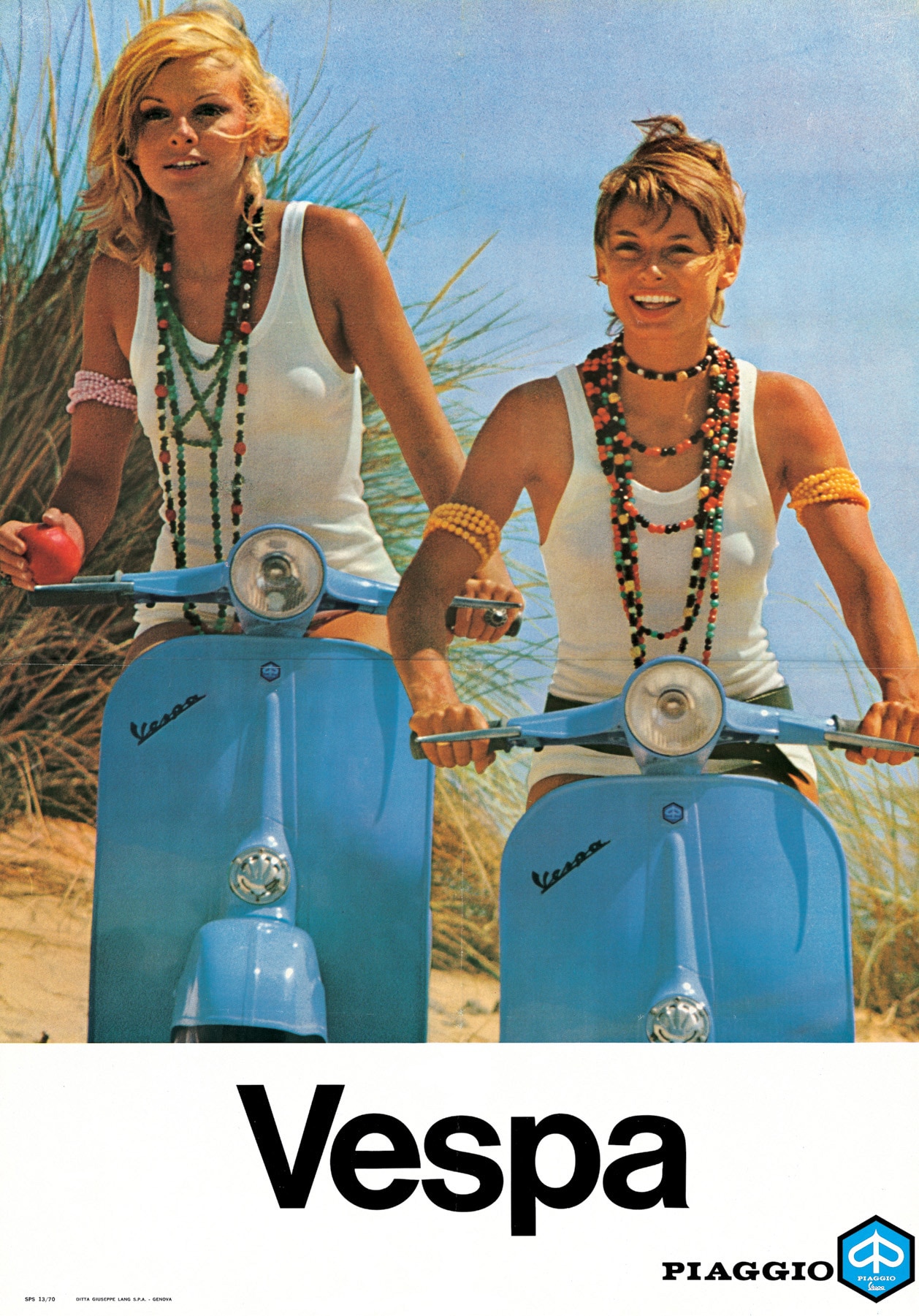
Happy Birthday Vespa, the best-loved scooter turns eighty
A true mobility and cultural phenomenon, the scooter par excellence celebrates 80 candles
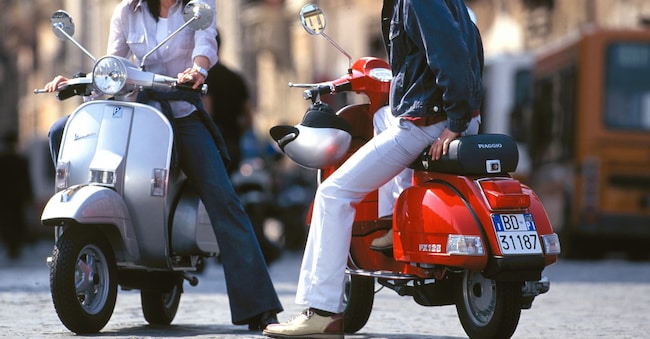
80 years of history with almost 20 million units sold on five continents. An ingenious all-Italian invention, thanks to Piaggio filing the patent on 23 April 1946, Vespa has truly become a global icon and a unique phenomenon.
How the Vespa came into being
The Vespa was born out of Enrico Piaggio's determination to create a low-cost, mass-market product. As the end of World War II approached, Enrico studied every solution to get production back on track in his factories, starting with the one in Biella, where a "motorscooter" was built on the model of small motorbikes for paratroopers. The prototype, marked MP5, was christened 'Paperino' because of its strange shape: but Enrico didn't like it, and commissioned Corradino D'Ascanio to revise the design. The aeronautical designer did not like the motorbike, which he considered an uncomfortable, bulky vehicle with tyres that were too difficult to change in the event of a puncture and dirt, especially because of the transmission chain. The engineer found all the necessary solutions by drawing on his aviation experience. To eliminate the chain, he imagined a vehicle with a load-bearing, direct-drive body; to make driving easier, he placed the gearbox on the handlebars; to facilitate changing the wheels, he devised not a fork but a support arm similar to an aircraft bogie. And finally he devised a bodywork capable of protecting the rider, preventing him from getting dirty or dishevelled in his clothing: decades before the spread of ergonomic studies, the Vespa's riding position was designed to sit comfortably and securely, rather than dangerously poised on a high-wheeled motorbike.
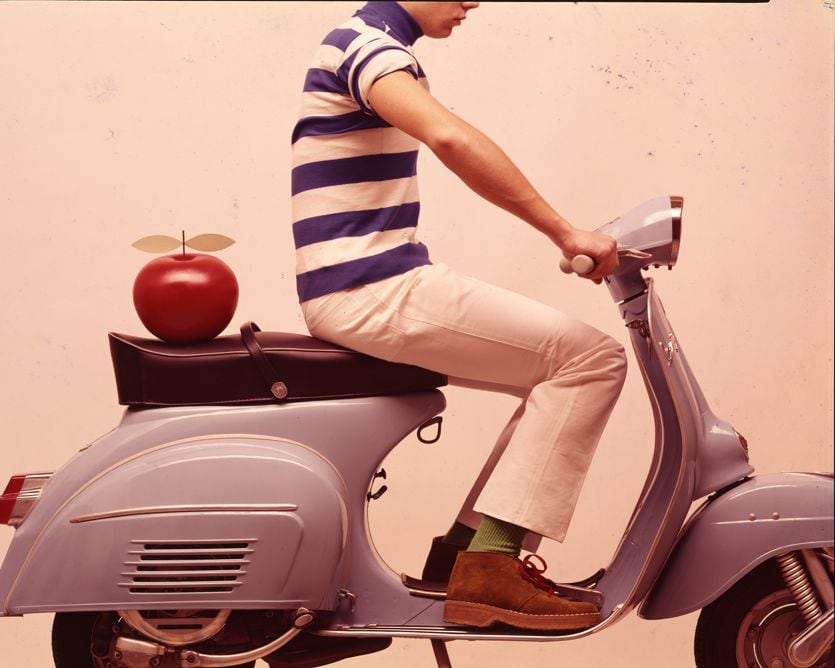
From D'Ascanio's new project came a vehicle that had nothing to do with the "Donald Duck": an absolutely original and revolutionary solution compared to all other examples of motorised two-wheeled locomotion. With the help of Mario D'Este, his trusted designer, Corradino D'Ascanio needed only a few days to fine-tune his idea and prepare the first design of the Vespa, which was produced in Pontedera in April 1946. The vehicle's name was coined by Enrico Piaggio himself, who, in front of the MP6 prototype, with its very wide central part to accommodate the driver and narrow "waist", exclaimed: "It looks like a wasp!". And Vespa it was. On 23 April 1946 Piaggio & C. S.p.A. filed - with the Central Patent Office for Inventions, Models and Trademarks of the Ministry of Industry and Commerce in Florence - a patent for a "motorbike with a rational complex of organs and elements with a combined frame with mudguards and bonnet covering the entire mechanical part". Enrico Piaggio did not hesitate to start mass production of two thousand examples of the first 98cc Vespa