
Victoria's Secret, the fashion show returns: nostalgia prevails over an attempt at renewal
After six years, criticism and scandal, the 'Angels' return to the catwalk and interpret the new course of the lingerie brand. The debut of plus-size models and 50-year-olds, however, is not enough
4' min read
4' min read
"It will be a celebration of how fantastic the show is, but through the lens of today's brand, rather than yesterday's": so Janie Schaffer, chief design and creative officer of Victoria's Secret, gave the first details about the big comeback of the show of America's most famous lingerie brand in an interview with Wwd. It is an event that has been awaited for six years, since that 2018 when the show was forced to close its doors after 23 years of success and glamour due to scandals, criticism and profound changes in the sensibility on the representation of lingerie and the female body itself.
Six years in which the brand, founded in 1977 in San Francisco by Gaye and Roy Raymond, claimed to have rethought its narrative by treasuring the lessons learned, the most important being that of embracing inclusivity and women's consciousness, abandoning the predominance of statuesque, perfect bodies dressed to please others rather than themselves. A path that was reflected in the accounts of Victoria's Secret, which, while remaining a global retail giant, with some 1400 shops, had seen turnover drop steadily at least since the late 2010s, to $6 billion in 2023.
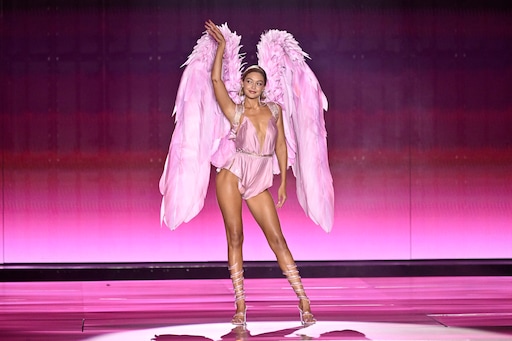
But what has changed, authentically, in these six years? Observing the Angels' fashion show that took place on the evening of Wednesday 15 October in New York, the answer is unclear: the same statuesque models of yesteryear, Gigi and Bella Hadid, Tyra Banks, Adriana Lima (who has meanwhile become a mother three times), Alessandra Ambrosio, returned to the catwalk; 50-year-old Carla Bruni and Kate Moss (with daughter Lila) made their debuts. But there were also other kinds of firsts: all-women performers Lisa, Tyla and Cher, all-women organisers, who energetically emphasised that the 52 models were representatives of 25 different countries; among them for the first time there were also plus-size models (Ashley Graham and Paloma Elsesser) and trans models (Alex Consani and Valentina Sampaio). In order to 'promote accessibility', the collection was also made immediately 'shopable' through a partnership with Amazon, which in 2023 also broadcast the documentary 'Victoria's Secret: The Tour 23' on Prime Video, a foretaste of the brand's return to 'big and bold' communication.
The last show was watched by 3 million people, this is the first one broadcast not on TV but on social media and the Prime Video platform. Will it be enough to bring the brand back to the splendour of the 1990s and early 2000s? Victoria's Secret's success had reached its peak with its first female ceo, Sharen Jester Turney, who in no less than 16 years at the helm had tried to elevate the brand both in terms of quality and communication, making it touch record sales of $8 billion, but who suddenly resigned in 2016, opening the most difficult years for the company: in a 2018 interview with Vogue Ed Razek, head of marketing for the group that then controlled the brand, L Brands, and the show's long-time organiser, declared that he would never have transgender models on the runway for fear that they would have shattered the event's appeal. Words that aroused outrage and led to the resignation of the CEO a week later, in a world that was changing fast, fuelled by the #MeToo movement. An investigation by the NYT revealed harassment and abuse of models, and when the close ties between the president of L Brands, Les Wexner, and the financier Jeffrey Epstein, also convicted of serious sexual offences, came to light, the crisis was deep.
After cancelling the show and a period of extreme caution, in 2021 Victoria's Secret launched the 'VS Collective' project, completely unaligned from its past: a creative and communication collective made up of seven women, including sportswomen Megan Rapinoe and Eileen Gu, actress Priyanka Chopra Jonas and plus-size model Paloma Elsesser. But this was not enough, and the best strategy seemed to be to return to the past, albeit with necessary modifications. And here is the slow return to the Angels' fashion show, complete with wings as in the golden days. In the Victoria's Secret fashion show, despite the good intentions, a nostalgic revival prevailed. On the 'pink carpet' that introduced it all the guests were in agreement: 'It's not like before, now we exalt awareness'.


