
Video footage usable against employee accused of theft only if informed
Incriminated employee reinstated. Images not usable because made without correct information and well-founded suspicion

2' min read
2' min read
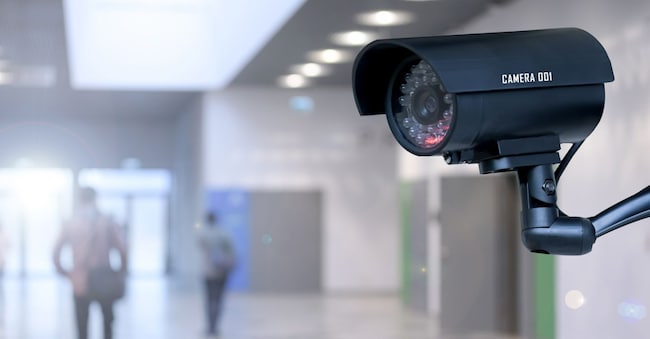
An employee accused of theft on the basis of footage taken with cameras must be reintegrated and compensated if there is no proof ofcorrect information on the use of the devices and if the defence investigation was activatedwithout a well-founded suspicion. The Court of Cassation dismisses as inadmissible the appeal of a well-known fashion designer against the decision of the Court of Appeal to annul thedismissal ordered against the manager of a Milan showroom because it was ordered in violationof the rules of information on the instruments used to protect the company's assets and without the prerequisite of a well-founded suspicion to be able to invoke the inapplicability of Article 4 of the Workers' Statute, which would have allowed the company to evade 'the fulfilments required by that provision'. The checks that had led to the dismissal had, in fact, started from 'a purely subjective belief' of a colleague.
Stock control
.The investigation activity, carried out directly by the colleague, without guaranteeing the confidentiality and protecting the dignity of the employee, was outside the law. The man had, in fact, carried out an unlawful search on the handbag of the employee. An initiative taken after he had seen telematic footage showing the presence, for the second time in the editorial showroom, of his colleague. A mere suspicion was enough for him to go to her office, while she was away on her lunch break, to look fortraces that could in some way prove any wrongdoing.
Information on the use of devices
.As for the filming of the audiovisual equipment - which the Supreme Court considers to be correctly attributed by both judges within the scope of the defensive controls of the company assets because they are addressed indiscriminately to all personnel - they cannot be used. For the Supreme Court, in fact, there is a lack of 'evidence of adequate information on the methods of using the instruments and carrying out the checks and in compliance with the provisions of Legislative Decree No 196 of 30 June 2003'.
The judges held, in fact, that 'the request for the production of the communiqué announcing the company's initiative to install video-surveillance equipment at all the sites was not timely, given not only - and not so much - the lateness of the filing, but, above all, the lack of proof as to whether the information in question had been delivered and/or brought to the knowledge of the employee'.
According to the Court of Cassation, the judges' assessment of the merits was also correct, therefore, "on the unusability of the images coming from the equipment as well as of the material resulting from such footage", as well as of the investigation, with the relevant testimony, of the witness-colleague who had improvised as an investigator. Statements considered unreliable due to numerous inconsistencies. No support came from other information provided by a second witness who was absent when the events took place and reported 'de relato'.

