
Video games made in Italy: growth is there, but the capital needed to make the leap onto the global stage is lacking
At this year’s First Playabe, the games industry takes a look in the mirror: over 500 industry professionals, including development studios and institutional investors. From Europe comes MediaInvest, the fund aiming to raise over 400 million to support the growth of the creative industries.
from our correspondent Luca Tremolada
FLORENCE – The Italian video game industry is no longer a niche market. In just over ten years, it has grown from 48 companies and a turnover of 20 million euros to over 200 operators, nearly 3,000 employees and revenues of between 180 and 200 million euros. Employment is rising, the number of established companies is growing, new projects are multiplying, and the target market is now predominantly international. Yet, behind these figures, there remains a vulnerability that risks slowing its development: money.
In fact, 88% of Italian studios continue to fund their video games using their own resources. In other words, the sector is growing but still operates on a self-financing model, whilst access to venture capital remains limited. This is an anomaly when one considers that the video game industry is one of the few cultural sectors capable of exporting intellectual property worldwide and that, over the next two years, it will see the launch of over 80 new titles, 62 of which are entirely original.
The real challenge for the Italian gaming industry does not, therefore, seem to lie in creativity, nor in the ability to reach international markets. The challenge is learning how to finance growth. Because making the transition from an independent studio to a company capable of competing on a global scale requires investment, a long-term commitment and greater access to capital. And it is precisely here that the Italian ecosystem still reveals its main limitation: few specialised funds, scant interest from venture capital and a continued heavy reliance on self-financing, publishers and public incentives.

“Creating video games today is certainly more accessible than in the past,” explains Thalita Malagò, director general of IIDEA, the trade association that brings together all the key players in the Italian video game industry. The real challenge, however, lies not so much in creating the product as in transforming a development studio into a sustainable and globally competitive business. The market is becoming increasingly crowded and complex in its dynamics, and access to capital, together with the ability to develop effective business development strategies, remains one of the main obstacles for Italian companies. The tax credit – he adds – marked a historic turning point for the Italian sector, recognising video games for the first time as a cultural and creative industry worthy of support. It has helped to increase investment, foster the growth of studios and attract new operators. Today, however, it cannot be considered a sufficient tool on its own. In a market environment characterised by reduced availability of private capital and complex competitive dynamics, its role should be that of a lever within a broader industrial strategy, based on continuity, predictability and speed of implementation.”
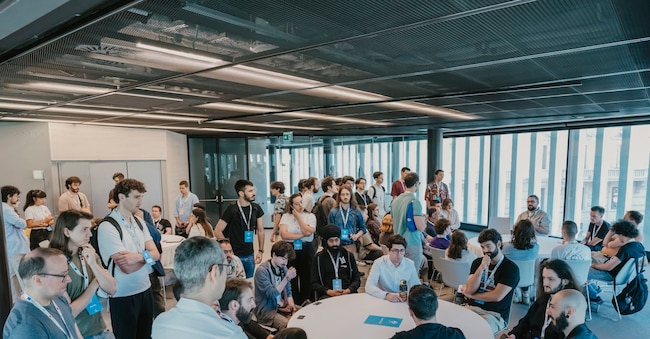
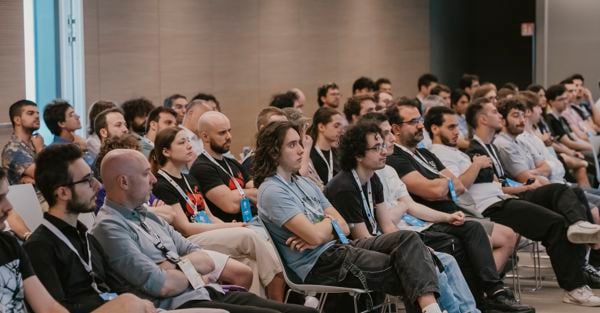
During the eighth edition of First Playable, the video game business event organised in collaboration with the Toscana Film Commission – Fondazione Sistema Toscana, which took place a few days ago, brought together a cross-section of the gaming industry, which is struggling to make the big leap forward despite a continuous evolution in quality. Over three days, more than 500 participants – including development studios, publishers, investors, institutions and professionals from all over the world – came together. The focus was on the quest for a successful video game – the kind of title that in Poland was *The Witcher* and *Cyberpunk 2077*, and in France *Clair Obscur: Expedition 33*, named the best game of 2025. And so, too, the focus was on securing the funding needed to grow sufficiently to make Italian gaming products visible on the global market.


