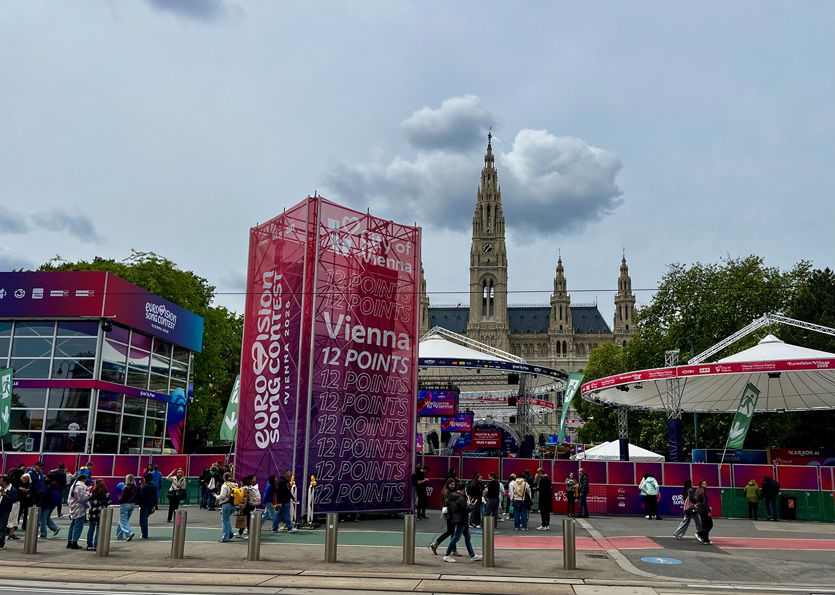
Vienna, widespread imperial stage for Eurovision
From the Rathaus to the Stadthalle, from historic cafés to disco cruises on the Danube, the competition transforms the Austrian capital

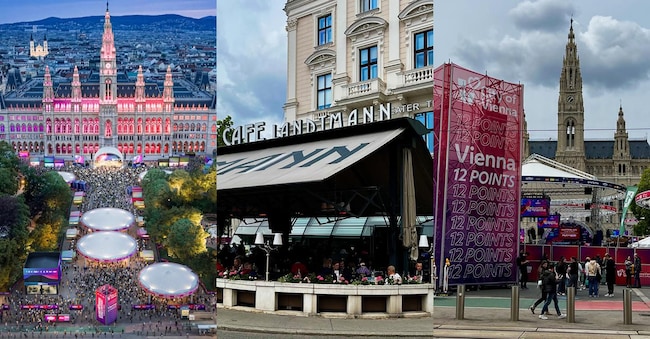
In Vienna, Eurovision begins long before the Wiener Stadthalle. It begins beneath the neo-Gothic spires of the Rathaus, where the city hall watches a crowd dressed in flags, sequins and flashy costumes; it crosses the Ringstrasse, passes historic cafés, skirts the blossoming gardens of the Volksgarten and arrives at the Danube. For a few days, the city where Mozart lived and composed, where Strauss transformed the waltz into European imagery, where Freud founded psychoanalysis and where the Habsburg memory remains engraved in the architecture, agrees to be invaded by another idea of Europe: less solemn, more colourful, pop and easygoing. This is perhaps the most interesting effect of Eurovision on Vienna: not just the arrival of a mammoth television production, nor the temporary transformation of a city into a fan zone. Rather, a short-circuit between two forms of grandeur: on the one hand, the architectural, musical and historical grandeur of the Austrian capital; on the other, the sentimental and deliberately excessive grandeur of the world's most watched (non-sporting) television event. Vienna brings imperial palaces, theatres, cafés, gardens, concert halls. Eurovision responds with big screens, karaoke, glitter, flags worn like capes, and fans passing through the city like a parade where you can sing, dress up and party without having to take yourself too seriously.
The symbolic centre of this overlap is Rathausplatz, the large square in front of City Hall, transformed into the Eurovision Village. Here, the contest comes out of television and stops being just a show constructed to the millimetre: it becomes a party that moves between the square, the flags, the choirs and the phones raised in front of the stage. The main stage hosts concerts, DJ sets, screenings of the live broadcasts, stands where you can stuff yourself with Kaiserschmarrn and Wiener Schnitzel, karaoke and thousands of people.
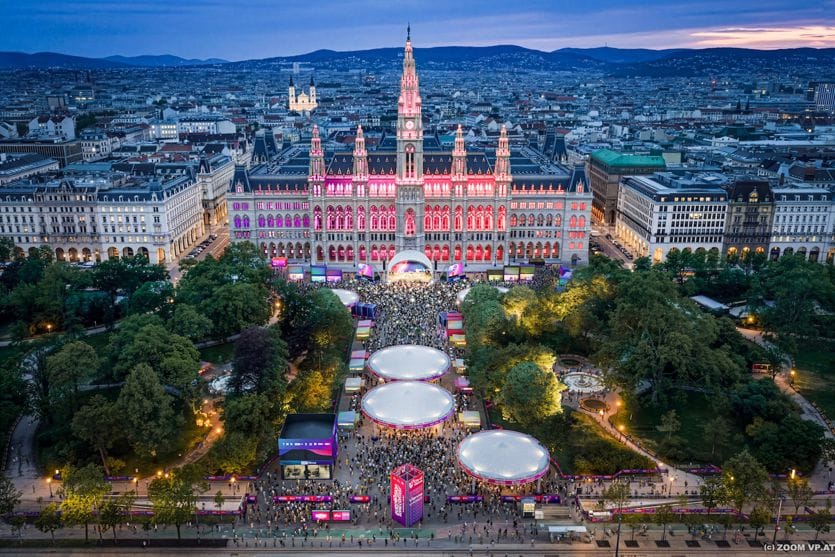
Rathaus
In the background, the façade of the Rathaus: a grey stone setting of pointed arches and towers, imposing, severe, designed to communicate civic authority. At its feet, an orderly European carnival, as only Vienna could make it possible. Excess, but with the right timing.
Just a few steps away is the Burgtheater, Austria's great national theatre, which in its 250th anniversary season observes the revelers with the slightly snobbish majesty of places accustomed to tragedy, high speech, and the liturgy of the stage. A little further on, Café Landtmann, a Viennese institution since 1873, participates in the Eurofan Café game by hosting the UK and San Marino: bow-tie-wearing waiters, elegant tables, Kaffeehauskultur tradition and, in the same space, the noisy lightness of the Euro-visual ritual.
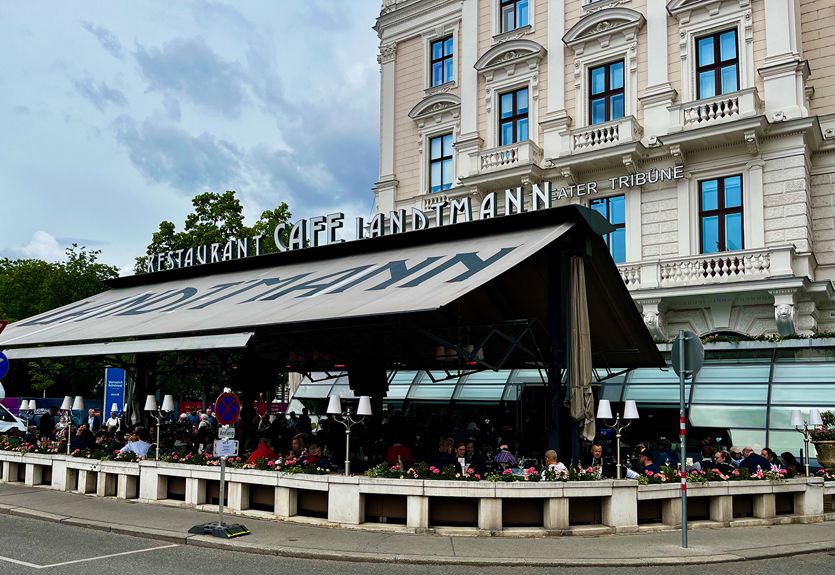
It is one of the most successful images of these days: Vienna does not give up its own form, but lends it to a different narrative. The city of waltzes and cultured music is not cancelled from Eurovision, it is crossed. On the Danube, which in the European imagination remains linked to the Strauss waltz, musical cruises depart, where people dance to the rhythm of historical and contemporary pieces from the competition. On public transport, a special tram hosts karaoke and jam sessions, while the U2 metro becomes the 'Song Contest Route', connecting some of the main venues of the Eurovision week. Even urban transport, a Viennese miracle of efficiency and composure, ends up inside the party.