
The monuments of the Ville Lumière become iconic race tracks
. .

3' min read
3' min read
The mantra of sustainable Olympics, hinged by the IOC in the so-called 'Agenda 2020+5', has been declined by the Parisian organisation not only with the 55% reduction in carbon dioxide emissions and - on the contiguous front of inclusiveness - with the equal division of competitions between males and females, but above all with the minimisation of land consumption.
Apart from the Olympic village, to host the Games for the third time in history, after the 1900 editions and the one a century ago in 1924, the facilities built from scratch in the French capital can be counted on the fingers of one hand: among them the Aquatics Centre in Saint-Denise (dedicated to artistic swimming, diving and water polo) and the Bourget Sport Climbing.
Rather, in order to enrich the sporting spectacle and enhance the architectural beauty of the Ville Lumiére, many of the 35 locations have been constructed in iconic locations. An added incentive for the approximately 10 million spectators who will be watching the competitions live.
Thus, the Inaugural Ceremony of the Summer Olympics, directed by Thomas Jolly, will not be held in the classic stadium, but on the Seine, where on the afternoon of 26 July the delegations of the 206 national teams will parade on 94 boats. The six-kilometre route will wind its way through the Jardin des Plantes to skirt the Saint-Louis and de la Cité islands, passing under ten bridges and footbridges to reach the Trocadéro and the Eiffel Tower.
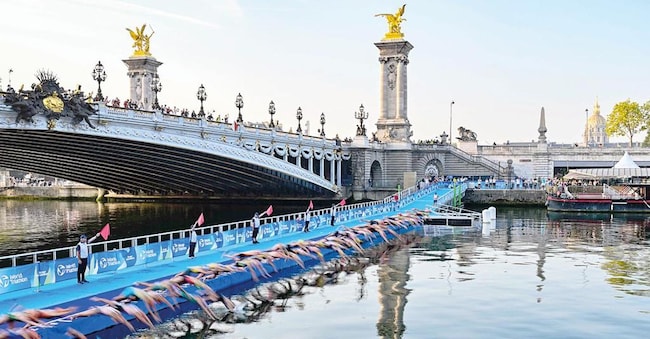
In the same Seine, which has been made swimmable for a stretch - it will be one of the most important material legacies of the Olympic event - the cross-country swimming competitions will be held, with the 10-kilometre race in which Gregorio Paltrinieri will compete.


