Municipalities

Mayors: Funaro wins; Fioravanti and Manfredi on the podium, with more southern candidates in the top ranks

Florence’s mayor tops the 2026 Governance Poll, followed by her counterparts in Ascoli and Naples. Basile puts in a strong performance in Messina (fifth). Sala does well in Milan and Gualtieri in Rome. Giacomo Tranchida comes last in Trapani

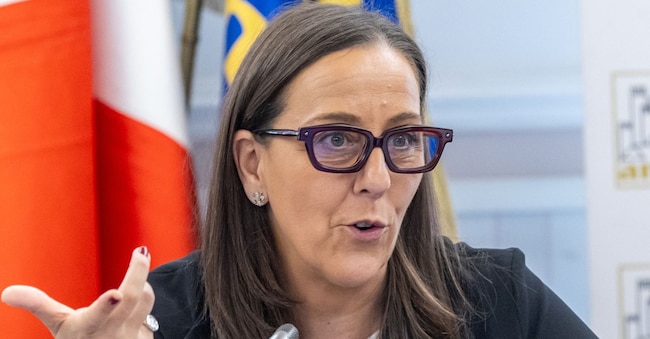
Sara Funaro, Sindaco di Firenze  (photo by Mauro Scrobogna / LaPresse)

5' min read

Translated by AI
Versione italiana

5' min read

Translated by AI
Versione italiana

The rise of women in politics, which has been a feature across the political spectrum from right to left for some years now, is also making its mark in local councils. And with an 11-point rise compared with the 2025 survey, Sara Funaro, the mayor of Florence, has shot to the top of the latest edition of the Governance Poll, the annual survey of citizens’ approval ratings for their mayors carried out by Noto Sondaggi for *Il Sole 24 Ore*.

Funaro, the first woman to reach the top of the Governance Poll, shares the podium with two regulars in the rankings: the mayor of Ascoli Piceno, Marco Fioravanti, last year’s winner, and the mayor of Naples, Gaetano Manfredi. The two also hold leading positions within the National Association of Italian Municipalities, with Manfredi serving as president and Fioravanti as chair of the national council.

Loading...

From Rome to Genoa

Funaro’s rise appears to be a clear-cut one, built entirely on the concrete ground of local government – a fact evidently fully recognised by the public two years into his term, whereas in 2025, 12 months before the vote, they had instead shown a little more reserve. The rise indicated by the Governance Poll in Florence is much more pronounced than that recorded by Silvia Salis in Genoa; although she has been at the centre of the national debate for months regarding her potential leadership role within the centre-left, her rise in support (when compared with the actual election results) is more modest, placing her in 33rd position with 55 per cent. However, Salis has only just completed her first year in office, and she too may need more time to consolidate public support.

The South is growing

Just behind the podium, however, the rankings are in flux, with plenty of new developments. The leap from 55 per cent last year to 66 per cent – which secured the gold medal for the mayor of Florence – is a significant one. But it is not the most striking achievement. The most dramatic rise has been that of Federico Basile, mayor of Messina, who, rising from 50 per cent in 2025 to 62 per cent in the latest survey, has gained 12 points and climbed 68 places in the rankings, soaring from 73rd to fifth place. Local events have also played a part in this performance; because at the start of 2026, Basile had resigned a year before the natural end of his term after losing the support of the majority of city councillors, but he stood for re-election in May and won in the first round with 58.4 per cent of the vote. In short, Messina is experiencing a sort of ‘second honeymoon’, typical of the weeks immediately following a successful election campaign.

But this particular context does not detract from the exceptional nature of the case, involving a mayor from the deep South who, moreover, is outside the major national political blocs as a representative of Cateno De Luca’s ‘Sud chiama Nord’ party, and who ranks among the frontrunners in the national polls.

Eleven more points also go to the mayor of Palermo, Roberto Lagalla, who has thus managed to stay well clear of the bottom spot he occupied last year – a position now reclaimed by his counterpart in Trapani, Giacomo Tranchida, who remains at the bottom of the table in 2024 as well.

Compared with the past, however, in addition to Manfredi and Basile, there is a much stronger presence from the South at the top of the rankings. Just above the mayor of Messina, in fourth place, is Massimo Zedda, for example. Now in his third term as mayor of Cagliari – having returned to the post he previously held between 2011 and 2019 following a spell as leader of the opposition in the Sardinian Regional Council – Zedda has gained eight points compared to last year, securing a ‘yes’ vote from 63 out of every 100 Cagliari residents. And the central and southern Italian representation in the top rankings also includes the mayor of L’Aquila, Pierluigi Biondi, in sixth place with 61 per cent, consolidating last year’s already excellent performance, former Minister of Justice Clemente Mastella in Benevento, repeating his 2025 feat, and Vincenzo Voce in Crotone.

What about the elections?

With less than a year to go before a major local election – in which almost all of Italy’s major cities will be holding polls – it is clear that the Governance Poll rankings will be scrutinised by parties and coalitions, which are only now, in the coming weeks, beginning to get serious about selecting their candidates.

Alongside Gaetano Manfredi, who traditionally receives encouraging figures in the annual survey, Roberto Gualtieri is among the mayors now in the final year of their first term. The news is good for him too, as the 54 per cent attributed to him in this year’s edition indicates a marked recovery compared with 2025, with an increase of eight percentage points and a rise of no fewer than 48 places. The situation is similar in Turin for Stefano Lo Russo, who, with 55 per cent of the vote, occupies 33rd place alongside Silvia Salis and the mayor of Ancona, Daniele Silvetti, gaining 4.5 points compared with last year. Matteo Lepore’s result in Bologna is less impressive; he remains one point above the 50 per cent threshold but drops to 64th place, losing 2.5 points compared with the 2025 edition. In Milan, meanwhile, Beppe Sala reaches the end of his second term in tenth place, with 59.5 per cent confirming his solid support; this is despite the legal troubles over building projects that have involved the administration, although these have so far resulted in a series of acquittals.

Support is slipping

But the Governance Poll, of course, is not a mock election, for the simple reason that, for example, there are no candidates. Rather, its purpose is to gauge the relationship between the mayor and their fellow citizens, which is influenced by a myriad of factors combining administrative decisions, communication skills and the city’s economic and social conditions. From this perspective, the survey reveals some shifts in the overall approval ratings of mayors: 74 out of 92 mayors – that is, 80 per cent – have reached the 50 per cent mark, whereas last year this figure stood at 85 per cent of those ‘assessed’.

It is difficult to draw any clear conclusions from these figures. But it is clear that mayors often find themselves playing the thankless role of scapegoat, even on issues over which they have only indirect authority, starting with security: with every incident in the news, the mayor ends up in the dock without much consideration being given to the role of the State or the local council’s actual capacity to intervene.

Copyright reserved ©
Loading...

Brand connect

Loading...

Newsletter

Notizie e approfondimenti sugli avvenimenti politici, economici e finanziari.

Iscriviti