
Vinitaly, space for alcohol-free wine (with the best prospects for market growth)
In Italy it has been liberalised but there are regulatory and fiscal doubts. The sector is worth 2.5 billion globally and is set to expand at a rate of 10% per year.

3' min read
3' min read
A market that is already worth$2.5 billion globally with the prospect of doubling over the next ten years at an annual growth rate of 10% against the flat trend expected for conventional wines. A very strong interest on the part of the production world, given that in a recent survey carried out by the Italian Wine Union as many as 60% of the producers surveyed responded that they were looking with interest at the prospect of producing no alcohol or low alcohol wines but a production that, for the moment, in Italy, remains at a standstill.
Yes, because despite the provision launched by Minister Lollobrigida last December that authorised the production of NoLo wines and that was welcomed with great satisfaction by the production world, then actually going from laws to facts is often very complicated. There are still many uncertainties hanging over the sector.
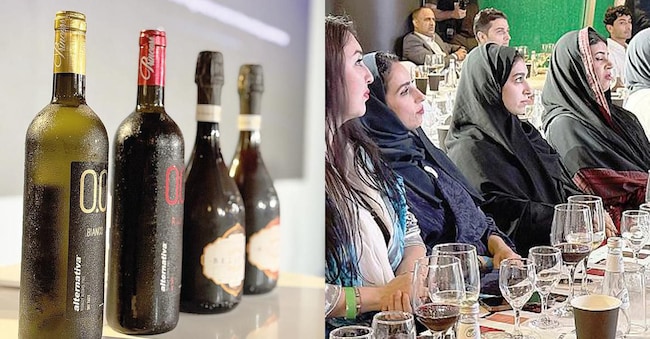
The denunciation, at the opening of Vinitaly, comes from the Italian Wine Union, an organisation of wine producers and traders that has from the outset been very committed to the frontier of low-alcohol wines. It was at Vinitaly that the UIV organised a meeting on the prospects and constraints of the alcohol-free or low-alcohol wines sector.
"At the moment there are at least two kinds of problems,' explains the secretary general of the Italian Wine Union, Paolo Castelletti. 'On the one hand there are some controversial aspects of Minister Lollobrigida's decree, and on the other there is the whole question of the tax framework on which there are 'leaps forward' by the Ministry of the Economy that certainly do not help to have a defined picture in front of us.
In particular," they explain to the UIV, "the Masaf decree of 20 December 2024 leaves two problems on the table: on the one hand the provision for the separation of spaces within companies between those dedicated to the production of wines tout court and those destined for the production of NoLo wines (see other article on the page). And on the other hand, the planned prohibition on keeping rooms inside where low-alcohol or completely alcohol-free wines are produced, carbon dioxide. Or rather, one cannot produce dealcoholised sparkling wines in the same premises where conventional sparkling wines are produced'. "At least on this second point," adds Castelletti, "reference could be made to the regulation of the Testo Unico del Vino that regulates 'promiscuous establishments', i.e. those in which aromatised wine-based beverages are produced and in which carbon dioxide is permitted. Spaces dedicated to the production of dealcoholised wines could be assimilated to those, thus loosening the knot'.


