Analysis

Violence, addiction and fake news: the real business of social media

It is not fair to place all the blame on platforms for the increase in unease among teenagers, but it is clear that social media can become dangerous because they are designed to hold attention. We need a 'passport' for access

by Riccardo Pirrone *

4' min read

Translated by AI
Versione italiana

4' min read

Translated by AI
Versione italiana

In recent years, the debate on the dangerousness of social networks has intensified, not least because with the advent of artificial intelligence it has become even easier to produce harmful content and fake news.

Born as tools to connect people, social networks have gradually become social media that entertain us and shape the way we inform and relate.

Loading...

Authoritative content and fake news on an equal footing

According to various analyses (Stanford, MIT, 2025), on the Internet, "all things seem to have the same value": authoritative content and misinformation coexist on the same plane, and even "the cries of a madman on social media seem as credible as the discoveries of a Nobel Prize winner, and often the madman even pretends to be a Nobel prize winner". This dynamic contributes to the loss of a common basis of facts on which we can all agree.

At the same time, there is a widespread perception that we live in an increasingly dangerous world, not least because algorithms tend to circulate more sensationalist and violent content. The data, however, tell a different story. In Italia, for example, according to the official Istat report, in 2024 there were about 327 homicides, so almost one a day, but twenty years ago there were about twice as many and in the 1980s more than three times as many.

Other crime indicators and road fatalities are also declining over the long term. In short, the world is not more violent or more dangerous, but we see and therefore comment more and more posts about violence. All is not well, however: according to Istat data (2024) and recent reports by the Postal Police, scams, especially online, are on the rise, while suicides are not decreasing.

Social and youth

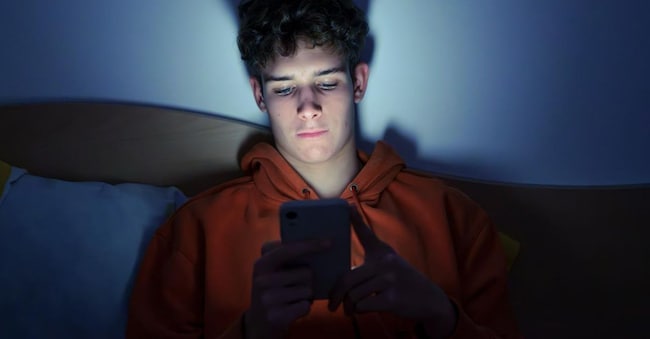
The issue becomes even more sensitive when it concerns young people. It is not correct to place all the blame on social networks for the increase in depression, anxiety and unease among teenagers. However, it is clear that platforms have amplified the dark side of adolescence out of all proportion, building veritable b>business models on these malaises. Social networks can be useful, even educational, but they are also dangerous environments, designed to hold attention and maximise dwell time.

The scientific literature on the subject is now vast. Psychologists, psychiatrists and data scientists have studied the impact of social media on sleep, attention and school performance. Some researchers have even coined the expression 'TikTok Brain' to describe the changes in brain functioning of young people exposed to social media for many hours a day. This is not to say that TikTok automatically makes one stupid or unable to concentrate, just look how cute this monkey dancing YMCA like Trump... sorry, what were we talking about?

Loss of responsibility

Then there is another central issue: the loss of accountability. What was once networking has now become rapid consumption of content, often without context or verification. In this ecosystem, violent posts, hate speech and fake profiles proliferate easily.

The point is that we are getting used to it, almost anesthetising it. Have you realised that content that would previously have been scandalous is now just yet another video we scroll through or share with friends?

The more we expose ourselves to this kind of content, the more our threshold of tolerance is lowered. And if we think about how many young people are growing up with smartphones in their hands, it becomes clear that social media is redefining what we perceive as 'normal'.

Laws to ban social media for minors

In the face of this scenario, regulatory responses are also emerging: some countries, such as Australia, have already introduced restrictions, while others, including Spain, Portugal, Great Britain and France, are considering laws to prohibit access to social networking sites for children under the age of sixteen.

Signs are also arriving from the judicial world: a popular jury in Los Angeles recently ruled that social media can be addictive, condemning Meta and Google to pay $3 million to a woman who had developed a severe addiction during her childhood, with consequences on anxiety, depression and body perception. This is the first time a jury has ruled on a case of this kind, and the decision could set an important precedent: the trial is in fact similar to some two thousand other cases currently pending.

Social media are certainly not the sole cause ofcontemporary malaise, but it is clear that they have contributed to intensifying already existing vulnerabilities. We all pay the price for this imbalance every day, while platforms continue to defend themselves and deny direct responsibility.

Verified digital identity is a possible solution

Among the possible solutions, I propose a verified digital identity, a sort of 'passport' to access social networks, capable of drastically reducing online hatred and fake accounts. It is not difficult to understand why platforms are not enthusiastic: effective verification tools would inevitably limit traffic and, consequently, also their earnings.

Clearly I will use the same platforms that I criticised in this article to share it, hoping to make it go viral on social media... in much the same way as a monkey doing the Trump dance.

* Social Media expert

Copyright reserved ©
Loading...

Brand connect

Loading...

Newsletter

Notizie e approfondimenti sugli avvenimenti politici, economici e finanziari.

Iscriviti