
Violence against women: politicians respond to the call for unity from Lorena Isceri’s father
Meloni assures: ‘We will continue to do our bit.’ Schlein reiterates her stance on emotional education and the consent law. But Vannacci continues to criticise the offence of femicide

Key points
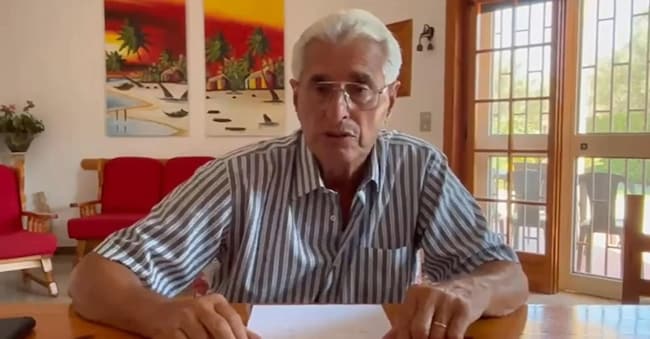
‘My daughter is a good girl – extraordinary, well-mannered, hard-working and dedicated to her studies and work. She had so many dreams and plans, but now she no longer has them.’ Franco Isceri uses the present tense to describe his daughter Lorena, the woman who was locked in the boot of a car and then thrown like an object from a viaduct on the A1 motorway by her ex Federico Vella. He does so in a heart-wrenching yet lucid appeal to politicians, urging them to ‘stand united’ in the fight against male violence against women. It is an appeal to which many in both the government and the opposition have responded, from Prime Minister Giorgia Meloni to the secretary of the PD, Elly Schlein. This has further isolated the position of General Roberto Vannacci, who, on the sidelines of the Cernobbio Forum, continued to criticise the offence of femicide.
The plea from this father, devastated by grief, is clear: ‘Work in schools, strengthen anti-violence centres and the legal framework to take unanimous action to ensure this never happens again. I ask this of you with all my heart.’
Meloni responds to the appeal
The response from Giorgia Meloni, who as early as Friday 4 September at the Fdi rally in Bari regarding the Government’s record-breaking tenure, as Lorena had pointed out, is not long in coming. The Prime Minister first and foremost highlighted the work carried out during this parliamentary term, “thanks also to the contribution and efforts of all the political groups in Parliament”: “We have doubled funding for anti-violence centres and women’s refuges, thereby preventing many of these facilities from having to close. We have made the ‘Reddito di Libertà’ (Freedom Income) a permanent feature and expanded it, strengthened a fundamental tool such as the ‘Codice Rosso’ (Red Code), and were among the first in Europe to introduce femicide as a standalone offence.”
The Prime Minister’s promise
But Meloni admits that this is not enough; she acknowledges that ‘we must all continue to seek solutions, to improve what already exists, and to do everything possible to take action before it is too late’. Then came the promise: “We will continue to do our bit, right to the very end. In the name of Lorena and all the victims. In the name of their families. In the name of a society that protects women and their freedom’. A freedom that ‘in Italia is non-negotiable’, she had proclaimed in Bari to applause, in an obvious indirect rebuke of Vannacci.
Tajani: ‘We need a culture that respects women’
The deputy prime ministers are also taking a stand – albeit with some caveats. “We are aware of the sheer magnitude of the abomination that lies behind every case of femicide, a specific criminal offence that was introduced for the first time by this very legislature,” states the leader of Forza Italia, Antonio Tajani. Speaking on behalf of his party, he brands the idea of ‘love as possession’ as completely distorted and agrees that there is still a long way to go ‘to foster a culture that truly respects women and instils an awareness of the horror of a mindset that inevitably leads to violence’.


