
Modi from Netanyahu: India-Israel strategic alliance against 'radical Shia and Sunni axes'
Strengthening partnerships on defence, technology and regional alliances in a complex geopolitical context
from our correspondent Marco Masciaga
 Aggiungi Il Sole 24 Ore
ai preferiti su Google
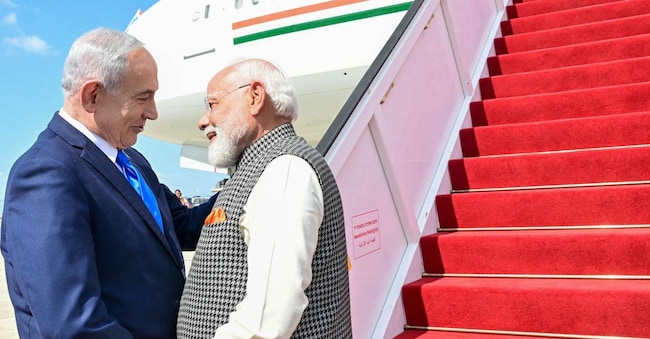
NEW DELHI - New Delhi's long transition from unconditional support for the Palestinian cause to an increasing strategic alignment with the State of Israel took a new step yesterday, when Indian Prime Minister Narendra Modi landed at Tel Aviv's Ben Gurion Airport, where his Israeli counterpart Benjamin Netanyahu was waiting for him, an honour reserved only for the most prestigious guests.
To encapsulate the meaning of Modi's trip in a formula is not easy, such are the ties between the two countries. But - thanks to the fact that the background to the visit is the tragedy in Gaza and the possibility of a conflict between the United States and Iran - geopolitics and security are set to play a central role in the talks.
Defence is one of the main areas of cooperation between the two countries. According to estimates by the Stockholm International Peace Research Institute, India has been the main customer of the Israeli defence industry for years: from 2020 to 2024, 34% of the defence systems exported by the Jewish state were bought by the New Delhi Armed Forces. Drones, missiles, radar systems and equipment for special departments were part of the package. New developments could include the purchase and co-production of Iron Beam, a laser system to intercept drones, missiles and mortar shells.
In general, economic relations between India and Israel are strong. With an interchange of $3.62 billion, New Delhi is the Jewish state's second largest Asian partner, and on Sunday Netanyahu anticipated new collaborations in the fields of artificial intelligence and quantum computing. Another topic of discussion will be the India-Middle East-Europe Economic Corridor (Imec), the ambitious infrastructure de-risking project that aims to create an alternative to the Suez Strait.
After landing in Tel Aviv, Modi travelled with Netanyahu to Jerusalem, where the two leaders spoke before the Knesset. During his speech, the Israeli Prime Minister touched on a key dear to his host, saying that "in the face of extreme Islam we will create an iron alliance, of states that sanctify life against those who bow down to death. Israel,' Netanyahu continued, 'is stronger than ever, and India is stronger than ever. We will break the axis of evil'. Words to which Modi responded by assuring that 'India stands by Israel with firmness and full conviction at this time and also in the future'.


