
Vittorio Occorsio and a commitment paid with his life
At the State Archives in Rome, the story of the magistrate killed fifty years ago by Ordine nuovo through explanatory panels, photos, documents, newspapers: for a memory that keeps us ever vigilant
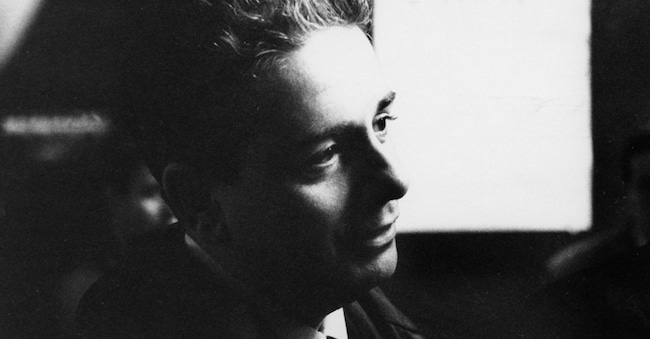
Rome, 10 July 1976. Magistrate Vittorio Occorsio, 47 years old, leaves home in the morning and takes his Fiat 125 to go to court. He has been on holiday since the next day.
Suddenly he was hit by a burst of machine gunfire, he collapsed on himself, while on the seat next to him the assassins left nine leaflets with the claim: there was the signature of Ordine Nuovo, the formation of the subversive right led by Pierluigi Concutelli. The judge's son, Eugenio (later a journalist at Repubblica), 20 years old, is the only one at home, rushes to see what has happened, calls his mother Emilia - at that moment at his parents' in Grottaferrata - and his sister Susanna. It is yet another bloody episode of those years and in particular of that '76 so tormented in the history of our country (a month earlier, the Red Brigades had killed the Genoa prosecutor Francesco Coco). A small but very significant and instructive exhibition, set up in Rome in the splendid Sala Alessandrina of the State Archives (just a stone's throw from Palazzo Madama), recounts who Vittorio Occorsio was, the context in which he operated, the nature of the investigations he conducted, the number of assassins. But also his normality, family life, holidays, a daily life broken for doing his duty.
Surrounded by the wooden bookcases designed by Borromini, one moves among explanatory panels, documents, photographs, and newspaper articles that convey the tense atmosphere of that historical phase. The deputy public prosecutor paid with his life for his seriousness and commitment, condemned by 'revolutionary justice' - as in the leaflet - for the trials brought against the New Order, whose exponents 'are illegally held in democratic prisons' or 'have been forced to abscond for years'. But even executioners die!'. Alongside the robe that belonged to the judge, and a machine gun identical to the one used by the terrorists (an Ingram: the original has never been found), there are display cases with court documents, letters and minutes that show how Occorsio dealt with the most complex and dramatic events of that turning point in our history: from the attempted coup d'état of '64 devised in the Solo plan and coordinated by General De Lorenzo (revealed three years later by an investigation in L'Espresso) to the Piazza Fontana massacre and the bombs that exploded in Rome on 12 December 1969 (when Occorsio was on duty in the Public Prosecutor's Office) to the first investigations into the P2 Masonic Lodge.
As for Ordine nuovo, Occorsio applied the Scelba law implementing the constitutional principle on the prohibition of the reorganisation, in any form, of the fascist party. This resulted in the dissolution of the movement: they did not forgive him. Paese Sera, in the evening edition of 10 July, broke the news with a banner headline: the front page was cut out, without the photo of the corpse removed by his children to spare his mother further pain. In a telegram, Enrico Berlinguer immediately expressed his 'indignation' and 'horror' at the 'ferocity of criminals who aim to strike at democratic institutions', sharing the grief of the family with emotion. Aldo Moro wrote the same. Vittorio Occorsio was moreover aware of the escalation of subversion and violence, as evidenced by some handwritten notes found by the family and displayed in the exhibition. A radicalisation that would not spare even the colleague called to continue some of his investigations: in June 1980, the deputy public prosecutor Mario Amato was assassinated in Rome.
Visiting this exhibition (intended especially for girls and boys, but not only) is therefore important because the memory must never fade: on the one hand, it imposes homage to a servant of the state, and on the other, it forcefully conveys the warning not to underestimate any possible retreat in the rule of law.


