
‘Buy today, pay tomorrow’ credit is booming, up 127% in three years
The ‘The Invisible Debt’ feature highlights its popularity amongst Gen Z young people. The situation is deteriorating amongst businesses

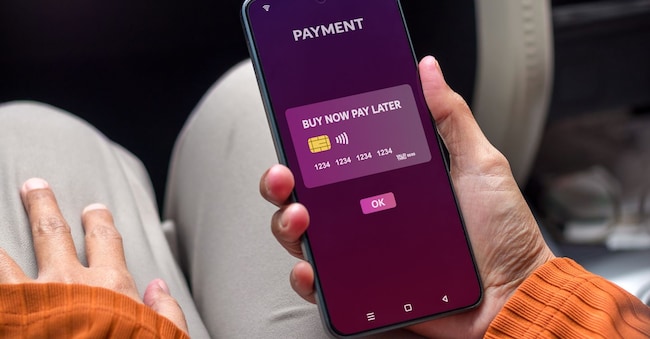
Extremely fast, with no special procedures or checks – instant. After three instalments, the debt is cleared. ‘Buy now, pay later’ credit has quickly won over Italians, becoming part of their daily routine for both online and offline shopping. Between 2022 and 2025, the volume of credit granted under the ‘buy now, pay later’ scheme rose by 127 per cent, with a clear substitution effect on traditional small consumer loans – those for amounts under 1,500 euros – which saw a 29 per cent decline. This is according to ‘The Invisible Debt’, the latest Censis–Confcooperative report, presented yesterday.
“Among the businesses deemed vulnerable by the Bank of Italia, the proportion of debt held in 2026 stands at 35 per cent. And the paradox is cruel: credit,” adds Maurizio Gardini, president of Confcooperative, “is shrinking precisely for those who need it most. People are taking on debt to survive, not to grow. This is not a warning about the future. It is a snapshot of the present, which risks becoming even more complicated due to the ECB’s restrictive monetary policy.”
The BNPL phenomenon is very widespread amongst young people; amongst Generation Z in particular, it accounts for 18.1 per cent of the credit facilities used. Even more significantly, 19 per cent of applicants have no credit history whatsoever. These are people accessing credit for the first time via an instalment plan integrated into an online purchase, without ever having had an explicit relationship with a bank. The risk lies in the silent accumulation of debt. The simultaneous use of multiple BnPL contracts across different platforms generates small-value liabilities that escape traditional indicators of financial vulnerability. This invisible debt accumulates instalment by instalment, often on rapidly depreciating goods such as electronics, clothing and personal care products – which account for 53.4% of BNPL transactions – and only becomes visible when it is no longer sustainable.
On the business front, the Censis–Confcooperative report paints a picture of a deteriorating situation. 38.6 per cent of Italian companies with at least 50 employees consider the current economic situation to be worse than in the previous quarter, with figures as high as 43.7 per cent in the South. ECB data for the second quarter of 2026 indicate a tightening of lending criteria for existing business loans, whilst demand for financing for fixed investments is falling and demand for liquidity and working capital is rising – a sign that businesses are managing a crisis rather than pursuing growth. Between 2024 and 2025, loans to high-risk businesses have already contracted by 2.2%; for vulnerable micro-enterprises, the decline was 6.6 per cent. Among firms classified as vulnerable by the Bank of Italia, the debt ratio stands at 35 per cent. In an adverse scenario, that ratio could rise by a further 5 percentage points.

